
How to Unify Quality Control Standards Across All Suppliers Without Disrupting Production
Learn how to unify QC standards across suppliers smoothly. Discover effective strategies to maintain production continuity.
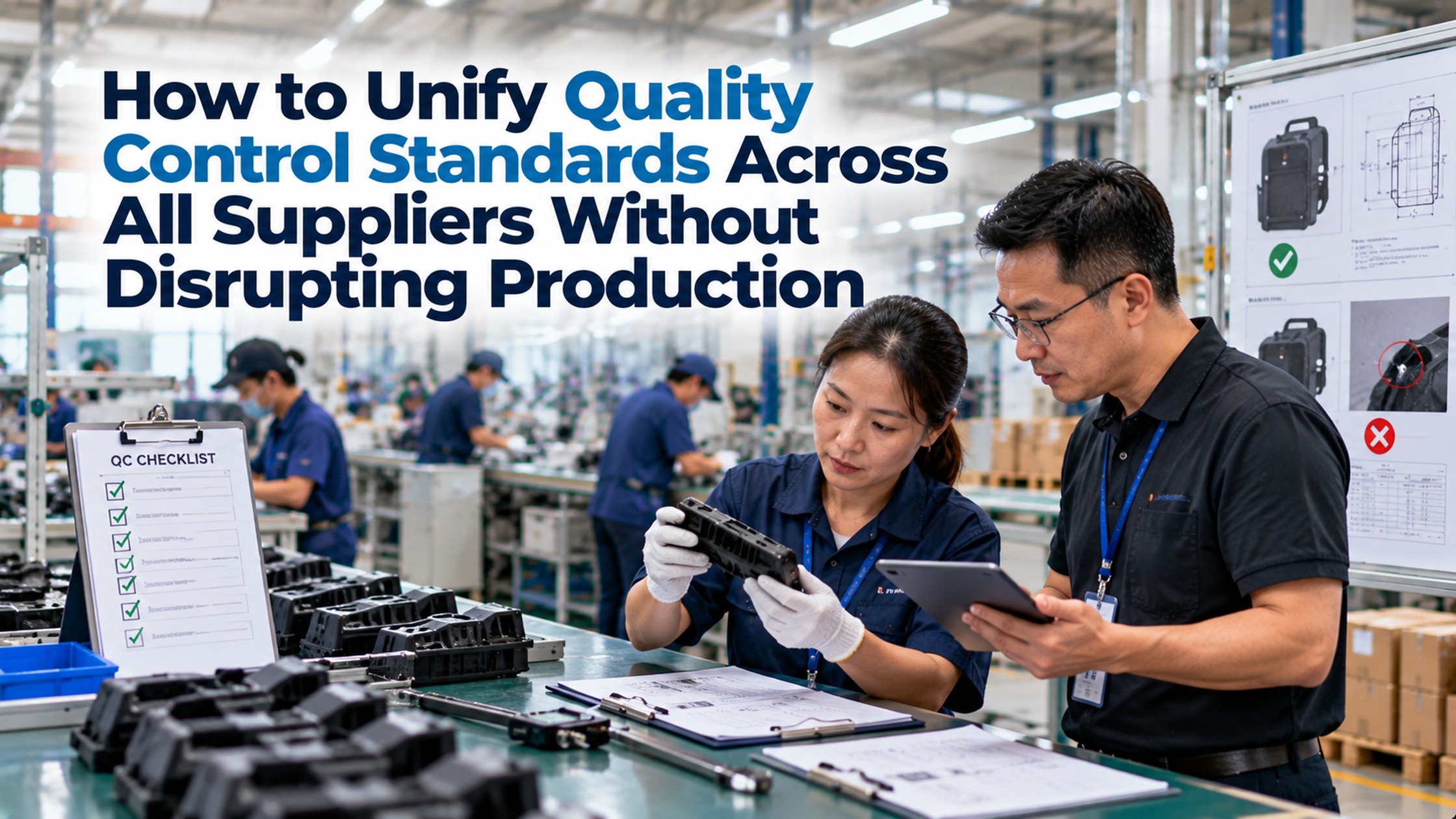


How to Unify Quality Control Standards Across All Suppliers Without Disrupting Production
Quick answer: To put one QC standard in place across every supplier without disrupting production, you need a structured, phased approach. This involves assessing each supplier's capabilities, developing a clear and universal quality framework, providing on-site training, and establishing continuous monitoring. Using a manufacturing partner with direct employees on the ground can help you manage this transition smoothly.
If you're an operations or sourcing decision-maker for a mid-market company, you know the pressure of maintaining product quality while managing costs. You rely on a network of suppliers across Asia, each critical to your success. But when one supplier delivers a perfect batch and another sends products with frustrating inconsistencies, it creates a ripple effect. These issues can lead to customer complaints, damage your brand's reputation, and squeeze already tight margins.
The need for a single, unified quality control (QC) standard across your entire supply chain becomes clear. But the big question is how to implement it without causing the very production delays and disruptions you're trying to avoid. The challenge is complex; suppliers have different processes, equipment, and cultural norms. A top-down mandate sent via email from thousands of miles away is likely to fail, leading to confusion, resistance, and costly errors.
Value Source Global manages this process for you with a different approach. We don’t rely on third-party agents. Instead, our own direct employees work from our wholly owned offices in Vietnam, Thailand, Cambodia, and China. They are on the factory floor with your suppliers, implementing your QC standards, providing training, and monitoring production in real-time. This on-the-ground presence allows you to standardize quality effectively, reduce risk, and maintain production momentum. It's about turning your supply chain into a predictable, high-performance asset.
TL;DR - Quick Takeaways
• Supplier Diversity Creates QC Challenges: Working with multiple suppliers in Asia introduces variations in equipment, processes, and communication styles, making a single quality standard difficult to enforce without a clear strategy.
• A Structured Rollout is Essential: A successful implementation requires a phased approach: first assessing supplier capabilities, then developing a clear framework, followed by hands-on training and continuous, on-site monitoring.
• On-the-Ground Management Helps Reduce Disruption: Having direct employees in the factories, rather than relying on remote agents, can make the transition much smoother. They can address issues instantly, provide clear instructions, and ensure the new standard is adopted correctly without halting production.
Why Is It So Hard to Standardize Quality Control Across Suppliers?
Standardizing quality control is difficult because your global supply chain is a network of independent businesses, each with its own established processes, equipment, and company culture. Imposing a single new standard on this diverse group without a careful, hands-on strategy often leads to resistance, misunderstanding, and production issues.
For US and international companies manufacturing in Asia, the goal of a universal QC standard is a strategic necessity. It’s the foundation for consistent product quality, predictable costs, and a reliable customer experience. Yet, the path to achieving it is filled with operational hurdles. A single email with a new spec sheet is not enough. Without proper management, the attempt to unify quality can create more problems than it solves.
Let's look at the common scenarios where well-intentioned standardization efforts go wrong and the business risks they create.
What are the most common failure points?
• Communication Breakdowns: This is a common point of failure. QC standards written in one country may not translate clearly, both linguistically and culturally. A term like "cosmetically acceptable" can have different interpretations. Without someone on the ground to clarify expectations in person, suppliers may misunderstand critical requirements, leading to entire production runs that miss the mark.
• Resistance to Change: Suppliers have processes that work for them. A new QC standard can feel like an imposition that slows them down or increases their costs, especially if they don't understand the reason behind it. This can lead to pushback, half-hearted implementation, or a return to old habits as soon as oversight is reduced.
• Mismatch in Capabilities: Your new standard might require technology, testing equipment, or skills a supplier simply doesn't have. For example, if you introduce tighter tolerances that require advanced CNC machinery, a supplier with older equipment cannot comply. This forces you into a difficult choice: lower your standard, invest in the supplier, or find a new one, all of which can disrupt production.
• Lack of On-Site Verification: Trust is important, but verification is essential. Relying solely on a supplier's own reporting is a significant risk. Without your own people on-site to conduct inspections and audits, it's much harder to know whether the new standards are being followed before the finished goods arrive at your door, when problems are far costlier to fix.
What are the consequences of a failed rollout?
When a QC standardization plan is implemented poorly, the consequences extend far beyond a single bad batch of products. The financial and operational fallout can be significant, impacting your bottom line and your brand's standing in the market.
• Increased Costs: You face the direct costs of product returns, reworks, and scrapped materials. You also absorb the indirect costs of shipping back defective goods, air-freighting replacements, and the management time spent resolving the crisis.
• Production Delays: If a quality issue is discovered mid-production, it can halt the entire line. Finding the root cause and implementing a fix takes time, leading to missed deadlines, stockouts, and strained relationships with distributors and customers.
• Damaged Brand Reputation: Inconsistent quality erodes customer trust. A few negative reviews or a product recall can do long-term damage to your brand's reputation, making it harder to attract and retain customers in a competitive market.
• Strained Supplier Relationships: A poorly managed QC rollout can create an adversarial relationship with your suppliers. This makes future collaboration difficult and can leave you vulnerable if you become over-reliant on a single, uncooperative partner.
What Is the Right Way to Implement a Single QC Standard?
The right way to implement a single QC standard is through a systematic, three-phase process: 1) Assessment and Framework Development, 2) Communication and Training, and 3) Integration and Monitoring. This structured approach ensures all suppliers understand and can meet your expectations before full-scale implementation, minimizing risk and preventing disruption.
Rushing the process or skipping steps is what leads to the failures described earlier. A successful rollout isn't about flipping a switch; it's about guiding your suppliers through a deliberate transition. This method transforms the goal of standardization from an abstract objective into a practical, achievable plan. It’s about "building quality into your products from day one" instead of just inspecting for it at the end, a principle that leading quality management experts endorse. By investing in a clear process, you build a foundation for long-term quality and supply chain resilience.
Phase 1: What does the assessment and framework stage involve?
This initial phase is about discovery and planning. Before you can create a universal standard, you need a deep understanding of your current state and a clear vision for your future state.
• Conduct Supplier Audits: The first step is to assess the current capabilities of each supplier in your network. This goes beyond a simple checklist. It involves on-site visits to review their existing QC processes, inspect their equipment, and understand their internal documentation and training procedures. The goal is to identify the gaps between their current practices and your desired standard.
• Develop a Unified QC Framework: Using the audit findings, you can now develop a single, comprehensive QC manual. This document should be incredibly specific. It must include detailed product specifications, acceptable tolerance levels, testing methodologies, criteria for passing or failing inspections, and clear photographic examples of both acceptable and unacceptable quality. This becomes your "single source of truth" for quality.
• Define Key Performance Indicators (KPIs): How will you measure success? Establish clear metrics to track quality over time. This could include defect rates (parts per million) and on-time delivery rates. These KPIs will allow you to objectively measure supplier performance against the new standard.
Phase 2: How should you communicate and train suppliers on the new standard?
With a solid framework in place, the next phase is focused on education and alignment. Your goal is to ensure every supplier not only receives the new standard but fully understands and buys into it.
• Translate and Localize Materials: Don't just send an English-language PDF. All training materials and the QC framework itself should be professionally translated into the local language of each supplier. It's also important to consider cultural context to ensure the instructions are clear and respectful.
• Conduct On-Site Training Workshops: These can go a long way toward a smooth rollout. Your team, or your manufacturing partner's team, should be on the factory floor, leading workshops for the supplier's quality managers, line supervisors, and key workers. This allows for real-time Q&A, hands-on demonstrations, and ensures everyone interprets the standards the same way.
• Establish a Clear Feedback Loop: Create a formal channel for suppliers to ask questions or raise concerns. This shows that you view them as partners and helps you identify potential issues before they become major problems. It could be a dedicated contact person, regular meetings, or a shared digital platform.
Phase 3: How do you ensure the standard is followed long-term?
Implementation isn't the end of the process. Ongoing monitoring and continuous improvement are what make the new standard stick and deliver lasting value.
• Mandate First Article Testing & Approval (FATA): Before a supplier begins a full production run under the new standard, they must produce a small "first article" batch. Your team must inspect and approve these samples against every single specification in the QC framework. Production only scales up after you've signed off, confirming they can meet the standard correctly.
• Implement Regular In-Process Inspections: Don't wait until the final container is packed to check quality. A robust monitoring system includes scheduled and surprise inspections at various stages of the production process, from raw material receiving to sub-assembly to final packaging. This helps catch deviations early when they are easier and cheaper to fix.
• Review Performance Data and Refine: Use the KPIs you established in Phase 1 to track performance. Hold regular review meetings with your suppliers to discuss the data, celebrate successes, and collaboratively problem-solve any recurring issues. Quality control is not static; it should evolve and improve over time.
How Does VSG Prevent Production Disruptions During a QC Rollout?
Value Source Global prevents production disruptions by using our own direct employees on the ground in Asia to manage every stage of the QC implementation. Our teams work on-site with your suppliers to provide clear communication, hands-on training, and real-time monitoring, ensuring a seamless transition without halting operations.
The difference between a QC standard on paper and one that's followed in practice comes down to presence. When you partner with VSG, you're not just hiring a consultant; you're deploying a dedicated extension of your own team inside the factories making your product. Our staff operate out of wholly owned offices in Vietnam, Thailand, Cambodia, and China. They speak the local language, understand the culture, and have the technical expertise to manage the entire process for you.
What does VSG’s on-the-ground management look like in practice?
Instead of you trying to manage a complex rollout from overseas, our local teams handle the hands-on work. We take the three-phase process for successful implementation and execute it on your behalf.
• We Conduct the Audits: Our engineers visit your current or potential suppliers to perform the detailed assessments needed to identify capability gaps. We provide you with a clear report so you can make informed decisions.
• We Lead the Training: Our team takes your QC framework and personally trains the supplier's staff on the factory floor. We answer their questions, demonstrate correct procedures, and ensure there is no room for misinterpretation.
• We Manage First Article Testing: VSG's own quality experts conduct the First Article Testing & Approval on-site. We meticulously check the initial samples against your specs and don't approve full production until they are perfect, preventing large-scale errors before they start.
• We Perform Continuous Inspections: Our staff are in the factories regularly, conducting in-process and final inspections. Because we're there, we can spot a potential issue and work with the supplier to correct it immediately, rather than discovering it weeks later when the product arrives.
How does this approach reduce your risk?
Every supply chain carries some risk. Our approach is designed to help you spot it early and plan around it. By having our own employees manage the process, we remove the variables and uncertainties that come with remote management or relying on third-party agents whose incentives may not align with yours.
This direct control over the process, from quoting and sourcing to production management and quality control, means fewer surprises. You get the consistency of a unified QC standard without the operational headache and risk of managing it yourself. Your product ships on time and meets spec, protecting your margins and your brand. Your product. Our manufacturing expertise.
What's the Key to Long-Term Quality Consistency?
The key to long-term quality consistency is treating quality control not as a one-time project, but as a continuous process managed through a strong partnership with your suppliers. This takes constant communication, regular performance monitoring, and ideally an on-the-ground presence to help ensure standards are consistently met day after day.
Implementing a unified QC standard is a major step forward, but the work doesn't end there. Markets change, product designs evolve, and new manufacturing challenges emerge. Lasting success depends on a system that is both robust and adaptable. Direct, in-factory oversight is a highly effective way to maintain this system, helping bridge the gap between your expectations and your suppliers' daily execution.
By shifting from a reactive "inspect and reject" model to a proactive, partnership-based approach, you build a resilient supply chain that becomes a true competitive advantage. It's an investment in predictability, reliability, and the protection of your brand's promise to its customers.
Key takeaways:
• Standardization is a Process, Not a Project: Achieving consistent quality requires ongoing management, not just a one-off implementation.
• Direct Oversight is Crucial: You cannot manage what you cannot see. An on-the-ground presence helps ensure your QC standards are followed correctly and consistently.
• Partnership Drives Better Results: A collaborative relationship with suppliers, built on clear communication and mutual goals, is more effective than a purely transactional one for maintaining high quality.
If you're ready to gain control over your product quality without disrupting your supply chain, tell us about your product. We can build a plan that fits.
Frequently Asked Questions
How long does it take to implement a new QC standard across multiple suppliers?
The timeline varies depending on the complexity of your product and the number of suppliers. A rushed implementation often leads to errors and is not recommended. The goal is a smooth, sustainable transition, not just a fast one.
What happens if a supplier is unable or unwilling to meet the new standard?
If a supplier lacks the capability, our on-site teams can often provide training and guidance to help them improve. If they're unwilling to adapt, Value Source Global can help you source and vet an alternative from our expansive network of vetted suppliers across Asia, helping keep the transition smooth with minimal disruption to your supply chain.
How does a standardized QC process help protect my product design and intellectual property?
While no system is foolproof, having direct employees from a trusted partner like VSG on-site adds a significant layer of protection. Our staff's regular presence and the strong, documented partnerships we build with factories create accountability. This direct oversight helps ensure your designs and processes are handled professionally and discreetly.
Sources
• Importance of a Quality Control Plan with a QMS
Check out our other blog for more information.Elevating Supplier Quality Management for Global Operations - Insights - Value Source Global
Ready to take the next step? see how we can help, or contact our team to talk through your goals.