
Elevating Supplier Quality Management for Global Operations
Discover how effective supplier quality management reduces risk, cuts costs, and improves resilience in global manufacturing. Learn strategies from Value Source Global.
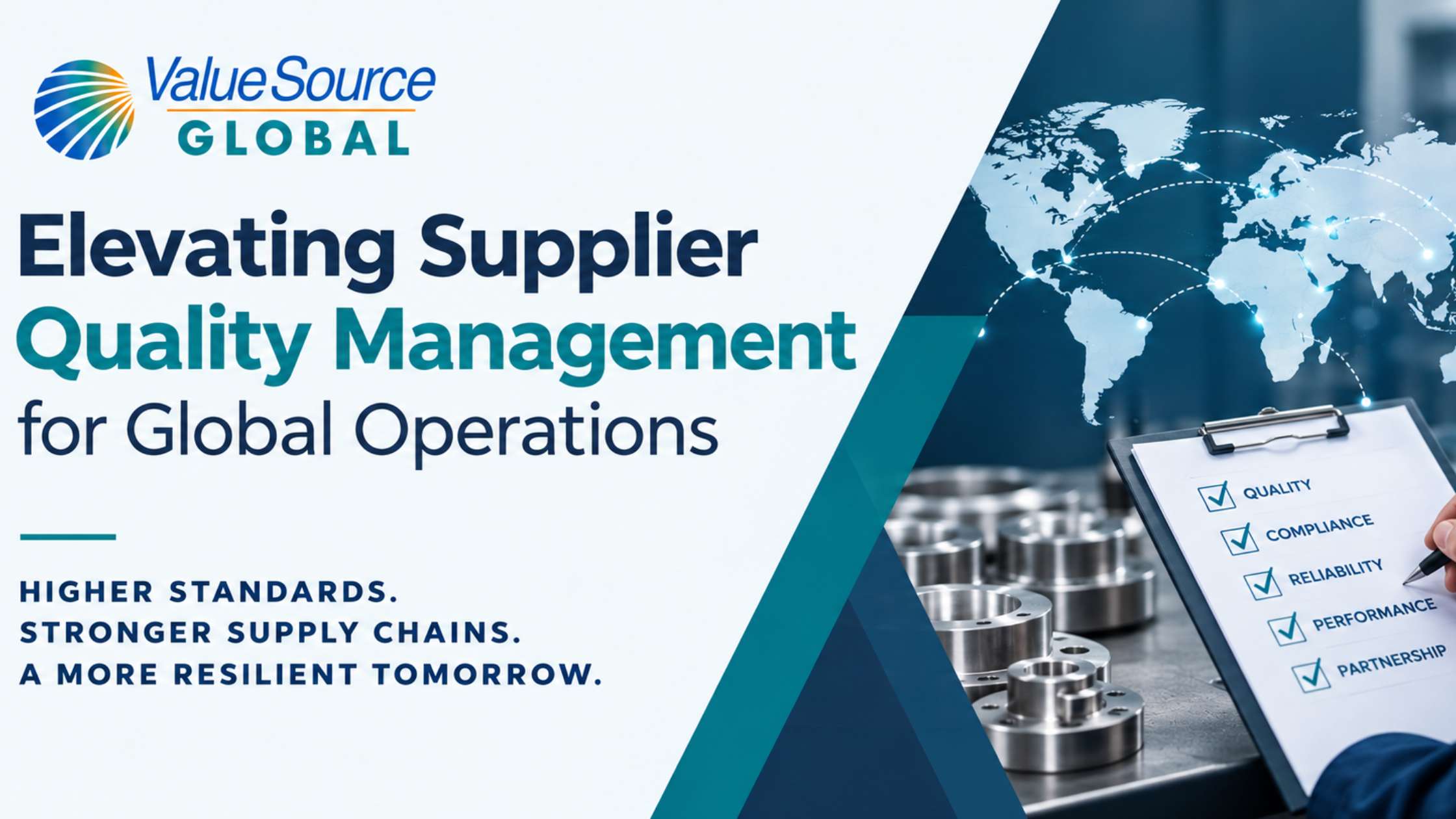


In today's interconnected global marketplace, the stability of your production relies entirely on the strength of your supply chain. When an overseas factory misses a manufacturing tolerance by a fraction of a millimeter, an assembly line across the world can grind to a halt. Effective supplier quality management has become the definitive line between operational excellence and costly delays. It's no longer just an administrative task or a simple compliance checkbox. It's a strategic necessity built to sustain your competitive advantage, optimize production costs, and build supply chain resilience.
As companies navigate increasingly complex manufacturing landscapes, they face a barrage of operational realities. Inconsistent supplier performance, fluctuating geopolitical climates, and rising logistics costs present continuous hurdles. Procurement leaders and operations executives regularly voice the same concerns. They're too dependent on a single supplier or region. Quality issues are becoming more frequent. Lead times are unpredictable. At Value Source Global (VSG), we understand these challenges deeply because our expertise comes from decades of hands-on sourcing and manufacturing leadership.
Quality issues embedded deep within the supply chain routinely lead to significant financial losses, tarnished brand reputations, and strained retail partnerships. Addressing these hurdles requires more than a standard vendor relationship. It requires an embedded operational advisor. In this comprehensive guide, we'll explore how modern organizations can implement robust supplier management strategies that mitigate risk and connect daily manufacturing operations to long-term business growth.
What Are the Quick Takeaways?
- Supplier performance requires continuous oversight. An initial factory audit is just the beginning. Long-term quality is sustained through regular, data-driven monitoring and transparent feedback loops.
- Misaligned standards lead to revenue loss. Ensuring that your global manufacturing partners perfectly understand and execute your specific quality criteria reduces product recalls and protects your margins.
- Partnership drives supply chain resilience. Moving away from transactional vendor relationships and toward strategic, embedded partnerships builds stability, ensuring reliable production even during market disruptions.
How Does a Potential Manufacturer Measure Up?
Choosing a manufacturing partner in Vietnam requires more than comparing capabilities and costs. Use VSG’s free Manufacturer Scorecard to evaluate prospective suppliers across the factors that can affect quality, reliability, and long-term supply chain performance.
Why Do Companies Struggle With Supplier Reliability?
Supplier quality management ensures the products, components, and services you source meet your organization's exact specifications and standards. However, businesses frequently encounter friction in this area. When these challenges aren't addressed with practical, real-world solutions, they lead to significant operational bottlenecks, financial strain, and stalled growth. Understanding why these operational struggles occur is the first step toward building a more resilient manufacturing network.
Procurement leaders often echo similar frustrations. They tell us their manufacturing costs keep rising without a corresponding increase in quality. They feel exposed because they're too dependent on one supplier or a single geographic region. They note that tariffs and geopolitical risks are directly affecting production schedules. These aren't theoretical problems. They're realistic business struggles that disrupt daily operations. Let's look closely at common scenarios that highlight why managing global suppliers is so complex.
Consider the challenge of inconsistent product quality. A mid-sized equipment company sources critical components from multiple international suppliers. For months, production runs smoothly. Suddenly, one supplier begins delivering batches with subtle defects. Because the company lacks an active quality agreement and doesn't conduct regular on-site audits, the defective parts make it to the final assembly. The result is a costly product recall and a damaged reputation. The root cause wasn't just a machine failure at the supplier level. It was the absence of a proactive quality tracking system.
Communication breakdowns represent another major vulnerability. A growing retail brand broadens its supplier base to new international markets to optimize costs. However, they face significant time zone barriers and language differences. Without standardized quality checklists and clear communication protocols, misunderstandings compound. The brand assumes the supplier understands the acceptable defect rate, while the supplier assumes standard commercial tolerances apply. This misalignment causes supply chain efficiency to plummet, resulting in severe stock shortages right before the peak holiday season.
Misaligned quality standards also create severe operational friction. Imagine an electronics manufacturer that partners with a new overseas factory. The initial product samples are flawless, passing every internal quality check. Relying on those initial samples, the manufacturer approves a massive production run. Unfortunately, continuous quality wasn't monitored on the factory floor during the main run. The subsequent shipments fail testing. The organization is forced into a costly reworking process, which destroys their delivery schedule and severely damages customer trust.
Finally, there's the hidden danger of supplier financial instability. A critical component supplier begins suffering financially. To stay afloat, they quietly start cutting corners, swapping out premium raw materials for cheaper alternatives. Because the contracting company doesn't have a system for evaluating overall supplier health and stability, they're entirely unaware of the risk. They receive faulty materials, leading to project delays and heavy financial penalties from their own clients. This scenario underscores the absolute necessity of having contingency plans and conducting routine evaluations of your manufacturing partners.
Supplier quality issues have far-reaching consequences that extend well beyond the immediate cost of scrapped parts. Poor supplier quality damages product reliability and erodes the trust you've built with your customers. It introduces legal liabilities and forces your internal teams to spend their time putting out fires rather than focusing on strategic growth. Businesses must adopt practical, experienced strategies to mitigate these risks and optimize their cost efficiency.
How Can You Master Supplier Quality Management?
Navigating global supply networks requires a methodical, informed mindset. The complexities arise because diverse regulatory standards, cultural communication differences, and geographical distances can quickly erode control measures. Add the constant pressure to maintain cost-effectiveness while scaling production, and it becomes clear why companies need a highly structured approach to quality assurance.
Mastering this process starts with strategic planning and flawless execution on the factory floor. The most successful procurement and operations teams don't just react to defects. They build systems that prevent them. This involves clear quality expectations documented in comprehensive manuals, rigorous supplier vetting processes, and continuous relationship management. According to the American Society for Quality, organizations that actively integrate supplier quality into their broader business strategies experience fewer disruptions and a higher return on their sourcing investments.
To establish a foundation of reliability, companies must define specific quality criteria that align directly with their business outcomes. You cannot hold a supplier accountable to a standard you haven't clearly communicated and documented. This means moving beyond basic purchase orders. You must engage in thorough factory audits, establish continuous communication channels, and implement structured corrective and preventative action plans when deviations occur.
Advanced data analytics and performance tracking are also critical. Modern supply chain leaders use data to spot negative trends before they turn into critical failures. If a supplier's defect rate creeps up by two percent over a quarter, a proactive team catches it, investigates the root cause, and implements a fix before a major shipment is ruined.
What Are the Key Qualities to Look For?
When evaluating your supply chain or seeking a new manufacturing partner, certain operational capabilities separate reliable partners from risky vendors. Identifying these traits early ensures that your sourcing strategy is built for scale and stability.
- Proactive Risk Mitigation
- Transparent Communication Protocols
- Scalable Production Capabilities
- Stringent Quality Control Systems
- Deep Operational Expertise
https://valuesourceglobal.com/contact-us Embedded operational advisors for global supply chain resilience.
How Does Proactive Risk Mitigation Protect Operations?
A reliable supplier doesn't wait for a crisis to react. They proactively manage risks by maintaining alternative material sources, conducting routine equipment maintenance, and planning for logistical disruptions. From a management perspective, evaluating a supplier's risk management framework tells you how they will handle the inevitable friction of global manufacturing. If they have contingency plans in place, your production line is far less likely to suffer downtime.
Why Are Transparent Communication Protocols Essential?
Transparency is the lifeblood of global sourcing. When issues arise on the factory floor, you need to know immediately. Partners with transparent communication protocols won't hide a flawed production run to save face. Instead, they alert your team, provide the data on what went wrong, and collaborate on a solution. This level of honesty prevents small manufacturing errors from compounding into massive logistical failures.
What Role Does Scalable Production Play?
As your business grows, your manufacturing partners must be able to grow with you. Scalability isn't just about having extra floor space. It's about having the workforce, the financial stability, and the management systems required to increase output without sacrificing quality. A partner focused on operational excellence will actively invest in their own infrastructure to support your long-term growth.
How Do Stringent Quality Control Systems Work?
Quality cannot be inspected into a product at the very end of the line. It must be built into the process. Strong manufacturing partners utilize stringent quality control systems like in-line inspections, statistical process control, and rigorous final lot testing. They maintain meticulous records and are always prepared for an unannounced audit. This dedication ensures that the product arriving at your warehouse matches your approved samples exactly.
Why Is Deep Operational Expertise Non-Negotiable?
Generalist vendors often lack the specific technical knowledge required for specialized manufacturing. Deep operational expertise means the supplier understands your industry's unique regulatory requirements, material tolerances, and performance standards. When your manufacturing partner possesses this level of insight, they evolve from a simple parts provider into a strategic collaborator who can actually suggest design or process improvements to optimize your costs.
Despite knowing these principles, businesses frequently make critical mistakes. One of the most common errors is rushing the initial supplier qualification phase. Driven by the urgency to cut costs or get to market quickly, teams conduct superficial due diligence. They partner with factories that look good on paper but lack the actual operational maturity to meet long-term quality standards.
Another frequent misstep is failing to establish clearly defined performance metrics. If you don't give your suppliers tangible targets for defect rates, on-time delivery, and responsiveness, you cannot hold them accountable. Without consistent communication, small quality deviations go unnoticed until they snowball into massive supply chain disruptions. Furthermore, companies often focus so heavily on aggressive cost reduction that they inadvertently force suppliers to compromise on quality, proving that short-term budget gains almost always result in long-term financial pain.
Improving these outcomes requires a strategic vision paired with hands-on expert knowledge. You have to invest time in educating your internal teams, ensuring your procurement staff understands the realities of factory operations. You must implement regular feedback loops, sharing performance scorecards with your suppliers so they know exactly where they stand. By establishing long-term commitments and mutual growth objectives, you foster a collaborative environment where suppliers are motivated to deliver sustained, high-quality output.
How Does Value Source Global Enhance Your Supply Chain?
In a volatile global market, maintaining strict quality standards isn't just about avoiding defects. It's about building a supply chain strategy that actively contributes to your company's profitability. At Value Source Global (VSG), we apply a highly structured, operational approach to supplier management. We don't just consult from afar. We bring decades of sourcing and global manufacturing expertise directly to your operations, acting as an embedded advisor rather than a traditional vendor.
Our methodology is built on the reality of factory floors and complex logistics. We connect sourcing decisions to your ultimate business outcomes, prioritizing cost efficiency, risk reduction, and supply chain resilience. When executives tell us they need more reliable suppliers and better visibility into their network, we deploy systems proven to stabilize production.
The VSG service methodology is designed to leave nothing to chance. We start with a comprehensive supplier evaluation. We don't just look at a factory's pricing sheet. We assess their operational capability, their compliance with international standards, and their historical consistency. We want to know if they have the financial stability to weather market shifts and the technical expertise to meet your exact specifications.
From there, we implement rigorous quality audits. We establish continuous monitoring programs that align directly with your corporate standards. Our teams focus on advanced performance tracking, ensuring that your suppliers are always striving for proactive enhancements rather than just reacting to mistakes. If a risk is identified, our deep operational experience allows us to devise mitigation strategies instantly, safeguarding your production timelines.
Recommended Product: https://valuesourceglobal.com/contact-us
Strategic Supply Chain Partnership
- Operational Assessment: Identify hidden risks and inefficiencies in your current global sourcing network.
- Custom Quality Frameworks: Implement rigorous, standardized audit processes tailored to your specific product lines.
- Embedded Expertise: Gain a dedicated partner who manages factory-level relationships and drives continuous improvement.
This disciplined, structured approach transforms your supply chain from a potential liability into a massive competitive advantage. By professionalizing your supplier management, we help you reduce wastage and improve your time-to-market. When quality expectations are perfectly aligned, supplier relationships become collaborative partnerships. Ultimately, enhanced quality and streamlined operational efficiency lead directly to reduced costs and a significant boost in profitability. You can focus entirely on scaling your core business, knowing your global manufacturing program is managed by proven experts.
What Do Our Partners Say About Our Approach?
"VSG fundamentally changed how we handle our overseas manufacturing. We were struggling with unpredictable lead times and rising defect rates. Their team didn't just offer high-level advice, they got into the operational weeds with our factories. Their hands-on perspective helped us stabilize quality, drastically reduce our production risk, and build a supply chain strategy that actually supports our long-term growth. They act as an extension of our own operations team."
Director of Global Operations, Industrial Manufacturing Sector
Are You Ready to Transform Your Operations?
Addressing supply chain vulnerabilities promptly is critical to maintaining your operational efficiency. It's essential to approach supplier quality with a methodical, highly informed mindset to ensure long-term reliability. Engaging with seasoned professionals who possess real-world manufacturing expertise doesn't just save your organization time and resources. It fundamentally enhances your business outcomes through the precise execution of proven strategies.
Our methodology is built on a foundation of specialized knowledge and years of managing factory operations globally. We understand the complex nuances that arise when dealing with international suppliers, and we're equipped to address them with calm authority and practical precision. By choosing to partner with Value Source Global, you are taking a decisive step toward ensuring that the highest standards of quality are embedded into the very fabric of your supply chain.
We invite you to consider the next logical step in optimizing your sourcing strategy. Our commitment to transparent communication, risk mitigation, and operational excellence underscores every program we manage. With our strategic guidance, you can build a more resilient network, optimize your costs, and meet your market demands with absolute confidence. Connect with our team today to explore how our operational expertise can secure your supply chain and drive your company's long-term growth.
Put Your Supplier Due Diligence into Practice
The right manufacturing partner can strengthen your supply chain. The wrong one can introduce costly quality, compliance, and delivery risks. Download VSG’s free Manufacturer Scorecard to assess potential Asian suppliers using the same due diligence framework our team applies to every order and client engagement.
[Get the Manufacturer Scorecard]
Frequently Asked Questions
What exactly does supplier quality management entail?
It involves the systems, processes, and metrics used to ensure that external suppliers consistently deliver products and services that meet an organization's specific quality standards and compliance requirements.
How often should we conduct supplier audits?
While frequency depends on the criticality of the component and the supplier's past performance, best practices dictate at least an annual comprehensive audit, supplemented by ongoing performance scorecards and quarterly business reviews.
How does poor supplier quality affect overall costs?
Defective parts lead to manufacturing downtime, expensive product rework, scrapped materials, expedited shipping fees to replace bad inventory, and potential customer warranty claims, all of which severely erode profit margins.
Why is it risky to rely on a single manufacturing region?
Geographic concentration leaves your supply chain highly vulnerable to localized disruptions, such as natural disasters, sudden geopolitical conflicts, or sudden changes in trade tariffs, which can instantly halt your production line.
How can an embedded partner improve our global sourcing?
An embedded partner brings deep operational experience and localized oversight, bridging communication gaps, actively managing factory-level risks, and ensuring that strategic business goals translate into flawless execution on the factory floor.
For additional information check out: Global Sourcing Strategies for Modern Manufacturing