
What a Solid Pre-Shipment Inspection in China Checks Before Your Goods Leave the Factory
Learn how thorough pre-shipment inspections ensure quality and protect your business before goods ship from China.
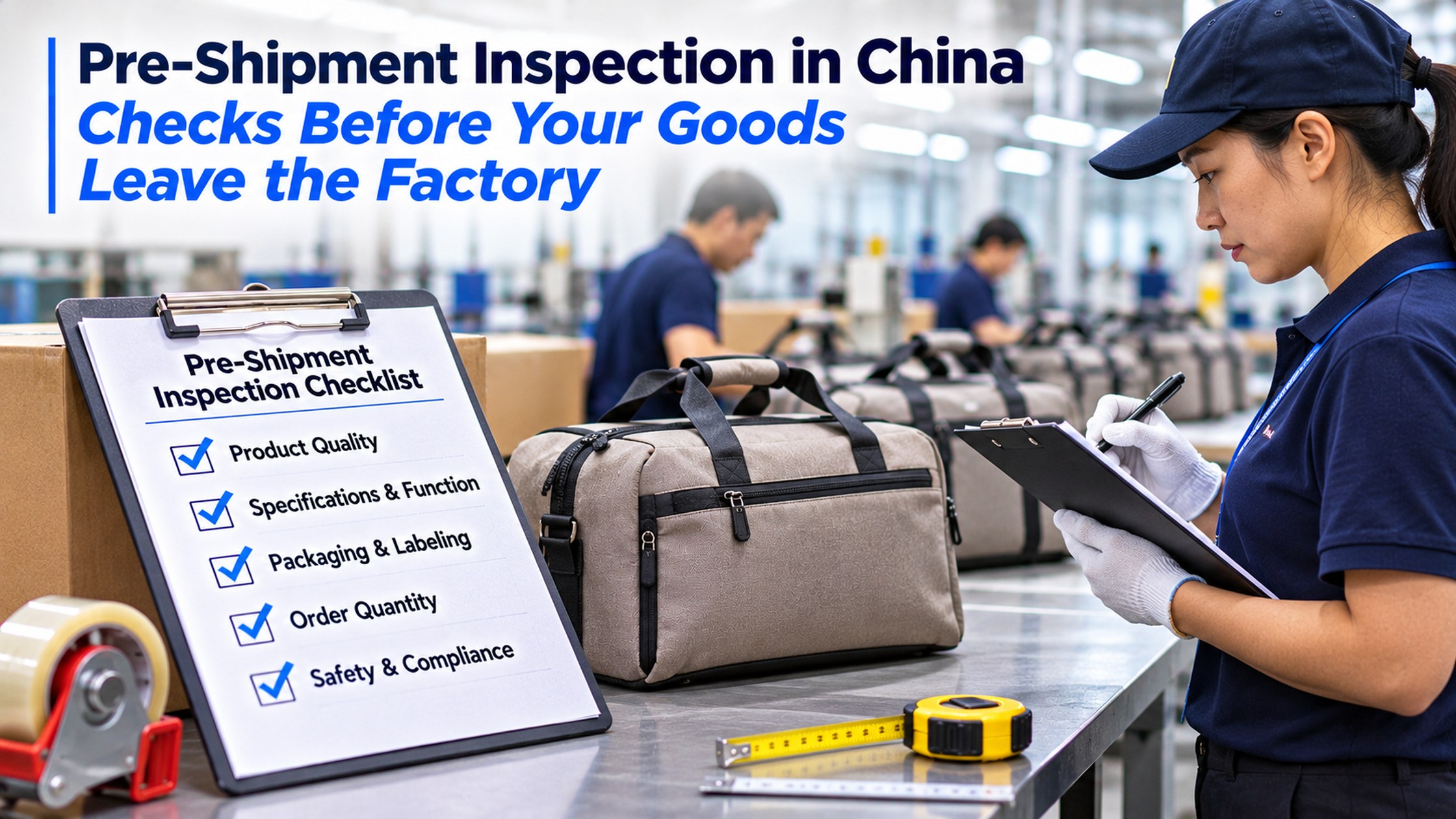

What a Solid Pre-Shipment Inspection in China Checks Before Your Goods Leave the Factory
Quick answer: A solid pre-shipment inspection in China checks your finished goods for quality, quantity, packaging, labeling, and compliance against your approved specifications before they ship. An inspector typically uses a detailed checklist to verify product functionality, appearance, and measurements on a statistically significant sample of the production run to catch defects early.
For operations and sourcing leaders at companies manufacturing in Asia, the moment a container leaves the port is a point of no return. You’ve invested time and capital, and now you wait, hoping the products that arrive match the ones you ordered. But what if they don’t? A shipment of goods with inconsistent quality, incorrect quantities, or damaged packaging can erase margins, delay product launches, and damage your brand’s reputation. This is a constant pressure for mid-market manufacturers and fast-growing brands relying on overseas suppliers.
One of the most effective tools to manage this risk is a pre-shipment inspection (PSI). It’s the final quality gate that confirms your order has been produced to your standards before you issue final payment and authorize shipment. At Value Source Global (VSG), we see this not just as a procedural step, but as a critical part of a well-managed supply chain. Unlike sourcing agents who hire third-party inspectors, we have our own direct employees on the ground in our wholly owned offices across Asia, including China, Vietnam, and Thailand. They work in the factories to manage your product’s quality control, giving you direct oversight and confidence that what you ordered is what will arrive at your door.
This article explains what a thorough pre-shipment inspection in China covers, why it’s so vital for protecting your business, and how having a partner with their own staff on the factory floor makes a significant difference in your outcomes. We’ll walk through the specific checks that should be on every inspection list, from quality and quantity verification to packaging integrity, so you can plan around risks and ensure your products meet customer expectations every time.
TL;DR - Quick Takeaways
• What It Is: A pre-shipment inspection (PSI) is a final quality control check performed on your products when at least 80% of the order is manufactured and packaged.
• Why It Matters: A PSI is your last chance to identify and fix quality issues, quantity discrepancies, and packaging problems before the goods leave the factory, saving you from costly returns, rework, or lost sales.
• Who Performs It: Having your own dedicated team or a partner like VSG with direct employees on-site provides far more control and accountability than relying on third-party agents who are disconnected from your overall production process.
• Key Checks: A thorough PSI verifies product specifications, functionality, appearance, quantity, packaging, and shipping marks against a detailed, pre-approved checklist.
Why is a Pre-Shipment Inspection So Critical for Your Business?
A pre-shipment inspection is critical because it serves as your final safeguard against receiving substandard products, incorrect quantities, or non-compliant goods. It allows you to verify quality at the source, preventing costly and often irreversible problems once the products have shipped internationally.
For any company manufacturing overseas, the distance and time between production and delivery create inherent risks. A small misunderstanding about a product spec, a shortcut taken on the assembly line, or improper packaging can cascade into significant financial and reputational damage. The PSI is a systematic process designed to catch these issues before they become your problem.
Without this final check, you’re essentially trusting that your specifications were perfectly understood and executed thousands of miles away. Unfortunately, this trust is often misplaced, leading to common and painful scenarios that VPs of Operations and sourcing managers know all too well.
What happens when quality assurance fails?
One of the most frequent challenges is inconsistent product quality. An electronics company might order 10,000 units, only to find that 15% have faulty batteries or scratched screens upon arrival. A PSI would have caught this by testing a random sample before shipment. Without it, the company is now faced with sorting defective inventory, managing customer returns, and absorbing the cost of unsellable goods. This directly impacts your bottom line and erodes customer trust in your brand.
How can you avoid regulatory and compliance issues?
Products manufactured abroad must meet the safety, labeling, and material regulations of the country they’re being imported into. A PSI can check visible compliance indicators, such as labels, warning labels, and country of origin markings, but it doesn't automatically confirm full legal compliance. For example, a toy manufacturer’s shipment could be seized by customs because the products contain materials that don’t meet child safety standards. An inspector could have flagged missing documentation at the factory, though laboratory testing and formal compliance verification would need to be handled separately. A blocked shipment means missed deadlines, potential fines, and a complete loss of inventory.
What is the risk of inaccurate order quantities?
Quantity verification is another core component of a PSI. It’s not uncommon for factories to accidentally short-ship an order. If a retail business is expecting a specific number of units to stock its shelves for a seasonal promotion and receives 10% less, it leads directly to lost sales and unfulfilled demand. Conversely, being over-shipped can tie up valuable capital and warehouse space in excess inventory. A simple carton count and piece count during the PSI helps confirm you're getting the quantity you paid for.
What Does a Thorough Pre-Shipment Inspection Checklist Actually Include?
A thorough pre-shipment inspection checklist includes detailed criteria for verifying product quality, quantity, packaging, labeling, and on-site testing. This document acts as a clear, objective guide for the inspector to confirm that your entire order meets the exact specifications you agreed upon.
The success of a PSI hinges on the quality of its checklist. A vague or incomplete list leaves room for interpretation and can result in critical defects being missed. A strong checklist is developed collaboratively between you and your sourcing partner, tailored to your specific product. While the details vary, every professional PSI process is built around a few core components.
This systematic approach, often guided by international standards such as the ISO 2859 sampling procedures, reduces guesswork and helps make each inspection more consistent and repeatable. It transforms quality control from a subjective hope into an objective, data-driven process.
How is the sample size determined for an inspection?
Inspectors don’t check every single unit in a shipment. Instead, they use a statistical sampling method called Acceptable Quality Limits (AQL). This international standard (ISO 2859-1) defines how many units to pull for inspection from a given order size and the number of defects allowed before an order "fails." This gives you a statistically sound assessment of the entire batch's quality without the time and expense of a 100% inspection.
What specific quality checks are performed on products?
Once the sample is pulled, the inspector performs a series of checks based on the product specifications. This is the most hands-on part of the inspection and typically includes:
• Visual Inspection: Checking for cosmetic defects like scratches, dents, poor stitching, color inconsistencies, and surface finish blemishes.
• Measurements and Dimensions: Using tools like calipers to verify that the product's physical dimensions match the technical specifications in your design files.
• Functional Testing: Performing on-site tests to ensure the product works as intended. This could mean turning on an electronic device, testing the zipper on a garment, or ensuring parts of an assembly fit together correctly.
• Safety and Compliance Checks: Verifying the presence of required safety labels, warning stickers, and compliance markings (like CE, UL, or FCC).
How is packaging and labeling verified?
How your product is packed is just as important as the product itself. Improper packaging can lead to damage during transit, while incorrect labeling can cause major issues at the receiving warehouse. The inspector checks:
• Retail Packaging: Ensuring the color box, hangtag, or other consumer-facing packaging is correct and undamaged.
• Shipping Cartons: Verifying that the master cartons are sturdy enough for transit, correctly labeled with shipping marks, and contain the right number of units.
• Barcode Scans: Scanning barcodes (like UPC or EAN) to ensure they are correct and readable. A bad barcode can create chaos for your inventory management system.
What happens if defects are found during the inspection?
If defects are found, the inspector classifies them based on severity: minor, major, or critical. A detailed report, complete with photos and descriptions of every issue, is sent to you immediately. Based on this objective data, you can make an informed decision. As one industry guide notes, this allows you to avoid costly mistakes by catching problems before they leave the supplier. You might accept the shipment, reject it and ask the factory to rework the defective items, or negotiate a discount with the supplier. The key is that you are in control.
How Does VSG Improve Your Pre-Shipment Inspection Outcomes?
Value Source Global improves your pre-shipment inspection outcomes by using our own direct employees on the factory floor, not third-party agents. This provides strong control, clear communication, and accountability, helping to align inspections with your long term quality goals from start to finish.
The standard industry practice is to hire a third-party inspection company for a one-off check. While better than nothing, this approach has limitations. The inspector is a stranger to your product, your supplier, and your quality standards. They are there to follow a checklist for a day, with little investment in the outcome. VSG’s model is fundamentally different. We are your manufacturing partner, and our on-the-ground team in Asia is an extension of your own.
This integration of quality control into the entire production process means that by the time we reach the pre-shipment inspection, many potential issues have already been identified and resolved. Our team isn't just showing up at the end; they are managing the process all along the way.
What's the difference between using VSG and a third-party inspection agent?
The key difference is partnership versus transaction. A third-party agent is hired to perform a task. Their job is to find and report defects on a specific day. VSG’s direct employees, working from our wholly owned offices in China, Vietnam, Thailand, and Cambodia, are your dedicated partners. Their goal is not just to find defects but to prevent them. They understand your product deeply because they've been involved since the sourcing and quoting stage. When an issue arises during an inspection, they can have a direct, solutions focused conversation with the factory management in the local language, which makes this kind of communication more consistent and reliable than relying on an outside inspector. This proactive problem-solving saves you time, reduces friction, and leads to better long-term supplier relationships.
How does VSG's five-step process integrate quality control?
Quality isn't a single event; it's a process. Our five-step sourcing and manufacturing management process bakes quality control in from the beginning. It starts with vetting and selecting the right factory for your product. It continues with First Article Testing & Approval, where we thoroughly inspect the initial production samples to verify they meet specifications before mass production begins. The pre-shipment inspection is the final, crucial step in a system designed to help get quality right the first time. Our team manages every step, creating a smoother flow of information and accountability and reducing the risk of gaps that can come with using separate agents for sourcing, production, and inspection.
How do your on-the-ground teams reduce risk and communication gaps?
Having our own staff in the same time zone as your factory helps reduce the communication delays that affect many global sourcing operations. If a quality issue is found during a PSI, you don't have to wait 12 hours for an answer. Our team provides a detailed report in real time and can immediately begin working with the factory on a corrective action plan. This boots-on-the-ground presence also helps protect your intellectual property, as your product and designs are managed by our trusted employees within a network of vetted suppliers. We help you spot risks early and plan around them, bringing a sense of calm and control to what can often be a volatile process.
What Is the Real Value of an On-Site Pre-Shipment Inspection?
The real value of an on-site pre-shipment inspection is risk mitigation and cost avoidance. It's an investment that helps protect your revenue, brand reputation, and operational stability by helping verify product quality and order accuracy before you commit to international shipment and final payment.
Ultimately, a PSI transforms uncertainty into confidence. It replaces the hope that your order is correct with objective data confirming that it is. For an operations leader, this means fewer surprises, more predictable lead times, and less time spent fighting fires caused by quality escapes. It allows you to focus on growing your business instead of managing overseas production problems.
More importantly, the quality of that inspection, and who performs it, determines its value. Entrusting this critical step to a dedicated partner with its own employees on the ground, like Value Source Global, is designed to provide a level of control and assurance that goes beyond what a transactional inspection service typically provides. It’s about building a resilient supply chain with a partner who is as invested in the quality of your product as you are.
Key takeaways:
• A pre-shipment inspection is an essential tool for verifying product quality, quantity, and packaging before goods leave the factory in China.
• A detailed, product-specific checklist is essential for a successful inspection, covering everything from visual appearance and function to packaging and labeling.
• Using a partner with direct employees on-site, rather than third-party agents, gives you greater control, better communication, and proactive problem-solving.
• The goal of a PSI is not just to find defects, but to provide you with the objective data needed to protect your investment and make informed decisions.
By making a thorough PSI a non-negotiable part of your manufacturing process, you help safeguard your business against costly errors and support the goal of delivering products that consistently meet your customers' expectations.
Frequently Asked Questions
When should a pre-shipment inspection happen?
A pre-shipment inspection is typically scheduled once at least 80% of the order is finished and packed or ready for packing. This timing is intended to let the inspector review the product much as you'd receive it, while still allowing time for any necessary rework before the scheduled shipping date.
Can I provide my own quality checklist for the inspection?
Absolutely. In fact, it's highly recommended. While VSG provides a comprehensive baseline checklist based on industry best practices, we collaborate with you to customize it with your product’s unique specifications, functional tests, and quality standards. This helps keep our inspectors focused on what matters most to you and your customers.
What’s the difference between a pre-shipment inspection and a factory audit?
A factory audit evaluates the supplier, while a pre-shipment inspection evaluates the product. A factory audit is performed before you place an order to assess a potential supplier's capabilities, quality management systems, and ethical standards. A PSI is performed after your product has been manufactured to verify the quality of that specific production run.
How does VSG handle intellectual property protection during inspections?
We help protect your intellectual property by managing the entire manufacturing process with our own direct employees and a network of thoroughly vetted factories. Your designs and specifications are handled by our trusted team, not passed around to unknown third-party agents. This integrated approach reduces your exposure and provides greater security for your sensitive product information.
Sources
• Pre-Shipment Inspection in China - A Practical Quality Control Checklist for Buyers | Yiwu Lian
Check out our other blog for more information.Elevate Manufacturing Quality Control with Strategic Sourcing - Insights - Value Source Global
Ready to take the next step? see how we can help, or contact our team to talk through your goals.