
What Should I Know Before Sourcing Products from Vietnam?
Discover essential strategies for global sourcing and supply chain resilience. Learn how to mitigate risks and optimize manufacturing in Vietnam with Value Source Global.
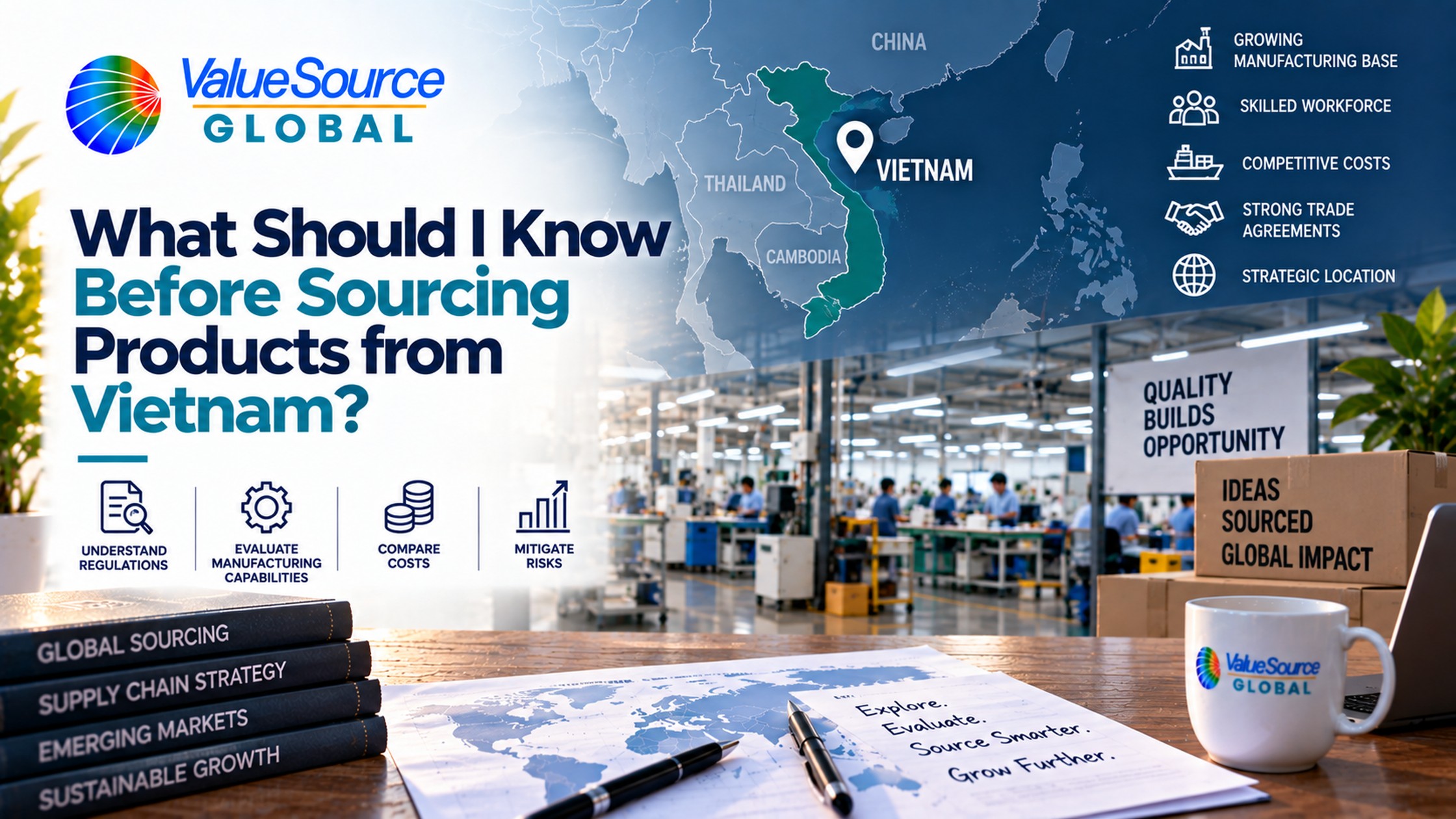

In the rapidly evolving landscape of global supply chains, procurement leaders and operations executives are actively seeking ways to build resilience and optimize costs. Many are looking toward Southeast Asia to diversify their production hubs. If you are evaluating this region for your business, you might be asking yourself exactly what should I know before sourcing products from Vietnam? The answer requires looking past surface level benefits to understand the deep operational realities of a new manufacturing environment.
Vietnam has firmly established itself as a premier destination for global sourcing. The country offers a highly skilled workforce, competitive labor costs, and a government that actively encourages foreign investment. For businesses looking to scale production, these factors are incredibly appealing. However, transitioning a supply chain or establishing a new supplier network requires much more than simply locating a factory on an online directory. It demands a strategic approach to risk mitigation, quality assurance, and long term relationship building.
At Value Source Global, we understand the complexities involved in international procurement. We have spent decades navigating foreign markets and managing comprehensive supply chain strategies. In this guide, we will break down the essential operational insights you need to successfully launch and scale your manufacturing initiatives in Vietnam. You will learn how to anticipate common challenges, establish rigorous quality controls, and build sustainable partnerships that protect your bottom line and drive organizational growth.
TL;DR Quick Takeaways
- Thorough supplier auditing is non-negotiable. Relying on digital storefronts without on the ground verification often leads to quality fade and supply chain disruptions.
- Local expertise drives operational efficiency. Understanding regional manufacturing hubs and navigating local infrastructure are critical for maintaining predictable lead times.
- A dedicated manufacturing partner reduces risk. Embedded advisors like Value Source Global manage contract negotiations, enforce quality standards, and ensure long term production scalability.
Why Do Businesses Face Operational Roadblocks When Expanding to Vietnam?
Expanding your global sourcing footprint presents a wealth of opportunities, but it also introduces significant operational hurdles. Many executives assume they can simply replicate their existing procurement models in a new country. Unfortunately, this approach often leads to costly delays, unpredictable product quality, and strained vendor relationships. Understanding the specific roadblocks within the Vietnamese market is the first step toward building a resilient supply chain strategy.
One of the most prominent challenges is ensuring consistent quality control. When businesses source products overseas without a local presence, they rely heavily on the factory's internal quality assurance processes. This can be a major vulnerability. We frequently see scenarios where a company receives an initial batch of products that meets every specification flawlessly. However, as production scales, subtle variations in raw materials or manufacturing techniques begin to emerge. Without rigorous oversight and continuous inspections, these small deviations compound into significant quality failures. Resolving these issues after the products have shipped across the ocean is incredibly expensive and damages your brand reputation.
Logistical complexities also play a massive role in supply chain disruptions. Vietnam has invested heavily in modernizing its infrastructure, but the rapid influx of foreign manufacturing has put immense pressure on local roads and ports. Companies that are unfamiliar with the nuances of regional logistics often face unexpected delays. For example, a business might secure a fantastic production rate at a facility located far from major export hubs like Ho Chi Minh City or Hai Phong. They soon discover that inland transportation bottlenecks erode their cost savings and ruin their delivery schedules. Proper supply chain mapping must account for these infrastructure realities from day one.
Furthermore, cultural and communication barriers extend far beyond simple language differences. In international trade, clear communication is the foundation of operational efficiency. In Vietnam, business culture places a heavy emphasis on relationship building and mutual respect. Direct confrontation or aggressive negotiation tactics can severely damage supplier trust. Misunderstandings regarding technical specifications, production timelines, or acceptable defect rates are common when teams fail to bridge this cultural gap. Navigating these nuances requires diplomatic negotiation and an intimate understanding of local business etiquette.
Finally, the regulatory and compliance landscape can be intricate. Foreign businesses must navigate complex export laws, labor regulations, and environmental standards. Failing to align with local compliance frameworks can result in shipments being held at customs, severe financial penalties, or total loss of supplier access. Executives must approach the market with a comprehensive risk mitigation strategy that addresses both operational and legal vulnerabilities.
How Do You Build a Resilient and Scalable Manufacturing Strategy?
Overcoming the hurdles of international production requires a systematic, experienced approach. You cannot leave your supply chain to chance. To achieve true cost optimization and operational excellence, you must implement a robust framework that covers every phase of the sourcing lifecycle, from initial vendor selection to final delivery. This requires shifting your mindset from transactional purchasing to strategic partnership development.
The foundation of a strong strategy begins with extensive market research and supplier auditing. It is not enough to review a supplier's website or exchange a few emails. You must conduct deep due diligence. This involves evaluating a facility's production capacity, examining their machinery maintenance logs, and verifying their financial stability. You need to know if the factory you are speaking with is the actual manufacturer or merely a trading company acting as a middleman. Authentic transparency is critical. Industry standards dictate that thorough audits are a mandatory component of global trade. For broader context on international quality standards, you can review the guidelines provided by the International Organization for Standardization, which outlines the benchmarks top tier facilities strive to meet.
What Are the Key Qualities to Look For in a Manufacturing Partner?
- Proven Production Scalability Capability to handle volume increases without sacrificing quality or extending lead times.
- Transparent Quality Assurance Well documented internal inspection processes and a willingness to accommodate third party audits.
- Strong Supply Chain Networks Established relationships with reliable raw material vendors and local logistics providers.
- Financial Stability Solid financial backing to weather market fluctuations and invest in necessary equipment upgrades.
- Clear Communication Protocols Responsive, bilingual management teams that understand international business standards.
https://valuesourceglobal.com/manufacturing-partner Elevating precision and reliability across your entire global supply chain.
How Do You Implement Reliable Quality Assurance?
Once you have identified a capable supplier, establishing a comprehensive quality assurance framework is the next critical step. Quality cannot be an afterthought; it must be engineered into the production process from the very beginning. This starts with creating a detailed product specification document that leaves no room for interpretation. Every material, tolerance, color code, and packaging requirement must be explicitly defined and agreed upon before a single unit is manufactured.
We recommend implementing In Process Quality Control measures alongside final random inspections. Catching a defect during the assembly phase is drastically cheaper and faster to correct than discovering it after the products are boxed and ready for shipping. Establishing Acceptable Quality Limits provides a mathematical, objective standard for evaluating production runs. When both parties agree on these metrics upfront, it eliminates ambiguity and ensures that your supplier network is held accountable to your specific standards.
How Can You Mitigate Logistical and Regulatory Risks?
Supply chain resilience is heavily dependent on how well you manage the movement of your goods. You must account for regional weather patterns, local holidays like Tet which can halt production for weeks, and the dynamic nature of international freight rates. Building buffer inventory into your planning cycles is a practical way to insulate your business from sudden shocks. Furthermore, cultivating relationships with experienced freight forwarders who understand the local customs processes is essential for smooth export operations.
From a legal perspective, you must protect your intellectual property and clearly define liability within your manufacturing agreements. Standard purchase orders are rarely sufficient for complex international manufacturing. You need robust contracts that specify delivery terms, defect resolution protocols, and confidentiality clauses. By addressing these legal and logistical variables proactively, you create a supply chain strategy that is optimized for efficiency and protected against unforeseen disruptions.
How Does Value Source Global Optimize Your Sourcing Operations?
Navigating the intricacies of overseas production demands time, resources, and highly specialized knowledge. For many organizations, attempting to manage this internally diverts focus from their core competencies like product development and sales growth. This is where Value Source Global steps in as your dedicated manufacturing partner. We bridge the gap between your strategic vision and the complex realities of the factory floor, ensuring that your operations are executed flawlessly.
Our approach is rooted in decades of hands on experience. We do not operate as a passive directory or a simple broker; we are an embedded operational advisor. When you partner with Value Source Global, you gain access to our comprehensive end to end manufacturing solutions. We begin by conducting an in depth consultation to understand your exact technical requirements, cost targets, and timeline constraints. Using this data, our local teams execute targeted market research to identify facilities that possess the precise capabilities you need.
Recommended Product: https://valuesourceglobal.com/manufacturing-partner
Comprehensive Supply Chain Management
- Supplier Vetting: Rigorous facility audits that ensure capability and compliance.
- Quality Assurance: On site monitoring to maintain strict product standards.
- Risk Mitigation: Proactive management of logistics and contractual obligations.
"Transitioning our production overseas felt like an insurmountable challenge until we partnered with Value Source Global. They provided the operational clarity and on the ground presence we desperately needed. Their team audited our supplier network, implemented an airtight quality control process, and immediately stabilized our lead times. They are far more than consultants; they are a critical extension of our operations team."
Are You Ready to Secure Your Global Supply Chain?
In conclusion, taking advantage of the tremendous manufacturing opportunities in Southeast Asia requires preparation, insight, and meticulous execution. Answering the question of what should I know before sourcing products from Vietnam involves recognizing the critical balance between cost efficiency and operational stability. Tackling these challenges with a clear strategy is essential for achieving sustainable, long term results.
Our team at Value Source Global embodies the experience and operational intelligence needed to lead you through this complex landscape. We understand the specific friction points of international procurement and are fully equipped to handle them with professionalism and expertise. By choosing to work with an embedded manufacturing partner, you are making a strategic decision that prioritizes supply chain resilience, safety, and scalable success.
We invite you to consider professional implementation as the logical next step in your organizational growth. Let our global sourcing expertise be the foundation of your procurement strategy, providing you with the confidence needed to move forward effectively. Contact Value Source Global today to explore how we can optimize your operations and deliver the measurable business outcomes you require.
Frequently Asked Questions
Why is Vietnam considered a strong alternative for manufacturing?
The country offers a highly skilled labor force, competitive operational costs, and proactive government policies that encourage foreign investment. It has heavily developed its infrastructure to support high volume production across various industries.
How can I ensure my products meet quality standards when manufactured overseas?
Implementing a strict quality assurance framework is vital. This includes defining clear product specifications, conducting in process quality control inspections, and utilizing third party audits to verify that factories adhere to your exact requirements.
What are the biggest risks of sourcing internationally without a local partner?
Businesses often face severe quality fade, unexpected logistical delays, and communication breakdowns. Without a local presence to enforce standards and navigate cultural nuances, minor production issues can quickly escalate into costly supply chain failures.
How does Value Source Global improve the procurement process?
We act as an embedded operational advisor, managing the entire sourcing lifecycle. Our team conducts on the ground supplier audits, negotiates contracts, oversees daily production quality, and optimizes logistics, allowing you to focus on growing your business.
For additional information check out: Supply Chain Optimization Strategies