
How to Get Firm Private Label Quotes for Your Next Budget: A Checklist
What to send private label manufacturers to secure firm quotes. Discover key steps for budget-friendly sourcing!
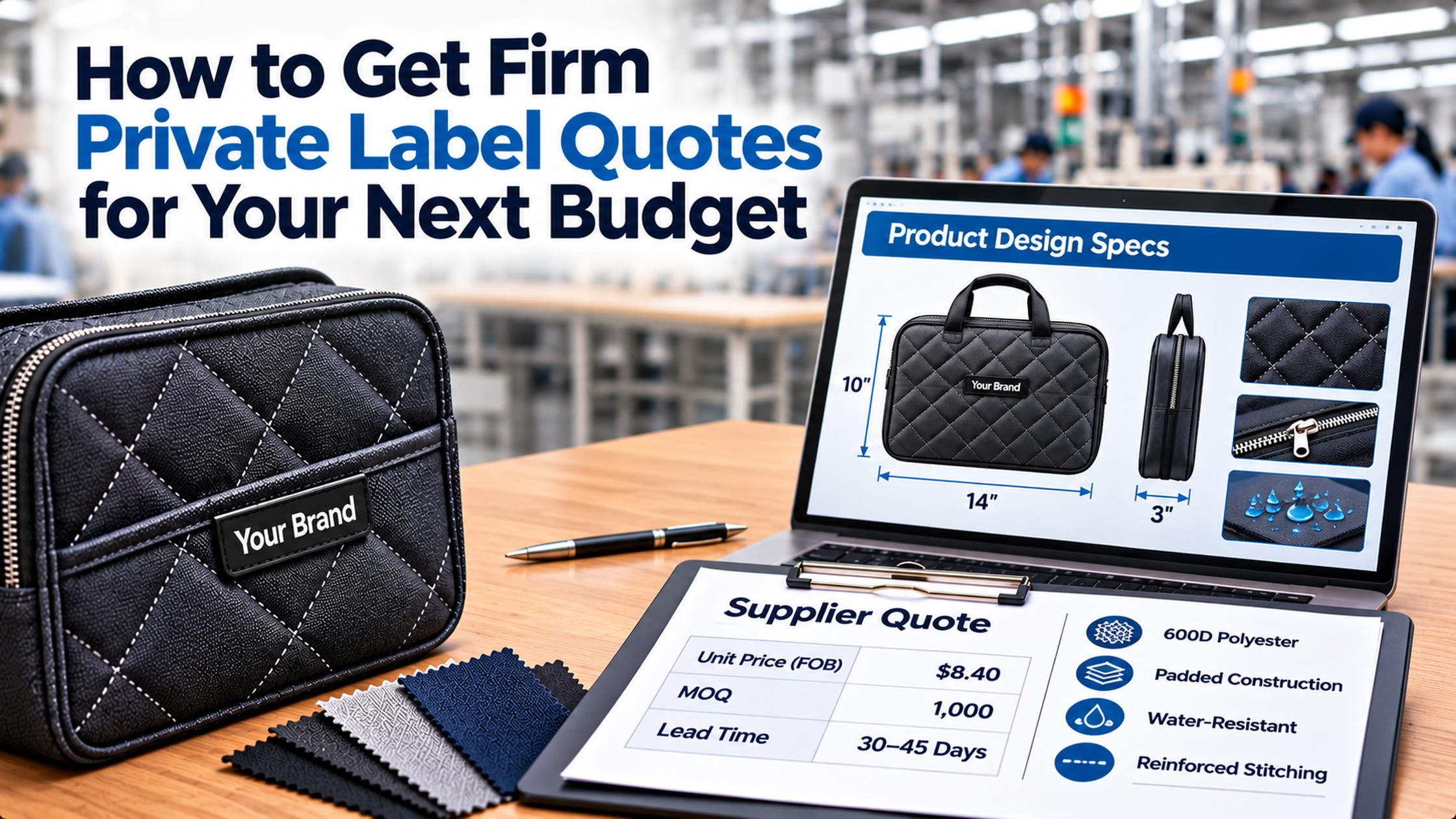


How to Get Firm Private Label Quotes for Your Next Budget: A Checklist
Quick answer: To get firm house brand quotes from private label manufacturers, you need to provide a complete information package. This includes a detailed technical specification sheet (tech pack), defined quality control standards, complete packaging and labeling requirements, projected order volumes, and your target landed cost. Supplying this comprehensive data upfront prevents inaccurate estimates and protects your budget.
As a VP of Operations, Director of Supply Chain, or Head of Procurement, you face constant pressure to protect margins and ensure product quality. With budget season approaching, the need for accurate, reliable quotes from your private label manufacturers isn't just a preference, it's critical for planning. Vague estimates lead to cost overruns, production delays, and difficult conversations with your leadership team. Rising material costs, inconsistent quality from run to run, and over-reliance on a single supplier only add to the pressure.
Getting a firm quote you can build a budget around requires more than sending a simple request. It requires providing manufacturers with a precise, detailed blueprint of your product and expectations. At Value Source Global, we help companies like yours navigate this process. Our direct employees work from wholly owned offices in Vietnam, Thailand, Cambodia, and China, managing the quoting and manufacturing process on the ground. We ensure your detailed specifications are understood and accurately priced, transforming a complex process into a clear path forward.
This guide walks you through the exact information you need to send private label manufacturers to get a firm quote. By following this checklist, you can reduce uncertainty, compare suppliers effectively, and build a sourcing strategy that gives you confidence in your budget for the next fiscal year. Instead of reacting to supply chain surprises, you can proactively manage your costs and quality from the very first step.
TL;DR - Quick Takeaways
• Provide a Complete Tech Pack: A detailed technical package with CAD drawings, a Bill of Materials (BOM), and material specifications is non-negotiable for an accurate quote.
• Define Quality and Packaging Upfront: Clearly state your quality control standards, testing requirements, and all packaging details to avoid unexpected costs later.
• Share Volume and Timeline Targets: Give manufacturers your projected order volumes, target landed cost, and desired delivery schedule so they can price accordingly and confirm capacity.
Why Do Initial Private Label Quotes So Often Miss the Mark?
Initial quotes from private label manufacturers often feel unreliable because they are based on incomplete information. When key details are missing, factories are forced to make assumptions about materials, quality, and logistics. These assumptions create a wide variance in pricing and can lead to significant cost increases once production begins.
As an operations or sourcing leader, you've likely experienced this firsthand. You receive a promising low-cost quote, only to find it doesn't account for essential quality checks, specific packaging, or fluctuating raw material prices. This misalignment doesn't just disrupt your budget; it can delay product launches, compromise quality, and damage your brand's reputation. The root of the problem is often a gap in communication and a lack of granular detail in the initial request for quotation (RFQ).
Relying on a single supplier can further complicate things. Without competitive quotes to benchmark against, you have limited negotiating power and are more exposed to that supplier's potential delays or price hikes. The goal is to move from a transactional request to a strategic one, providing enough detail to get a quote that truly reflects the final, landed cost of your product.
What are the most common business struggles in the quoting process?
• Inaccurate Specifications: Sending vague or incomplete product details is the leading cause of faulty quotes. A request for a "blue plastic handle" is open to interpretation. A request specifying "Pantone 293 C ABS plastic handle, 120mm length, with a textured grip pattern as per CAD file" leaves no room for error.
• Miscommunication Across Cultures and Time Zones: A lack of clear, direct communication channels can lead to misunderstandings about your needs. Without someone on the ground who speaks the local language and understands the manufacturing context, your requirements can be misinterpreted, resulting in misquotes and production errors.
• Ignoring Total Landed Cost: Many businesses focus solely on the per-unit price. This overlooks other critical expenses like logistics, tariffs, customs fees, and quality assurance. A low unit cost can be quickly offset by high shipping or rework costs, leading to major budget overruns.
• Supplier Overdependence: Relying on a single manufacturer for quotes limits your leverage. If that supplier has a production issue or raises prices, your entire product line is at risk. A proactive sourcing strategy involves vetting multiple qualified factories to ensure competitive pricing and supply chain resilience.
For example, a consumer goods company planned to launch a new line of kitchen gadgets. They sent a basic product description to three factories and received quotes that varied by as much as 30%. The lowest bidder had assumed lower-grade stainless steel and minimal packaging. This discovery came only after samples were produced, delaying the launch by a quarter as the company had to restart the RFQ process with a proper technical package.
What Information Do Manufacturers Need for an Accurate Quote?
To get a firm and reliable quote, you must provide manufacturers with a comprehensive request for proposal (RFP) that leaves no room for guesswork. This package should act as a complete blueprint for your product, covering everything from raw materials to final packaging, so that every factory is pricing the exact same item.
Think of this process less like asking for a price and more like providing a set of instructions. The more detailed your instructions, the more accurate the result will be. This upfront work not only secures a better quote but also serves as the foundation for your manufacturing agreement and quality control plan. A strong RFP allows you to compare bids on an apples-to-apples basis and significantly reduces the risk of surprise costs and delays down the line. It's the first and most important step in building a predictable supply chain.
What are the essential documents for a manufacturer quote?
A complete RFP or RFQ package should be organized and professional. It demonstrates that you are a serious partner and helps the manufacturer understand the full scope of the project. Here are the five key elements you must include:
1. The Technical Specification Sheet (Tech Pack)
This is the single most important document. It is the engineering and design core of your product. A thorough tech pack prevents manufacturers from substituting cheaper alternatives or misinterpreting your design intent. It should contain:
• 2D/3D CAD Drawings: Provide detailed drawings with precise dimensions, tolerances, and callouts for all components.
• Bill of Materials (BOM): List every single raw material, component, and piece of hardware required. Specify the exact grade, finish, and supplier if necessary (e.g., "304 Stainless Steel," "YKK zipper").
• Color Specifications: Use a universal system like Pantone (PMS) codes for all colors to ensure consistency across every production run.
• Assembly Instructions: If your product requires assembly, provide clear, step-by-step diagrams or instructions.
2. Quality Control Standards
You cannot expect a manufacturer to meet quality standards you haven't defined. Being explicit about your expectations for quality is crucial for getting an accurate price and protecting your brand. Your quality document should specify:
• Acceptable Quality Limit (AQL): Define the maximum number of acceptable defects per batch. This is a standard industry metric that sets clear expectations for inspections.
• Inspection and Testing Protocols: Detail the tests you require, such as stress tests, waterproof testing, or material composition analysis. Explain when and how these tests should be performed (e.g., during production, pre-shipment).
• First Article Inspection (FAI): State your requirement for a first-off-the-line production sample to be approved by your team before mass production begins.
3. Packaging and Labeling Requirements
Packaging is part of your product and its cost. A manufacturer can't price it correctly without detailed specifications. Surprises in packaging can be expensive and cause shipping problems.
• Retail Packaging: Provide dielines for boxes, artwork files, material specifications (e.g., "350 GSM C1S paperboard"), and any special finishes (e.g., matte lamination, spot UV).
• Labels and Barcodes: Include artwork for all labels, specifying placement, material, and any required information like UPC barcodes or regulatory symbols.
4. Commercial Terms and Volume
The manufacturer needs to understand the business context of your request to provide the best possible pricing. Be transparent about your intended scale and timeline.
• Projected Order Volumes: Provide an estimate of your annual volume and the expected size of your first order (Minimum Order Quantity or MOQ). This helps the factory determine their pricing structure.
• Delivery Timeline: State your target "ex-factory" date (when goods must be ready to ship) or the "in-warehouse" date you need to meet.
• Shipping Terms (Incoterms): Specify the shipping terms, such as FOB (Free on Board) or EXW (Ex Works), so the factory knows what logistics costs to include in their quote.
5. Target Costing
Sharing your target price may feel counterintuitive, but it is a highly effective strategy. It helps the manufacturer quickly determine if they are a good fit and allows them to suggest alternative materials or processes to help you meet your goal.
• Target Unit Cost or Landed Cost: Provide your ideal per-unit cost. If you know it, providing a target landed cost (the total cost to get one unit to your door) is even more powerful, as it forces the quote to account for logistics and tariffs.
How Does On-the-Ground Representation Improve the Quoting Process?
Having your own team on the ground in Asia transforms the quoting process from a remote transaction into a managed, collaborative effort. It bridges communication gaps, allows for in-person factory vetting, and ensures your detailed specifications are fully understood. This direct control helps you secure more accurate quotes and mitigates risk from day one.
Instead of sending your technical package into the void and hoping for the best, an on-the-ground partner like Value Source Global acts as your operational arm. Our direct employees, working from our wholly owned offices across Asia, manage the entire RFQ process for you. They can walk the factory floor, clarify technical questions in the local language, and analyze bids to ensure nothing is lost in translation. This is the difference between simply requesting a price and actively managing your sourcing to achieve a specific outcome.
This hands-on approach provides several key advantages. First, we identify and vet potential factories from our expansive network of suppliers, making sure they've got the right equipment, capacity, and quality record for your specific product. Second, our team can discuss your project in detail with factory engineers, heading off misinterpretations that lead to inaccurate quotes. Finally, we help you analyze the quotes you receive, looking beyond the unit price to calculate a true landed cost and spot any potential red flags. This expertise ensures the quote you approve is the price you actually pay, allowing you to budget with confidence.
What specific advantages does a partner like VSG provide?
• Clear Communication: Our bilingual staff in Vietnam, Thailand, Cambodia, and China communicate your exact requirements to factory management without the risk of cultural or linguistic misinterpretation.
• Factory Vetting: We don't just find suppliers; we qualify them. Our teams assess their production capabilities, quality systems, and financial stability before they are even invited to quote on your product.
• In-Person Clarification: If a factory has a question about your CAD drawing or material spec, our team can be there in person to provide an answer, saving days or weeks of back-and-forth emails.
• Landed Cost Analysis: We help you deconstruct each quote to understand the full cost picture, including materials, labor, overhead, logistics, and duties. This ensures you are making a decision based on the true bottom-line impact.
• Risk Mitigation: By managing the process directly, we spot risks early. Whether it’s a factory that seems to be cutting corners on a quote or a potential supply chain bottleneck, our on-the-ground presence allows us to plan around it. Your product. Our manufacturing expertise. That's how we help you move forward.
What's Your Next Step for a Predictable Sourcing Budget?
The first step to a predictable sourcing budget is preparing a thorough, professional information package before you request a single quote. Getting your technical specifications, quality standards, and commercial requirements in order is the most effective way to eliminate ambiguity and secure firm pricing you can trust for next year's budget.
Vague requests lead to vague answers. A detailed RFP is your best tool for ensuring that every potential manufacturing partner is quoting on the exact same product, built to the exact same standard. While this requires more effort upfront, it saves significant time, money, and frustration by preventing costly surprises during production. It establishes you as a serious, professional buyer and sets the foundation for a strong, long-term manufacturing partnership.
Ultimately, combining a detailed plan with an experienced partner on the ground is the most effective way to manage your global sourcing. A team that can vet factories, clarify specifications in person, and analyze quotes for total landed cost gives you the control and confidence needed to build a resilient and cost-effective supply chain.
Key takeaways:
• A detailed Request for Proposal (RFP) is essential for receiving accurate, comparable quotes from private label manufacturers.
• Your RFP must include a complete tech pack, quality standards, packaging requirements, and commercial terms.
• Partnering with a firm that has its own employees on the ground, like Value Source Global, helps eliminate communication gaps and ensures your specifications are correctly interpreted and priced.
Your next step is to assemble your product's technical information and start building the package that will secure your budget and your brand's future.
Frequently Asked Questions
How is my product design protected when I send it for a quote?
Protecting your intellectual property is crucial. When you work with Value Source Global, we ensure a Non-Disclosure Agreement (NDA) is in place with any factory that views your designs. Our on-the-ground presence also helps monitor and enforce these agreements, and we work with a network of trusted suppliers who have a long history of protecting client IP.
What's the difference between a unit cost and a landed cost?
Unit cost is the price to manufacture one piece of your product at the factory (also known as Ex Works or Free on Board price). Landed cost is the total cost to get that one unit from the factory to your warehouse door. It includes the unit cost plus all shipping, insurance, customs duties, and tariffs. Focusing on landed cost is essential for accurate budgeting.
How long does it typically take to get from quote to first production run?
The timeline varies depending on product complexity, and quoting alone can take anywhere from two to four weeks to compile properly. After that, you'll also need time for sample development and approval through First Article Testing, followed by the first mass production run. A detailed RFP and a responsive partner can help streamline this process.
Check out our other blog for more information.How Do I Find Reliable Private Label Manufacturers? - Insights - Value Source Global
Ready to take the next step? see how we can help, or contact our team to talk through your goals.