
What Needs to Be in Place Before Your First Big Retail Order Ships From a Factory in Asia?
What needs to be in place before your big retail order? Discover essential systems to ensure a successful shipment.

What Needs to Be in Place Before Your First Big Retail Order Ships From a Factory in Asia?
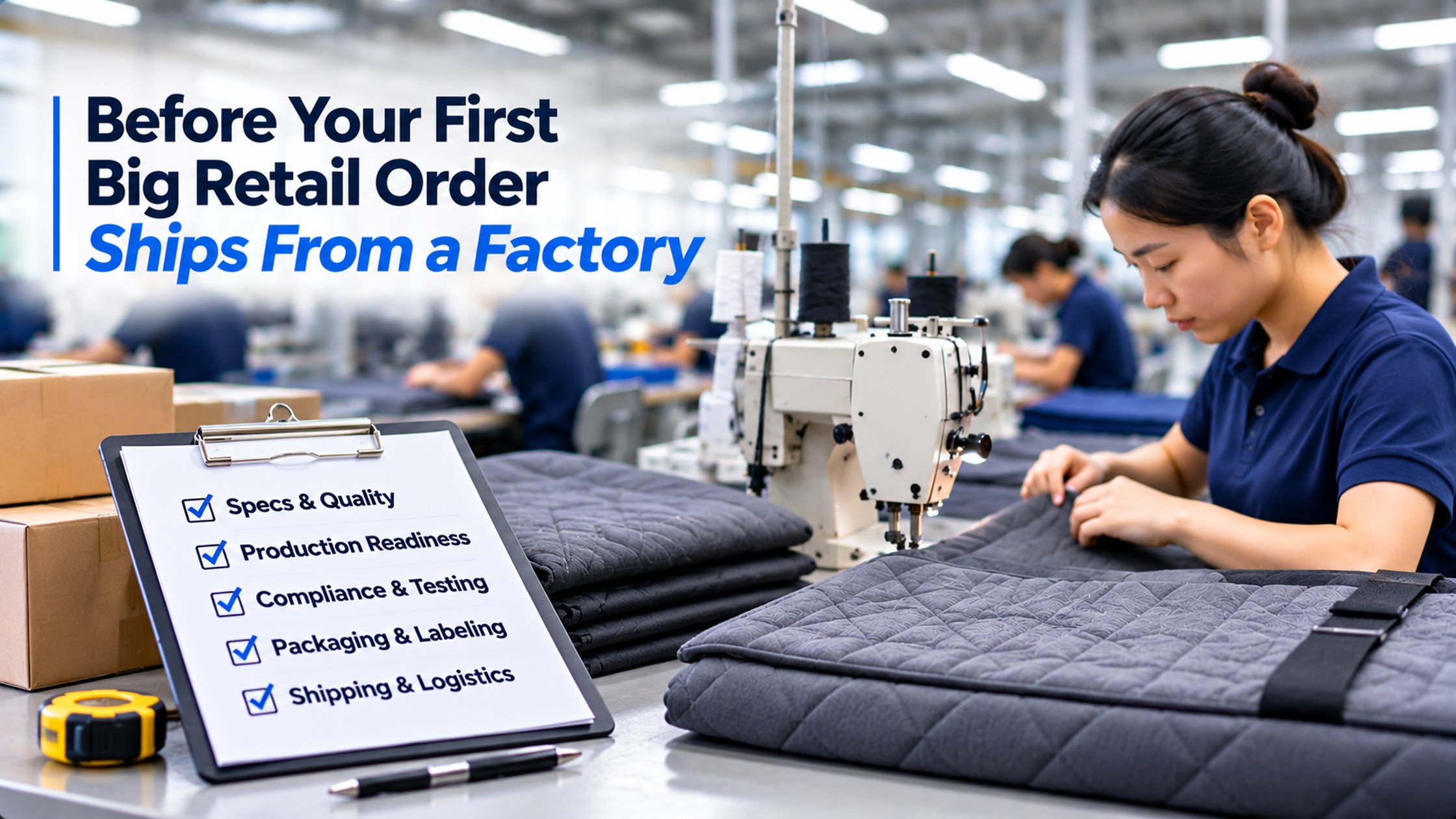
Quick answer: Before your first big retail order ships from Asia, you need a vetted manufacturing partner, a robust on-site quality control plan including First Article Testing, a clear logistics strategy that accounts for total landed cost, and established communication protocols. These elements help prevent costly delays, quality failures, and supply chain disruptions.
Landing your first major retail order is a huge milestone. It’s the moment your product goes from a small-scale operation to the big leagues. But with that opportunity comes immense pressure. The retailer has strict delivery windows and quality standards, and your brand's reputation is on the line. As an operations or sourcing manager, you know that a successful launch depends entirely on what happens thousands of miles away in a factory in Asia.
The challenge is that manufacturing overseas introduces significant variables. You're dealing with different languages, time zones, and business cultures, all while trying to maintain control over your product's quality and timeline. A single misstep, a miscommunicated spec, a failed quality check, or a customs delay, can cascade into a major financial loss and damage your new retail partnership before it even begins. You need a clear, reliable process in place long before that first container is loaded onto a ship.
At Value Source Global (VSG), we see companies navigate this every day. The key is shifting from a reactive to a proactive approach. Instead of hoping for the best, you need direct control over the manufacturing process. With our own employees on the ground in factories across Vietnam, Thailand, Cambodia, and China, we manage your product from quoting and sourcing through production, quality control, and delivery to your door. This article breaks down the essential systems you must have in place to ensure your first big retail order is a success, not a source of stress.
TL;DR - Quick Takeaways
• On-Site Quality Control is Non-Negotiable: You need independent checks, like First Article Testing, performed by your own team or a trusted partner inside the factory, not just the factory's internal QC.
• Logistics Must Be Planned for Total Landed Cost: Don't just look at the per-unit price. Factor in freight, tariffs, customs fees, and potential delays to understand the true cost and protect your margins.
• Supplier Vetting Prevents Future Disasters: A reliable factory partner is your greatest asset. Thoroughly vet their capacity, compliance, and track record before committing to a large production run.
• Clear Communication Frameworks Save Time and Money: Misunderstood specifications are a primary cause of production errors. Establish a clear, documented communication process to bridge language and time zone gaps.
Why is the first large retail order from Asia so risky?
The first large retail order from Asia is risky because it magnifies any small cracks in your supply chain. Minor issues in communication, quality, or logistics that were manageable with smaller runs can become catastrophic failures at scale, leading to significant financial losses and reputational damage with a key customer.
When you're producing a small batch, you might be able to absorb the cost of a few defective units or pay for expedited shipping to fix a delay. But with a retail order for tens of thousands of units, those same problems can wipe out your entire profit margin. A 5% defect rate on an order of 50,000 pieces means 2,500 unsellable products. A two-week shipping delay could mean missing a promotional window, resulting in chargebacks from the retailer and unsold inventory.
The stakes are incredibly high. Retailers operate on tight schedules and have little tolerance for supplier errors. Failing to deliver on time and to spec can get your product pulled from shelves and jeopardize any future business. Imagine a startup clothing brand that secured a deal with a national retailer. They found a factory that promised a low price and fast turnaround. But when the first shipment of 20,000 sweaters arrived, the color was inconsistent across the batch and the sizing was wrong. The retailer rejected the entire shipment, and the brand was left with a warehouse full of defective goods and a broken partnership.
This isn't just a hypothetical. These scenarios happen when companies underestimate the complexities of scaling up production overseas. They might rely solely on the factory's own quality control reports, only to discover issues when the product lands in their warehouse. Or they might overlook the nuances of international trade regulations, leading to goods being held up in customs for weeks. The distance and time difference make it difficult to manage these issues directly, turning a simple question into a multi-day delay. Without a robust system and on-the-ground representation, you're essentially flying blind.
What key systems must be in place before production begins?
Before production begins, you must have four key systems in place: a thorough supplier vetting process, a multi-stage quality control plan, a detailed logistics and landed cost analysis, and a clear communication and intellectual property protection framework. These systems form the foundation for a predictable and successful manufacturing outcome.
Moving from concept to a full-scale retail order requires a disciplined, structured approach. Each of these systems addresses a specific point of failure in the global supply chain. By establishing them upfront, you can spot risks early and plan around them, rather than reacting to problems after they’ve already impacted your timeline and budget.
What are the non-negotiable elements for a successful shipment?
• A Fully Vetted Manufacturing Partner: Your factory isn't just a vendor; they are a critical partner. Your success depends on their ability to deliver consistently.
• An Independent Quality Control Plan: You cannot outsource quality assurance to the same people building the product. You need your own eyes on the line.
• A Comprehensive Logistics Strategy: Getting the product made is only half the battle. Getting it to your customer's distribution center on time and on budget is the other half.
• A Clear Intellectual Property (IP) Protection Protocol: Your design is your most valuable asset. Protecting it is essential for your long-term business health.
How do you properly vet a factory in Asia?
Properly vetting a factory goes far beyond reviewing their website or a few sample products. It requires an in-person assessment of their facilities, a deep dive into their production capacity and existing clients, and verification of their quality management systems and social compliance certifications. You need to confirm they can actually handle the volume and quality your retail partner demands.
Many companies make the mistake of choosing a supplier based on the lowest price per unit. This often leads to working with factories that are not equipped for large, high-stakes orders. A thorough vetting process, conducted by people who understand the local landscape, is crucial. This is where having your own direct employees on the ground is a major advantage. They can visit the factory, speak with the line managers in their own language, and assess the real-world conditions, not just what's presented in a sales deck.
What does a robust quality control plan actually look like?
A robust quality control plan includes multiple checkpoints throughout the manufacturing process, not just a final inspection. It starts with First Article Testing & Approval, where your own team inspects the very first units off the production line to confirm every specification is met before mass production begins. It also includes in-process inspections to catch deviations early and a final pre-shipment inspection to verify the entire order meets your standards before it's paid for and loaded into a container.
Relying on the factory's internal QC is a common but costly mistake. Their priority is output, while your priority is quality. A truly robust plan puts control in your hands. At VSG, our own quality engineers are in the factories conducting these checks. They work for you, ensuring your standards are met at every step. This prevents the disastrous scenario of unboxing a container of defective products thousands of miles away from the factory that made them.
How do you create a reliable logistics and shipping plan?
A reliable logistics plan starts with calculating your total landed cost, which includes the factory price plus shipping, tariffs, insurance, and customs fees. According to logistics experts, preparing an opening order requires careful coordination between your production timeline and shipping schedules. You need to partner with a trusted freight forwarder and ensure all your customs documentation is flawless to avoid delays. A good plan also includes contingency time for potential port congestion or transportation issues.
Many businesses are surprised when their "low-cost" product from Asia ends up being more expensive than planned due to unforeseen logistics costs. Calculating landed cost upfront protects your margins. Furthermore, diversifying your sourcing across different countries, like Vietnam or Thailand, can help you plan around tariff exposure and geopolitical risks that might affect a single region like China. This strategic approach to logistics turns your supply chain into a source of stability, not stress.
How can you protect your product design and intellectual property?
You can protect your product design by working with vetted factories and implementing legal agreements like a Non-Disclosure, Non-Use, and Non-Circumvention (NNN) agreement before sharing any sensitive files. It contractually prevents a factory from becoming your competitor or selling your design to others.
However, legal documents are only one layer of protection. Building a strong, trust based relationship with your manufacturing partner is one important part of safeguarding your IP, alongside ironclad agreements and physical security protocols. Working with a partner like VSG adds another layer of security. Because we've established relationships across a broad, vetted network of suppliers and manage the process with our own employees, your design information is handled within a controlled and accountable system. We ensure that your IP is only shared with the necessary parties for production, helping to keep your unique product safe.
How does VSG de-risk your first major retail shipment?
Value Source Global de-risks your first major retail shipment by replacing uncertainty with control. Our model uses our own direct employees in wholly-owned offices across Asia to manage your entire manufacturing process on the ground, from factory selection and quality control to final delivery to your door.
Instead of you trying to manage a supplier from thousands of miles away, our team becomes your team in the factory. We aren't third-party agents juggling multiple clients; we are a dedicated part of your operational extension. This fundamental difference in structure is how we solve the core challenges of overseas manufacturing and ensure your first retail order is a success.
How do on-the-ground employees ensure quality?
Our direct employees in Vietnam, Thailand, Cambodia, and China are your eyes and ears on the factory floor. They conduct the critical First Article Testing & Approval, stopping production if specs aren't perfect. They perform in-line and final inspections, catching issues before they become part of your finished inventory. Because they are VSG employees, their only priority is protecting your product and your brand. This level of accountability is difficult to achieve when you're relying on a factory's internal team or an independent agent.
How does controlling the process prevent delays and hidden costs?
VSG manages the entire five-step process: quoting, sourcing, production management, quality control, and delivery. This end-to-end control allows us to build realistic timelines and transparent, all-inclusive landed cost quotes. We manage communication with the factory, coordinate with freight forwarders, and handle customs paperwork. By owning the full process, we reduce the communication gaps and logistical missteps that lead to costly delays and surprise fees. You get one clear plan, one point of contact, and a predictable outcome.
How does VSG help you plan around risk?
Every supply chain carries some risk, whether from tariffs, political shifts, or port shutdowns. We help you spot it early and plan around it. Our presence in multiple Asian countries allows us to build resilient supply chains. If one region faces new tariffs or disruptions, we have the network and expertise to help you qualify a second factory in another country without disrupting your deliveries. We don't use hype or fear; we provide calm, practical strategies to protect your margins and ensure continuity of supply, giving you the confidence to grow.
What's the next step to secure your supply chain?
The next step is to implement a structured, proactive manufacturing plan that puts control in your hands. Building a resilient supply chain requires moving beyond a simple transactional relationship with a factory and establishing a true partnership with on-the-ground representation that manages quality, logistics, and communication for you.
Successfully shipping your first major retail order from Asia depends on the systems you put in place long before that container leaves the port. By focusing on diligent supplier vetting, independent quality control, and a comprehensive logistics strategy, you can turn a high-risk event into a predictable, profitable milestone for your company. The key is to have direct oversight and expertise within the factory, bridging the gap between your headquarters and your production line.
Ultimately, your brand's reputation and your relationship with your retail partner are on the line. A proactive approach with a trusted partner doesn't just reduce risk; it creates a competitive advantage, allowing you to scale confidently while protecting your margins and delighting your customers.
Key takeaways:
• Don't rely on the factory to manage its own quality. Implement independent, multi-stage inspections, including First Article Testing.
• Plan for total landed cost, not just the unit price, to protect your profit margins from unexpected shipping and customs fees.
• Having your own team on the ground is one of the most important ways to mitigate risk. Direct employees typically provide a higher, more consistent level of control and accountability than third party agents.
If you're preparing for a major retail order and need a partner to manage the process from quote to your door, tell us about your product.
Frequently Asked Questions
How long does it take to manufacture a product for a large retail order?
The timeline for a large retail order can vary widely, from 60 to 120 days or more, depending on product complexity, material availability, and factory capacity. Planning well in advance is critical to meeting a retailer's delivery window.
Can you help lower my landed cost for retail shipments?
Yes, we help lower your landed cost by optimizing the entire supply chain. This includes sourcing from factories with competitive pricing, selecting manufacturing locations to reduce tariff exposure, consolidating shipments to lower freight costs, and ensuring quality control to reduce the cost of defects and rework. We provide a transparent quote that accounts for all these factors.
How do you ensure quality is right the first time for a big order?
We ensure quality is right the first time through our rigorous First Article Testing & Approval process. Our own VSG employees are in the factory to inspect and approve the first production units against your exact specifications before mass production begins. This step, combined with in-process checks, catches any potential issues at the source, preventing costly mistakes at scale.
Sources
• Preparing Your First Opening Order | Warehouse & 3PL Logistics Encyclopedia
Check out our other blog for more information.How Do I Find Reliable Overseas Manufacturers? - Insights - Value Source Global
Ready to take the next step? see how we can help, or contact our team to talk through your goals.