
How to Solve Multi-Country Supply Chain Challenges
Discover how on-the-ground management can enhance quality and control in your multi-country supply chain. Learn more!
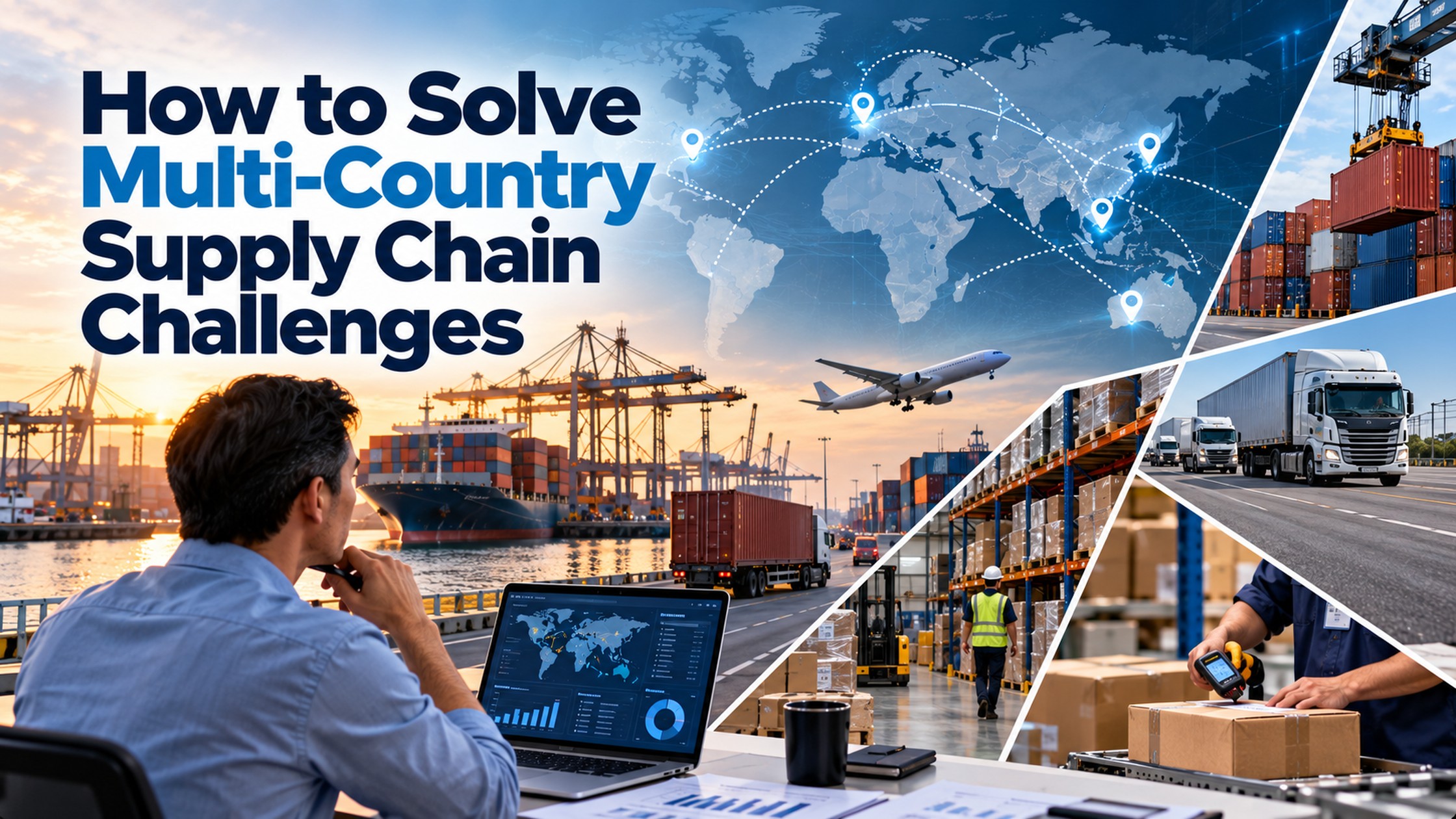

How to Solve Multi-Country Supply Chain Challenges
Quick answer: To resolve multi-country supply chain challenges, you need a strategy centered on direct, on-the-ground management to oversee production, local quality assurance to check goods before they ship, and turnkey operational integration to connect every step. This approach gives you direct control over outcomes, reduces risk, and ensures consistency across different suppliers and regions.
For mid-market manufacturers and growing brands, managing a supply chain that spans multiple countries in Asia is a constant balancing act. You're under pressure to protect margins, but you're dealing with rising costs, inconsistent quality between production runs, and long, unpredictable lead times. When you rely on third-party agents or manage suppliers from thousands of miles away, small issues can quickly become major roadblocks, impacting your profitability and customer satisfaction.
When a bad batch of products arrives, or a key shipment is delayed, the ripple effects are significant. These moments often trigger a search for a better way, a more reliable, transparent, and controlled approach to manufacturing. Resolving these multi-country supply chain challenges requires more than just finding another supplier; it demands a fundamental shift toward on-the-ground management, local quality assurance, and seamless operational integration. This is where Value Source Global (VSG) provides a different model. Instead of relying on outside agents, our own direct employees work from our wholly owned offices in Vietnam, Thailand, Cambodia, and China, managing your product’s entire journey from quoting and sourcing to quality control and delivery to your door.
We will touch on the common failure points in multi-country sourcing and a clear framework for how direct, in-factory oversight can transform your operational efficiency, protect your quality, and give you the control needed to scale with confidence.
TL;DR - Quick Takeaways
• On-the-Ground Staff is Key: The biggest risks in multi-country sourcing come from a lack of direct oversight. Having your own partner's employees in the factory, not third-party agents, is the most effective way to manage quality and timelines.
• Quality Must Be Checked Locally: Waiting until your product lands in your warehouse to find defects is too late. Effective quality assurance, including First Article Testing, must happen at the source, managed by a team that understands your specs.
• Turnkey Integration Reduces Complexity: Juggling different contacts for sourcing, production, and logistics creates communication gaps. A single partner who manages the entire process from quote to your door provides clarity, accountability, and a more resilient supply chain.
What Are the Common Pitfalls of Managing a Multi-Country Supply Chain?
The most common pitfalls of managing a multi-country supply chain are poor supplier management due to a lack of local presence, inadequate quality control processes that lead to defects, and misaligned operations that cause costly delays and communication breakdowns.
Expanding your sourcing across Asia can reduce costs and diversify risk, but it also introduces significant complexity. Without the right structure and oversight, companies often fall into predictable traps that undermine the very benefits they sought. These aren't just logistical headaches; they have a direct impact on your bottom line, brand reputation, and ability to grow.
Let's look at a few realistic failure scenarios that operations and sourcing managers face every day.
Failure Scenario 1: Inconsistent Quality from Poor Supplier Management
You’ve sourced components from two different factories in Southeast Asia. For the first few runs, everything seems fine. Then, a new shipment arrives, and the color is off, the tolerances are wrong, or the material doesn't match the spec. The problem stems from managing the suppliers from afar. Instructions get lost in translation, and there’s no one on the ground to enforce your standards consistently. You’re left with a container of unusable product, and the blame game between you and the distant factory begins.
Failure Scenario 2: Defects Discovered Too Late
Your team sources a finished product from a factory in China. The "golden sample" looked perfect. But when the full container load arrives at your US warehouse, you discover that a significant share of the units have a critical flaw that makes them unsellable. The factory may have switched to a cheaper material or cut a corner in the assembly process to save money. Without your own quality assurance team performing in-person checks during production and before shipment, you had no visibility into the issue until it was too late. Now you have to deal with costly returns, rework, or write-offs.
Failure Scenario 3: Operational Breakdowns and Delays
Your supply chain involves a design team in the US, a parts manufacturer in Vietnam, and an assembly plant in Thailand. Each partner operates on different systems and communication schedules. A slight delay in parts production isn't communicated effectively to the assembly plant, leading to costly idle time on their line. This bottleneck delays your final product’s market entry, causing you to miss a key sales window. This lack of turnkey operational integration means you're constantly chasing updates and putting out fires instead of focusing on strategic growth.
Failure Scenario 4: Unexpected Costs from Tariffs and Regulations
You're operating across multiple countries to mitigate tariff exposure. However, customs regulations and trade policies are constantly changing. A miscalculation in classifying your goods or a failure to comply with a new environmental regulation in one country results in your shipment being held at port, incurring unexpected fees and penalties. Without local experts who understand the nuances of each country's regulatory environment, you're exposed to financial and logistical risks that can erase your cost savings.
How Does an On-the-Ground Presence Solve These Challenges?
An on-the-ground presence solves supply chain challenges by replacing remote management with direct oversight. Having dedicated staff in local factories enables real-time problem-solving, enforces quality standards before shipment, and ensures clear communication, reducing the risk of errors and delays.
The fundamental problem with many global supply chains is the distance, not just in miles, but in communication, culture, and control. Trying to manage complex manufacturing processes via email and periodic visits is inefficient and risky. A dedicated, on-the-ground team acts as your eyes, ears, and hands within the factory, transforming your supply chain from a reactive system to a proactive one.
This model is about more than just having a contact in the same time zone. It's about having direct employees, who work for your manufacturing partner, managing your interests at every stage of production. This direct control is a highly reliable way to help ensure your product is made to spec, on time, and within budget.
Why is local quality assurance so critical?
Local quality assurance is critical because it catches potential issues at the source, before they become expensive problems. Waiting to inspect goods until they arrive at your facility means you've already paid for production and shipping on potentially defective products. This reactive approach leads to wasted time, money, and materials.
An effective quality assurance program, managed by staff on the factory floor, includes several key steps:
• Supplier Vetting: It starts with selecting and vetting factories that have the right equipment, processes, and a proven track record for your type of product.
• In-Process Inspections: Quality checks don't just happen at the end. Staff perform inspections at critical points during the production process to ensure consistency and catch any deviations early.
• Final Pre-Shipment Inspection: A final random inspection is conducted before the goods are packed and loaded for shipment, providing one last check to confirm the entire order meets your standards.
What does 'turnkey operational integration' actually mean for your product?
Turnkey operational integration means having a single, accountable partner manage every step of the manufacturing process for you. Instead of you coordinating between sourcing agents, factories, quality inspectors, and freight forwarders, one team handles it all. For your product, this means a smoother, more transparent journey from concept to delivery.
This integrated approach connects all the moving parts:
• Quoting & Sourcing: Finding the right factory from a network of hundreds of vetted suppliers.
• Production Management: Overseeing timelines, materials, and manufacturing processes.
• Quality Control: Implementing the rigorous checks described above.
• Logistics & Delivery: Managing packaging, customs, and shipping to your door.
When one team is responsible for the entire process, communication flows freely, and accountability is clear. As noted in a guide on managing global supply chains, visibility and communication are key to overcoming complexity. An integrated partner provides that single source of truth, so you always know the status of your product.
How can you manage tariff and regulatory risks effectively?
You can manage tariff and regulatory risks by leveraging local expertise. A partner with wholly owned offices and direct employees in each country of operation possesses deep, current knowledge of the local trade laws, customs procedures, and compliance requirements. This local intelligence is something a third-party agent or a remote team can find very hard to replicate.
This on-the-ground expertise helps you plan around risk. For instance, if you're pursuing a "China Plus One" strategy to reduce tariff exposure, a partner with offices in China as well as in countries like Vietnam and Thailand can help you identify the best location for your specific product. They can provide accurate landed cost analysis that accounts for duties, taxes, and shipping, giving you a clear picture of the true cost before you commit to a factory.
How Does VSG Provide On-the-Ground Management and Control?
Value Source Global provides on-the-ground management through our direct employees who work from our wholly owned offices across Asia. This structure gives you direct control over your supply chain, as our staff manages everything from sourcing and quality control to final delivery.
At VSG, our entire model is built to solve the core challenges of multi-country sourcing. We aren't a sourcing agent or a middleman who passes messages along. We are your dedicated manufacturing partner. Our US-based leadership team, made up of former operators who understand your pressures, works directly with our own staff on the ground in Vietnam, Thailand, Cambodia, and China.
This means when you partner with VSG, you have a team of our employees working on your product inside the factory. They are there to enforce your quality standards, manage production timelines, and solve problems in real-time. This structure is fundamentally different from relying on independent agents and provides a level of transparency and control that is otherwise difficult to achieve.
How do your direct employees ensure quality before goods ship?
Our direct employees ensure quality through a hands-on, multi-step process anchored by our First Article Testing & Approval protocol. Before your product goes into mass production, our team is on the factory floor with your technical specifications, inspecting the first units produced. They verify every detail, dimensions, materials, finish, and function, to ensure the factory’s output matches your requirements perfectly.
This isn't a passive check. If any aspect is not right, we work directly with the factory engineers to correct it on the spot. Only after you’ve approved the First Article sample does full production begin. Throughout the run, our staff continues to perform in-process and final inspections designed to keep the quality of the last unit consistent with the first. This rigorous, in-person process is a highly effective way to help prevent quality issues before they start.
How is your product's design protected?
Your product's design and intellectual property are protected through carefully structured agreements and by working within our vetted network of trusted suppliers. We understand that IP security is a major concern when manufacturing overseas. Our process is designed to safeguard your sensitive information.
We establish clear, enforceable contracts with factories that include non-disclosure and intellectual property clauses. Because we have a long-term presence and relationships in these countries, we work with suppliers who have a proven history of respecting their clients' IP. Our on-the-ground presence also acts as a deterrent, as our staff is there to monitor production and ensure that your designs and tooling are used exclusively for your products.
What does this mean for your landed cost?
Our model helps you achieve a lower and more predictable landed cost. By managing the entire process, we identify and eliminate inefficiencies that drive up expenses. Our extensive network of hundreds of suppliers allows us to find the right factory that can produce your product at a competitive price without sacrificing quality.
Furthermore, our expertise in navigating tariffs and trade regulations helps reduce your exposure to unexpected duties and fees. We can structure your supply chain across different countries to optimize for cost and resilience. By helping prevent quality-related defects, we also help you avoid the high costs associated with rework, scrap, and returns, so the price you were quoted is far more likely to be the price you actually pay.
What's the First Step to Building a More Resilient Supply Chain?
The first step to building a more resilient supply chain is to secure direct, on-the-ground oversight of your manufacturing operations. Gaining this visibility and control allows you to proactively manage quality, timelines, and costs, rather than reacting to problems after the fact.
Navigating the complexities of a multi-country supply chain doesn't have to be a source of constant pressure. The challenges of inconsistent quality, unpredictable lead times, and rising costs are solvable, but they require a shift away from remote management and third-party agents. The solution lies in having a true partner with their own employees on the factory floor, working on your behalf.
By focusing on on-the-ground management, implementing rigorous local quality assurance, and adopting a turnkey approach to operations, you can transform your supply chain from a vulnerability into a competitive advantage. This model provides the control and transparency needed to protect your margins, satisfy your customers, and grow your business with confidence.
Key takeaways:
• Direct control is a key driver of consistent quality. Relying on a partner's own employees in the factory is a highly effective way to help ensure your product is made to spec, run after run.
• Risk management is proactive, not reactive. Having local teams who understand the regulatory and political landscape helps you plan around tariffs and other disruptions.
• A single, integrated partner simplifies complexity. Managing one relationship for your entire manufacturing process, from sourcing to your door, saves time, reduces errors, and provides clear accountability.
If you're ready to gain direct control over your Asian manufacturing, the next step is to talk with a partner who has the people and infrastructure already in place.
Frequently Asked Questions
How long does it take to manufacture a product with a new partner?
The timeline for manufacturing a product with a new partner varies based on complexity, tooling requirements, and material availability. It typically includes phases for supplier sourcing and vetting, First Article Testing and approval, and mass production. A partner with an established process can often shorten this timeline by leveraging a network of pre-vetted factories.
What are the main risks of sourcing from multiple countries in Asia?
The main risks include inconsistent quality control across different factories, communication barriers due to language and time zones, complex logistics, and navigating varied regulatory and tariff environments. A partner with wholly owned offices and direct employees in each country helps mitigate these risks by providing consistent oversight and local expertise.
How does VSG help lower tariff exposure?
Value Source Global helps lower your tariff exposure by providing strategic guidance on where to manufacture your products based on current trade policies. With a presence in China, Vietnam, Thailand, and Cambodia, we can help you implement a "China Plus One" or other diversification strategy, analyzing landed costs to find the most financially advantageous location for your specific goods.
Sources
• Managing a Global Supply Chain: Key Challenges & Strategies
Check out our other blog for more information.How to Execute a China Plus One Strategy for Supply Chain Resilience
Ready to take the next step? see how we can help, or contact our team to talk through your goals.