
What Tariff Strategy Should I Use to Reduce Costs and Protect Margins?
Discover actionable methods to build a resilient supply chain. Learn how strategic tariff management can optimize costs and protect your operational margins.
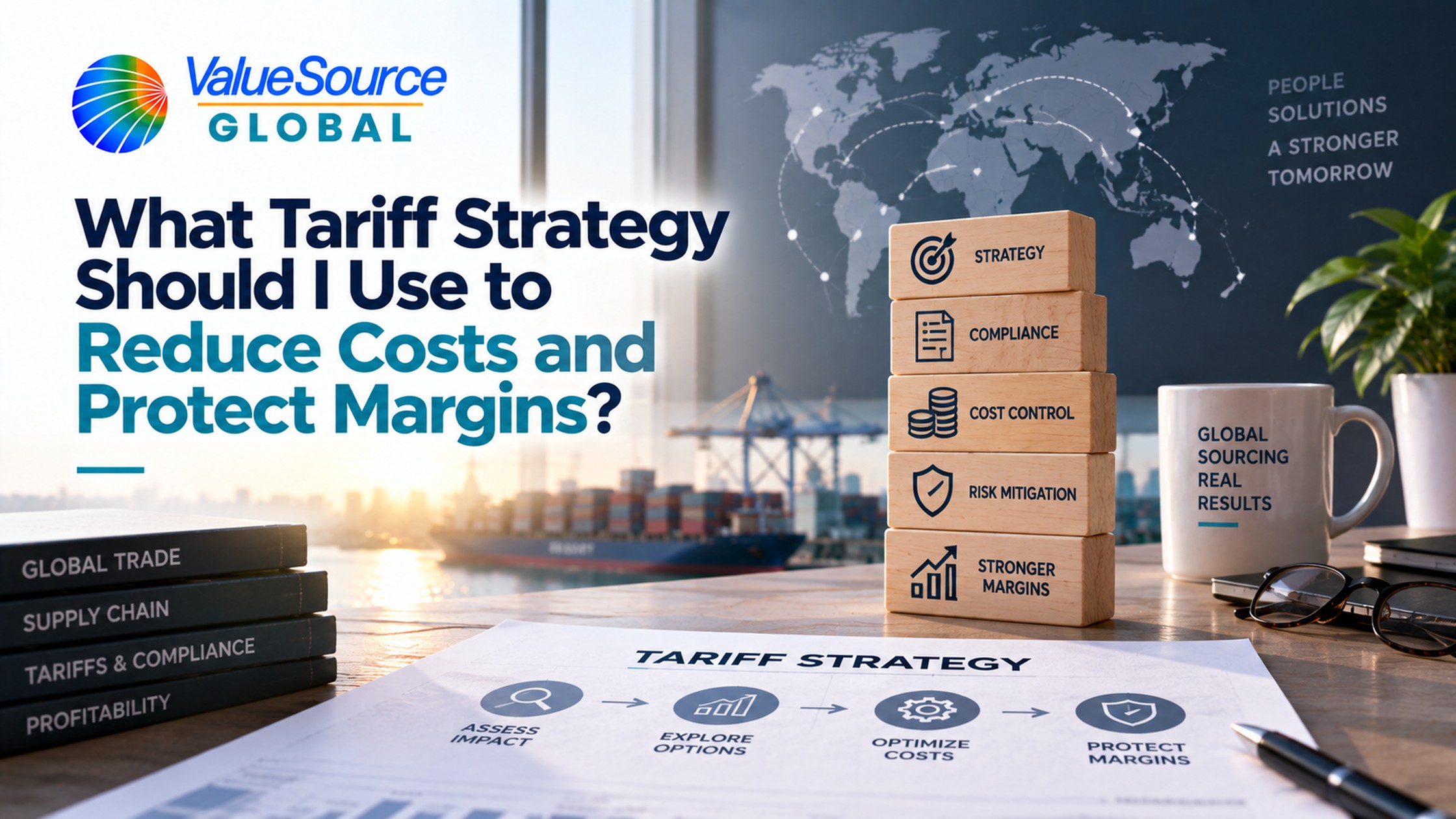


In today's highly volatile global manufacturing environment, procurement leaders are under immense pressure to maintain profitability while navigating a complex landscape of international trade regulations. If you are asking yourself what tariff strategy should I use to reduce costs and protect margins, you are identifying one of the most critical vulnerabilities in modern supply chain management. The constant fluctuations in duties, taxes, and cross border policies have made traditional single region sourcing models increasingly risky. At Value Source Global, we recognize that managing these variables is no longer a peripheral task. It is a central component of operational resilience and long term business growth.
Every decision regarding vendor selection, material sourcing, and production geography carries direct financial implications. When sudden regulatory shifts occur, organizations without a proactive plan often find themselves absorbing unexpected expenses that severely erode their competitive advantage. Developing a comprehensive framework for navigating these barriers requires more than simply reviewing historical data. It demands an active, forward looking approach that integrates geopolitical awareness with practical manufacturing realities. By taking deliberate steps to optimize your global footprint, you can transform regulatory challenges into strategic opportunities.
This comprehensive guide will explore the systemic hurdles that manufacturers face when importing components and finished goods. We will outline practical methodologies for auditing your current trade exposures, diversifying your supplier network, and implementing agile operational practices. By understanding how to structure your procurement operations intelligently, you can secure your supply chain against unforeseen disruptions. Establishing this level of control ensures your business remains cost effective, adaptable, and fully prepared to scale in an unpredictable international market.
TL;DR – Quick Takeaways
- Strategic supplier diversification is critical. Relying on a single manufacturing region exposes your operations to sudden regulatory hikes and operational bottlenecks.
- Accurate classification prevents margin erosion. Regularly auditing your Harmonized System codes ensures you are not overpaying duties on raw materials or finished goods.
- Embedded partnerships drive resilience. Working with an experienced advisory team like Value Source Global provides the operational oversight needed to adapt quickly to changing international trade policies.
Why Are Shifting Trade Policies Creating Vulnerabilities in Global Manufacturing?
The foundational challenge many companies face is an over reliance on legacy sourcing strategies that no longer reflect current economic realities. For decades, manufacturers centralized their production in specific regions to maximize volume discounts and streamline logistics. While this approach previously yielded high cost efficiency, the modern geopolitical climate has exposed severe flaws in placing all operational assets in one geographical basket. When international relations shift, the resulting trade barriers can alter the landed cost of goods practically overnight.
Consider the practical impact on a mid market industrial equipment manufacturer. If eighty percent of their critical subassemblies originate from a single country, a sudden twenty five percent duty hike directly inflates their cost of goods sold. Because consumer markets are highly price sensitive, the manufacturer often cannot pass these entire expenses onto their customers without risking market share. Consequently, the business is forced to absorb the financial blow. This unexpected capital drain restricts their ability to invest in research and development, facility upgrades, or workforce expansion. The ripple effect of a static supply chain strategy ultimately stifles long term corporate growth.
Furthermore, inadequate risk assessment leads to severe logistical friction. Trade barriers are rarely limited to simple financial penalties. They frequently involve increased customs scrutiny, complex documentation requirements, and extensive border delays. When goods are held at the port of entry for extended compliance checks, production schedules are derailed. Factory floors sit idle waiting for necessary components, while downstream distribution centers miss their fulfillment windows. This cascading failure strains relationships with key distributors and tarnishes the brand's reputation for reliability.
Another major operational risk is the failure to build flexibility into supplier contracts. Many organizations lock themselves into rigid, multi year agreements with overseas factories to secure favorable baseline pricing. However, when regulatory environments change, these rigid contracts prevent procurement teams from pivoting to alternative regions. Without clauses that account for force majeure events or sudden taxation shifts, companies find themselves legally bound to unfavorable terms. Recognizing these systemic vulnerabilities is the essential first step toward building a sourcing program capable of withstanding global volatility.
How Do Procurement Leaders Build a Resilient Framework for Duties and Taxes?
Developing a sophisticated approach to global trade requires a systematic methodology that aligns your procurement operations with your financial objectives. The goal is not merely to find the cheapest initial price tag but to optimize the total landed cost while minimizing exposure to sudden regulatory penalties. Achieving this balance involves several interconnected phases of operational restructuring.
The first critical phase is conducting a comprehensive audit of your current product classifications. International customs agencies rely on Harmonized System codes to determine the applicable taxes for imported goods. Surprisingly, many companies utilize outdated or incorrect codes, resulting in substantial overpayments. By working closely with trade compliance experts to reevaluate your product catalog, you can often identify legitimate opportunities for reclassification. Modifying the way a component is imported, perhaps by altering its state of assembly prior to shipment, can legally shift the product into a lower tax bracket. This granular attention to detail serves as an immediate lever for cost reduction.
The second pillar involves geographic diversification. Advanced manufacturing leaders are actively transitioning away from single country dependencies toward multi node supply networks. Strategies such as nearshoring or friendshoring allow companies to distribute their production across regions with favorable trade agreements. For example, relocating specific assembly processes to allied nations can significantly reduce inbound freight costs and eliminate heavy penalties. According to guidelines provided by the World Trade Organization, understanding bilateral and multilateral trade agreements allows businesses to strategically route their supply chains through advantageous territories.
Finally, technology and data analytics must be integrated into daily procurement activities. Modern supply chain management requires real time visibility into emerging geopolitical trends and raw material cost fluctuations. Implementing robust tracking systems enables your team to model various scenarios and predict how impending policy changes will impact profit margins. When you possess accurate forecasting data, you can proactively negotiate new vendor terms or stockpile critical inventory before new tariffs are enacted.
Key Qualities to Look For
When selecting a strategic framework to optimize your international sourcing, it is vital to prioritize attributes that ensure long term stability. The following elements are essential for a reliable Value Generation strategy.
- Proactive Compliance Management
- Dynamic Supplier Network Agility
- Total Landed Cost Transparency
- Operational Scalability
- Embedded Quality Assurance
https://valuesourceglobal.com/value-generation — Strategic sourcing solutions built to protect your bottom line.
Proactive Compliance Management
A robust sourcing program must prioritize adherence to international trade regulations. By maintaining rigorous compliance standards, your business avoids costly border delays, legal penalties, and unexpected duty fees. Proactive management ensures that every component is accurately documented and classified before it leaves the factory floor.
Dynamic Supplier Network Agility
The ability to pivot production between different global regions is the hallmark of a resilient supply chain. Dynamic agility means your operations are not permanently anchored to one location. If geopolitical tensions arise, you possess the established relationships necessary to seamlessly transfer manufacturing volumes to safer, more cost effective territories.
Total Landed Cost Transparency
Evaluating vendor bids based solely on factory gate prices is a critical misstep. A mature strategy demands complete visibility into the total landed cost. This encompasses freight logistics, insurance, warehousing, and all applicable taxes. Transparency ensures that hidden fees do not erode your projected profit margins upon delivery.
Operational Scalability
Your manufacturing strategy should seamlessly grow alongside your market demand. Operational scalability guarantees that your supplier network can handle sudden increases in production volume without sacrificing product integrity or incurring exorbitant rush fees. This flexibility is vital for capturing new market opportunities quickly.
Embedded Quality Assurance
Shifting production to mitigate trade costs should never compromise the quality of your finished goods. Embedded quality assurance means deploying on the ground inspection teams and rigorous testing protocols at the source. This prevents defective products from entering your supply chain, ultimately protecting your brand reputation and minimizing costly returns.
How Does Value Source Global Optimize Your International Production Operations?
Navigating the intricacies of international manufacturing requires more than just theoretical knowledge. It demands hands-on experience and a deeply established network of trusted global partners. At Value Source Global, we position ourselves as an embedded advisor to your procurement and operations teams. We understand the daily realities of factory management, logistics planning, and financial forecasting. Our mission is to transform your supply chain from a vulnerable cost center into a resilient, highly optimized competitive advantage.
Our approach begins with a comprehensive assessment of your existing operational footprint. We meticulously analyze your current vendor contracts, import classifications, and logistical routing. This deep dive allows our experts to identify hidden inefficiencies and areas of unnecessary exposure. We do not offer generic advice. Instead, we architect customized sourcing solutions tailored to the specific demands of your industry, whether you operate in advanced precision machining, consumer electronics, or industrial consumables.
Recommended Product: https://valuesourceglobal.com/value-generation
Optimize Your Global Sourcing Strategy Today
- Supplier Network Diversification: Mitigate regional dependency by expanding your manufacturing footprint.
- Total Landed Cost Reduction: Identify hidden fees and optimize logistics for maximum profitability.
- Continuous Operational Oversight: Rely on embedded experts to manage quality assurance and regulatory compliance.
"Implementing a dynamic trade management system is no longer optional for serious manufacturers. It requires a dedicated partner who understands the operational nuances of the factory floor just as well as they understand international customs compliance. Working with experienced advisors provides the clarity needed to navigate global complexities and secure long term profitability."
Are You Ready to Secure Your Margins and Scale With Confidence?
The global manufacturing landscape will continue to evolve, presenting both formidable challenges and distinct advantages for those prepared to adapt. Understanding what tariff strategy should I use to reduce costs and protect margins is a continuous process of analysis, diversification, and proactive management. Organizations that rely on static, outdated procurement models will inevitably face shrinking profits and operational bottlenecks. Conversely, companies that embrace agile supply chain architectures position themselves for sustainable, long term success.
At Value Source Global, our priority is to equip your business with the strategic intelligence and operational support necessary to thrive in this demanding environment. By auditing your current classifications, diversifying your manufacturing base, and continuously monitoring global trends, we help you absorb market shocks without sacrificing quality or customer satisfaction. Our hands-on expertise ensures that your supply chain functions as a highly efficient engine for growth, rather than a vulnerable liability.
Do not wait for the next wave of regulatory changes to dictate your financial outcomes. By taking decisive action today, you can fortify your procurement operations and confidently project your future revenue. We invite you to explore our comprehensive solutions and discover how a strategic partnership can elevate your international manufacturing capabilities.
Frequently Asked Questions
How frequently should our company audit its product classifications?
It is highly recommended to review your Harmonized System classifications at least annually, or immediately whenever there is a significant design change to your product or a major update in international trade agreements.
Can diversifying our supplier network actually increase initial costs?
While establishing new vendor relationships and tooling up alternative factories requires an upfront investment, this initial expense is vastly outweighed by the long term protection it provides against sudden regulatory penalties and localized supply chain disruptions.
What is the difference between nearshoring and friendshoring?
Nearshoring involves moving production geographically closer to your primary consumer market to reduce freight times. Friendshoring specifically focuses on relocating manufacturing to nations that share strong political and economic alliances with your home country, minimizing geopolitical risks.
How does Value Source Global ensure quality when switching to a new region?
We deploy on the ground engineering and quality assurance teams who audit factory capabilities before production begins. We then implement rigorous, continuous inspection protocols to guarantee that all components meet your exact specifications.
Is it possible to renegotiate existing vendor contracts to account for duty changes?
Yes, experienced procurement advisors can often renegotiate terms to include dynamic pricing clauses or shared risk agreements, ensuring that sudden regulatory expenses are not entirely absorbed by your business.
For additional information check out: Value Source Global Manufacturing Insights