
What Is the Step-By-Step Process for Sourcing a Product?
What is the step-by-step process for sourcing a product? Learn how to reduce risk, protect margins, and scale with confidence.
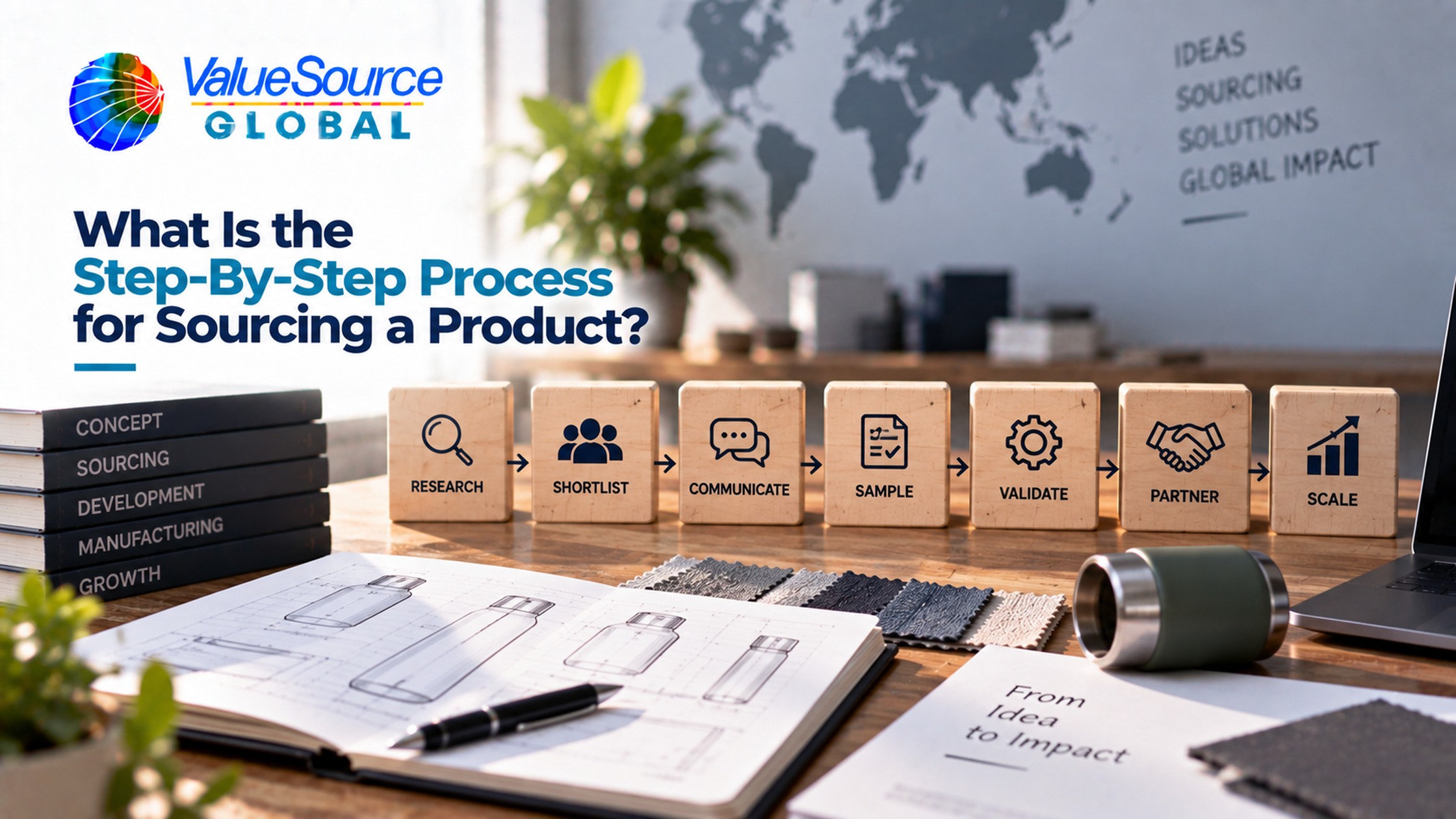

In the complex world of global commerce, sourcing a product effectively can easily be the difference between scaling a successful business and dealing with endless supply chain headaches. Whether you're a budding entrepreneur bringing a new concept to market or a seasoned business leader optimizing an established supply chain, understanding what is the step-by-step process for sourcing a product is absolutely essential. The decisions you make early in this journey will ripple through your entire operation, affecting everything from product quality and brand reputation to your bottom line.
At Value Source Global, we recognize the myriad challenges that businesses face when attempting to navigate international manufacturing. From selecting reliable suppliers and negotiating favorable terms to ensuring strict quality control and maintaining regulatory compliance, every single phase requires meticulous attention. Sourcing a product is more than just a simple transactional purchase. It is a pivotal component of your enterprise value strategy. Oversights can disrupt your supply chain, delay product launches, and severely impact customer satisfaction.
The stakes are incredibly high. The importance of approaching this process with precision and operator-minded discipline cannot be overstated. With the right expertise, you can confidently navigate these global complexities. As you dive into this comprehensive guide, prepare to learn exactly how to build a reliable, high-quality sourcing engine that protects your margins and delivers measurable results.
TL;DR – Quick Takeaways
- A structured sourcing process protects margins and ensures on-time delivery.
- Thorough supplier vetting and cost analysis are critical to avoiding quality failures.
- Partnering with experts like Value Source Global minimizes supply chain risks entirely.
Why Is Sourcing a Product So Challenging?
In today's interconnected global economy, finding the right manufacturing partner is both a critical necessity and a complex operational challenge. You're constantly balancing cost, growth, and customer satisfaction. The primary difficulty stems from the sheer number of variables that must align perfectly to produce a successful outcome. When businesses attempt to manage global sourcing without a structured methodology, they often expose themselves to significant financial and operational risks.
One major hurdle is the lack of transparency in the international marketplace. Finding a factory online is remarkably easy, but verifying that factory's true capabilities is incredibly difficult. Many businesses fall into the trap of superficial research. They might rely on simple internet searches, glossy brochures, or casual recommendations without performing rigorous due diligence. This often leads to engaging with middlemen or trading companies rather than direct manufacturers, which inflates costs and dilutes communication.
Quality fade is another massive challenge that plagues unvetted sourcing arrangements. A supplier might provide a flawless golden sample during the initial negotiation phase. However, once mass production begins, the factory might quietly substitute cheaper materials or cut corners to increase their own margins. If you aren't physically present to monitor the production line, these quality escapes will end up in your warehouse, or worse, in the hands of your paying customers. Delays and quality issues are incredibly expensive to fix after the fact.
Furthermore, businesses frequently ignore the massive complexities of international logistics and regulatory compliance. Overlooking freight variables, changing tariff schedules, and customs documentation can result in unexpected costs that completely wipe out your profit margins. Tariffs and trade rules change fast. If you underestimate these cross-cultural and logistical nuances, you'll likely face devastating delays at the port.
We see teams that are stretched thin trying to manage vendors across multiple time zones while simultaneously trying to grow their domestic sales. When supplier reliability is unclear, your team ends up spending all their time putting out fires instead of focusing on strategic growth. This is exactly why a documented, step-by-step approach to product sourcing isn't just a best practice. It is a fundamental requirement for survival and growth in the modern manufacturing landscape.
What Are the Essential Steps for Sourcing a Product?
Successful product sourcing is determined by a strategic and methodical approach. It requires clear communication, detailed research, and robust negotiation skills. By breaking the process down into actionable steps, you can build a resilient supply chain that delivers consistent, long-term value.
Step 1: Identifying Needs and Specifications
The first and most crucial step in product sourcing is to clearly define exactly what you need. This goes far beyond a simple sketch or a general idea. You must establish comprehensive product specifications, engineering drawings, exact material requirements, and acceptable tolerances. Failure to accurately define these needs leaves room for interpretation, which almost always leads to acquiring products that do not meet your business requirements.
For example, a retail business once misidentified its material specifications due to inadequate technical documentation. The supplier used a slightly different grade of plastic that looked identical but failed under stress testing. This oversight led to a massive product recall, financial losses, and wasted warehouse space. You must lock in your Bill of Materials and ensure your technical data packages are airtight before reaching out to any factory.
Step 2: Searching for and Vetting Suppliers
Once your specifications are locked down, you must identify potential suppliers who possess the actual capacity and capability to meet your exact requirements. A thorough vetting process is absolutely essential. This involves analyzing the supplier's manufacturing history, financial health, existing customer base, and physical facilities. You aren't just looking for someone who can make the product once. You need a reliable partner capable of scaling with your business.
Consider the scenario of a consumer electronics company that hurriedly chose a supplier based solely on the lowest initial quote. They skipped the facility audit. It turned out the supplier was outsourcing the complex assembly work to an unvetted third-party workshop, leading to massive delivery delays and defective components. This completely strained customer trust and hurt the brand's reputation permanently. Boots on the ground and thorough facility audits prevent these disasters.
Step 3: Cost Analysis and Negotiation
After identifying capable suppliers, you must conduct a detailed cost analysis and enter strategic negotiations. This step determines the true financial viability of your sourcing strategy. It is critical to understand your Total Landed Cost, which includes not just the unit price, but also freight, duties, tariffs, packaging, and insurance. Balancing cost considerations with required quality standards ensures you obtain maximum enterprise value without compromising on safety or performance.
We often see startups overestimate their negotiation leverage, resulting in purchasing agreements that look good on paper but include hidden fees or unfavorable payment terms. A lack of operational experience during negotiation can hamper your scaling plans. Effective negotiation secures favorable terms on lead times, minimum order quantities, and quality standards.
Step 4: Contract Development
Contracts establish the formal, binding agreement between you and the manufacturer. They should clearly outline all technical expectations, delivery schedules, payment terms, and strict accountability measures. A strong contract protects your intellectual property through Non-Disclosure and Non-Compete clauses while outlining exact penalties for late shipments or quality failures.
A common mistake occurs when businesses overlook the importance of penalty clauses. If a supplier fails to meet a critical holiday delivery schedule and there is no financial penalty outlined in the contract, you have no leverage. Clear, enforceable contracts ensure that both parties have shared expectations and shared accountability.
Step 5: Managing and Evaluating Supplier Relationships
Sourcing does not end once the purchase order is issued. Effective management of supplier relationships ensures that initial agreements are honored and production expectations are met continuously. Ongoing evaluation, regular pre-shipment inspections, and constant communication help address minor issues before they become catastrophic failures.
According to experts at the American Society for Quality (ASQ), rigorous and continuous supplier quality management is foundational to reducing long-term defect rates and driving operational excellence. Regular audits and performance scorecards keep your manufacturing partners accountable and focused on continuous improvement.
Key Qualities to Look For
When executing the step-by-step process for sourcing a product, the caliber of the supplier you choose will dictate your success. Not all factories are created equal. You need to identify specific traits that signal reliability, competence, and a commitment to long-term partnership.
- Proven Manufacturing Expertise and Technical Capability
- Transparent Communication and Responsiveness
- Robust In-House Quality Assurance Protocols
- Financial Stability and Scalability
- Commitment to Ethical Compliance and Risk Mitigation
https://valuesourceglobal.com/value-generation — Trusted manufacturing partnerships that deliver measurable enterprise value.
Proven Manufacturing Expertise and Technical Capability
You need a partner who has successfully manufactured products similar to yours. They must possess the right machinery, engineering talent, and operational workflows. A supplier with deep technical expertise can often suggest minor design modifications that significantly reduce production costs without sacrificing quality. Their experience becomes your competitive advantage.
Transparent Communication and Responsiveness
Time zones and language barriers can complicate global sourcing. The best suppliers prioritize clear, proactive communication. They don't hide problems. If a raw material shortage occurs, a transparent partner will notify you immediately and present alternative solutions. You want a manufacturer who acts as an extension of your own team, not a black box where purchase orders go in and unpredictable shipments come out.
Robust In-House Quality Assurance Protocols
Quality cannot be inspected into a product at the very end of the line. It must be built into the process. Look for suppliers who maintain internationally recognized quality management certifications. They should have dedicated quality control inspectors checking raw materials, monitoring the assembly line, and performing rigorous final testing before anything is packed for shipment.
Financial Stability and Scalability
Your business is going to grow, and you need a manufacturer who can grow with you. Financially stable suppliers can invest in new equipment, hire skilled labor, and purchase raw materials in bulk to secure better pricing. If a factory is struggling financially, they are highly likely to cut corners on your production run to stay afloat.
Commitment to Ethical Compliance and Risk Mitigation
Modern consumers demand ethical sourcing. You must partner with suppliers who maintain safe working conditions, offer fair labor practices, and comply with environmental regulations. Furthermore, they should actively participate in risk mitigation strategies, helping you navigate shifting tariffs and global supply chain disruptions with confidence.
How Can Value Source Global Improve Your Sourcing Outcomes?
We know that navigating the complexities of international manufacturing is incredibly taxing on your internal resources. At Value Source Global, we exist to make global sourcing feel clear, safe, and entirely results-driven. We are not just a transactional sourcing agent. We are your dedicated manufacturing partner, built to help you scale your products with absolute confidence.
Our comprehensive Value Generation service takes the guesswork out of the step-by-step process for sourcing a product. We utilize our wholly-owned offices and place our own experienced personnel directly on the factory floors. This operator-minded approach means we aren't just passing along emails from a broker. We are physically auditing facilities, negotiating pricing based on deep market knowledge, and enforcing strict quality control protocols on your behalf.
Recommended Product: https://valuesourceglobal.com/value-generation
Transform Your Supply Chain with Value Generation
- End-to-End Supplier Vetting: Eliminate risk by partnering only with audited, capable manufacturers.
- On-the-Ground Quality Control: Ensure every shipment meets your exact specifications before it leaves the factory.
- Strategic Cost Reduction: Optimize your total landed cost through expert negotiation and logistical planning.
What Are Customers Saying About Us?
We pride ourselves on building long-term, trusted relationships with the businesses we serve. Our clients frequently come to us feeling overwhelmed by the opaque nature of overseas manufacturing. They need a partner who speaks plainly, understands operational reality, and delivers on their promises.
One of our recent partners summarized their experience perfectly: "We needed a partner we could trust. Our internal team was stretched thin, and we were dealing with constant delays and quality inconsistencies from our previous vendors. We wanted fewer surprises and much better communication. Value Source Global stepped in, audited our supply chain, and built a comprehensive execution plan. They helped us reduce our tariff exposure, protect our margins, and finally get our product shipments arriving on time and perfectly to spec. They act like a true extension of our own company."
This is the exact level of service and dedication you can expect when you bring Value Source Global into your supply chain operations.
Are You Ready to Optimize Your Sourcing Strategy?
Understanding the step-by-step process for sourcing a product is just the beginning. Executing that process flawlessly in a volatile global market requires deep experience, local presence, and an unwavering commitment to quality. Missteps in finding suppliers, negotiating contracts, or managing quality control can introduce severe operational bottlenecks and erode your hard-earned market share.
You don't have to navigate these treacherous waters alone. By choosing a professional, dedicated partner like Value Source Global, you are securing a tailor-made approach that caters to the unique demands of your specific industry. We provide the best practices, advanced risk mitigation methodologies, and transparent communication required to completely transform your sourcing operations.
If you're ready to lower your landed costs, eliminate quality escapes, and scale your business with absolute confidence, it's time to take action. Let us help you build a resilient supply chain that drives real enterprise value. Contact us today and let's get started on optimizing your manufacturing future.
Frequently Asked Questions
What is the most critical step in sourcing a product?
While every step matters, identifying your exact needs and creating detailed technical specifications is often the most critical. If your initial product documentation is flawed or vague, every subsequent step, from supplier vetting to quality control, will be compromised.
How can I protect my intellectual property when sourcing globally?
Protecting your IP requires a combination of strong legal frameworks, such as Non-Disclosure, Non-Use, and Non-Circumvention (NNN) agreements, alongside careful vetting of the factory's track record. Partnering with an experienced sourcing firm ensures these legal protections are locally enforceable.
Why is Total Landed Cost more important than unit price?
The factory unit price is only a fraction of what you will actually pay to get the product into your warehouse. Total Landed Cost includes freight, insurance, customs duties, tariffs, and inland transportation. Focusing only on unit price often leads to unexpected expenses that destroy profit margins.
How often should I audit my manufacturing partners?
You should conduct an initial audit before signing any contracts, followed by regular annual or bi-annual audits depending on your production volume. Additionally, implementing third-party pre-shipment inspections on every major order ensures consistent quality over time.
For additional information check out: Strategic Sourcing and Supply Chain Management Resources