
What Impact Do Tariffs Have on Supply Chain Costs, Lead Times, and Profitability?
Discover how tariffs impact supply chain costs, lead times, and profitability. Value Source Global shares operational strategies to build resilience.

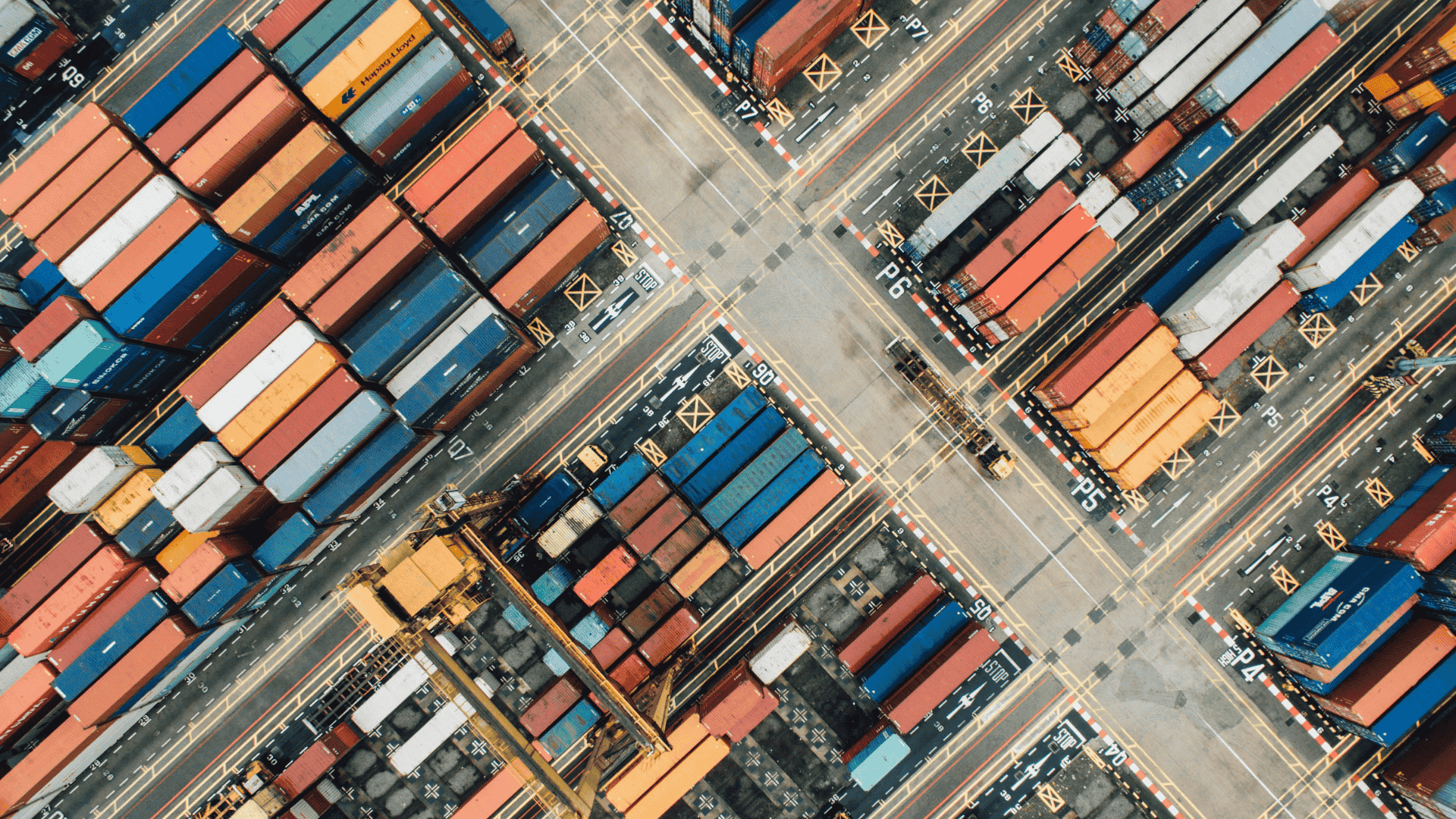

The global manufacturing landscape is shifting rapidly. With evolving trade policies and rising geopolitical tensions, operations executives are consistently asking one critical question: what impact do tariffs have on supply chain costs, lead times and profitability? It is a complex issue that requires far more than surface level adjustments to navigate successfully.
Tariffs are no longer just an abstract macroeconomic policy discussed in boardrooms. They are an immediate operational reality that procurement leaders and factory directors must manage on a daily basis. When import taxes increase, the ripple effect across the entire supply chain is immediate and severe. Profit margins tighten instantly. Lead times stretch as logistics teams scramble to reroute shipments or onboard untested secondary suppliers. The predictability that modern manufacturing relies upon begins to fracture, forcing businesses into reactive, costly postures.
In this comprehensive guide, we'll unpack the exact mechanisms by which tariffs disrupt global sourcing. You'll learn how shifting trade costs create friction in your daily operations and, more importantly, how to build a resilient sourcing strategy that protects your margins. Value Source Global has spent decades navigating complex international trade environments. We'll share the practical, field tested frameworks necessary to stabilize your supply chain and secure long term growth.
TL;DR – Quick Takeaways
- Tariffs directly inflate material costs and erode profit margins unless businesses strategically diversify their global supplier networks.
- Sudden trade policy shifts disrupt logistics operations, leading to unpredictable lead times and forcing companies into costly inventory holding patterns.
- Value Source Global builds resilient supply chain strategies that mitigate tariff risks through structured sourcing and continuous operational optimization.
How Do Sudden Tariff Increases Disrupt Daily Operations?
Tariffs represent a sudden and often unpredictable tax imposed on imported goods. While governments utilize them to protect domestic industries or leverage international trade negotiations, the reality on the factory floor is quite different. For companies relying heavily on global supply chains, a new tariff schedule means an immediate spike in the landed cost of raw materials, components, and finished goods.
Consider a mid sized electronics manufacturer that relies heavily on a single overseas region for specialized circuit boards. If a twenty percent tariff is announced overnight, their cost of goods sold increases drastically. Absorbing that cost completely wipes out their quarterly profit margins. On the other hand, passing the cost onto the consumer risks significant market share loss to competitors who possess more diversified sourcing networks. This is the operational bind that so many businesses find themselves in when trade policies shift.
Why Are Lead Times So Vulnerable to Trade Disputes?
The logistical impact of tariffs is equally severe and often more difficult to manage than the financial hit. When tariffs hit, companies predictably attempt to move production to non tariffed regions or change shipping routes to avoid expensive customs bottlenecks. This mass scramble creates massive congestion at alternative ports and overwhelms secondary suppliers who lack the capacity to handle sudden influxes of orders.
A standard lead time that was consistently forty five days can easily stretch to ninety or one hundred and twenty days. This unpredictability effectively destroys just in time inventory models, forcing companies to hold excessive buffer stock. Holding additional stock ties up critical working capital, increases warehousing costs, and exposes the business to higher risks of inventory obsolescence. When capital is trapped in a warehouse, it can't be deployed for research, development, or market expansion.
The broader business consequence here is vulnerability through over reliance. When operations leaders fail to plan for tariff scenarios, they're left reacting to crises rather than executing a well thought out strategy. This reactive posture damages supplier relationships and ultimately degrades product quality as procurement teams rush to find cheaper, unvetted alternatives just to keep the assembly lines moving. Navigating these turbulent waters requires foresight, agility, and a deep understanding of how global sourcing networks truly operate under stress.
What Are the Core Mechanisms of Tariff Driven Supply Chain Disruption?
To truly understand how to fortify your operations, we must examine the mechanics of how tariffs infiltrate every level of a business. The financial burden is the most visible outcome, but the systemic friction requires a much deeper look. According to supply chain resilience research published by authorities like the Harvard Business Review, companies that fail to map their extended supplier networks are consistently caught off guard when sudden trade disruptions occur.
The disruption typically follows a specific timeline. First comes the initial cost shock. Procurement teams are forced to immediately recalculate margins. Second is the scramble for alternatives. Companies begin aggressively auditing suppliers in unaffected countries. Third is the quality control drop. Rapidly onboarding new factories without proper auditing inevitably leads to defective production runs. Finally, the logistical bottleneck occurs as entire industries attempt to route shipments through new, unprepared trade corridors.
Building resilience requires moving away from the assumption that the cheapest per unit cost is the most efficient choice. True operational efficiency factors in the cost of risk. By developing a sophisticated understanding of regional manufacturing strengths and international trade agreements, companies can build a network that absorbs macroeconomic shocks gracefully.
Key Qualities to Look For
When developing a robust sourcing strategy to combat tariff volatility, there are several core competencies you must build into your organization or seek out in a manufacturing partner.
- Strategic Supplier Diversification
- Proactive Cost Management
- Operational Flexibility
- Robust Quality Assurance
- Embedded Supply Chain Visibility
https://valuesourceglobal.com/value-generation Stabilize operations and protect your margins with strategic global sourcing.
Strategic Supplier Diversification
Relying on a single factory or a single country is a massive operational vulnerability in today's climate. A robust sourcing strategy involves identifying, auditing, and qualifying secondary and tertiary suppliers across completely different geographic regions. This geographic dispersion creates a natural operational hedge against targeted tariffs and localized supply chain disruptions. If one region becomes financially unviable due to new taxes, production can be cleanly shifted to an existing, fully vetted partner.
Proactive Cost Management
It isn't enough to simply react to price increases as they happen. Experienced procurement teams utilize predictive analytics and thorough cost modeling to understand the potential impact of tariffs long before they are officially enacted. By carefully dissecting the cost of goods into raw materials, labor, factory overhead, and logistics, companies can identify specific areas where internal efficiencies can offset external tariff impacts.
Operational Flexibility
A rigid supply chain will always break under pressure. Flexibility means having supplier contracts that allow for dynamic volume adjustments. It means partnering with logistics providers capable of rerouting shipments dynamically while still at sea. It also means designing manufacturing processes and tooling that can easily be transferred between certified facilities without requiring months of recalibration.
Robust Quality Assurance
When shifting production to avoid tariffs, the greatest hidden risk is a catastrophic drop in product quality. Maintaining rigorous, standardized quality control protocols across all new and existing suppliers ensures that your cost saving measures don't result in defective products. Brand damage from poor quality is often far more expensive than the tariff itself. Establishing an on the ground engineering presence at the factory level is critical.
Embedded Supply Chain Visibility
You cannot manage what you cannot see. Complete transparency into Tier one, Tier two, and Tier three suppliers is absolutely vital. Knowing exactly where every raw component originates allows operations leaders to anticipate which specific product lines will be affected by emerging trade policies. Without this visibility, companies are flying blind during trade disputes.
How Can Companies Realign Their Inventory Strategies?
The traditional approach of maintaining razor thin inventory margins is fundamentally incompatible with volatile trade environments. We're seeing a massive industry shift from Just in Time inventory models to Just in Case models. While this does require more working capital, the cost of holding strategic buffer stock is often significantly lower than the cost of halting a production line or air freighting heavy components to meet customer deadlines.
Additionally, forward thinking businesses are exploring nearshoring and friendshoring. By building manufacturing relationships in countries that share stable, long standing trade agreements with their primary markets, companies dramatically reduce their exposure to sudden tariff hikes. This geographic repositioning doesn't happen overnight, but it is a necessary evolution for companies that want to remain competitive over the next decade.
How Does Value Source Global Protect Operations from Tariff Volatility?
Addressing the complex challenges of international tariffs requires an expert touch and a highly structured approach. Value Source Global serves as an embedded operational advisor for businesses navigating these turbulent waters. We don't just consult on strategy; we execute it on the factory floor. Our Value Generation services offer a comprehensive framework to mitigate the multifaceted challenges posed by shifting trade policies, ensuring that your business operates efficiently and profitably regardless of the macroeconomic climate.
Our approach begins with a comprehensive, microscopic analysis of your current supply chain framework. We evaluate exactly how current and potential tariffs are affecting your landed costs, lead times, and overall profitability. From there, we don't offer generic advice. We develop a tailored strategy that reflects the unique nuances of your industry and product lines. This includes identifying high risk SKUs and mapping out a detailed diversification roadmap.
Recommended Product: https://valuesourceglobal.com/value-generation
Optimize Your Global Sourcing Strategy to Protect Profit Margins
- Comprehensive Network Analysis: Identify vulnerabilities in your current supply chain and calculate exact tariff exposure.
- Strategic Supplier Diversification: Seamlessly transition production to vetted facilities in tariff favorable regions without sacrificing quality.
- Proactive Cost Mitigation: Streamline logistics and manufacturing processes to offset external tax burdens and protect your bottom line.
By optimizing your global supply chain with our Value Generation services, you position your business to dynamically respond to market changes. This flexibility provides a massive competitive advantage over organizations that remain anchored to outdated, rigid sourcing models. We turn potential operational crises into opportunities for long term structural improvement.
"Value Source Global transformed our approach to international procurement. When new tariffs threatened to eliminate our margins, their team rapidly deployed a diversification strategy that stabilized our costs and improved our overall product quality. They operate like a true extension of our own company."
Operations Director, Industrial Manufacturing Sector
Are You Ready to Fortify Your Supply Chain?
Addressing the complexities of international trade requires precision, deep expertise, and a commitment to operational excellence. Tariffs will continue to be an unavoidable reality of the modern global economy. Businesses that view them merely as unavoidable taxes will continually struggle to maintain profitability and reliable lead times. Conversely, operations leaders who proactively build agile, diversified supply chains will turn these macroeconomic challenges into distinct competitive advantages.
Navigating these issues successfully requires a trusted partner with a proven track record on the factory floor. With Value Source Global, you gain access to an experienced team equipped with the knowledge, the international network, and the operational tools necessary to deliver scalable sourcing frameworks. We understand the intricacies of raw material procurement, factory floor quality control, and international freight logistics.
Taking the next step to secure your manufacturing processes is a smart investment in your company's long term stability. Trust in our proven Value Generation methodology and allow us to partner with you in building an optimal, resilient supply chain. With Value Source Global embedded in your operations, you can move forward confidently, knowing your margins are protected and your supply chain is secure.
Frequently Asked Questions
What impact do tariffs have on supply chain costs lead times and profitability?
Tariffs act as an immediate tax on imported goods, directly inflating the cost of materials and finished products. If these costs cannot be offset by internal efficiencies or passed to the consumer, profitability drops. Additionally, companies scrambling to find non tariffed suppliers often create severe logistical bottlenecks, dramatically extending lead times.
How quickly can new tariffs disrupt my current manufacturing operations?
The disruption is almost immediate. While there is usually a short grace period before a policy is enacted, the logistical scramble begins the day the tariff is announced. Freight costs typically spike, and secondary suppliers are quickly overwhelmed with new orders, causing instant delays across the industry.
What is the most effective way to avoid tariff related delays?
The best defense is proactive supplier diversification. By auditing and qualifying secondary manufacturing partners in multiple geographic regions before a crisis occurs, you can cleanly shift production volumes without suffering the delays associated with rushing to onboard unknown factories.
Does Value Source Global help identify alternative manufacturing regions?
Yes. Value Source Global specializes in mapping your supply chain vulnerabilities and identifying qualified, vetted manufacturing partners in regions that offer more favorable trade agreements and stable operational environments.
Can I maintain product quality if I move production to avoid tariffs?
Maintaining quality is entirely possible, but it requires rigorous oversight. Transitioning production must be handled methodically, utilizing pilot batches and strict engineering controls. Partnering with experienced sourcing professionals ensures that cost saving moves do not result in defective product runs.
For additional information check out: Value Source Global Operational Insights