
Should I Reconfigure My Product to Help Save Cost?
Discover strategic approaches to product reconfiguration, risk mitigation, and cost optimization with experienced guidance from Value Source Global.
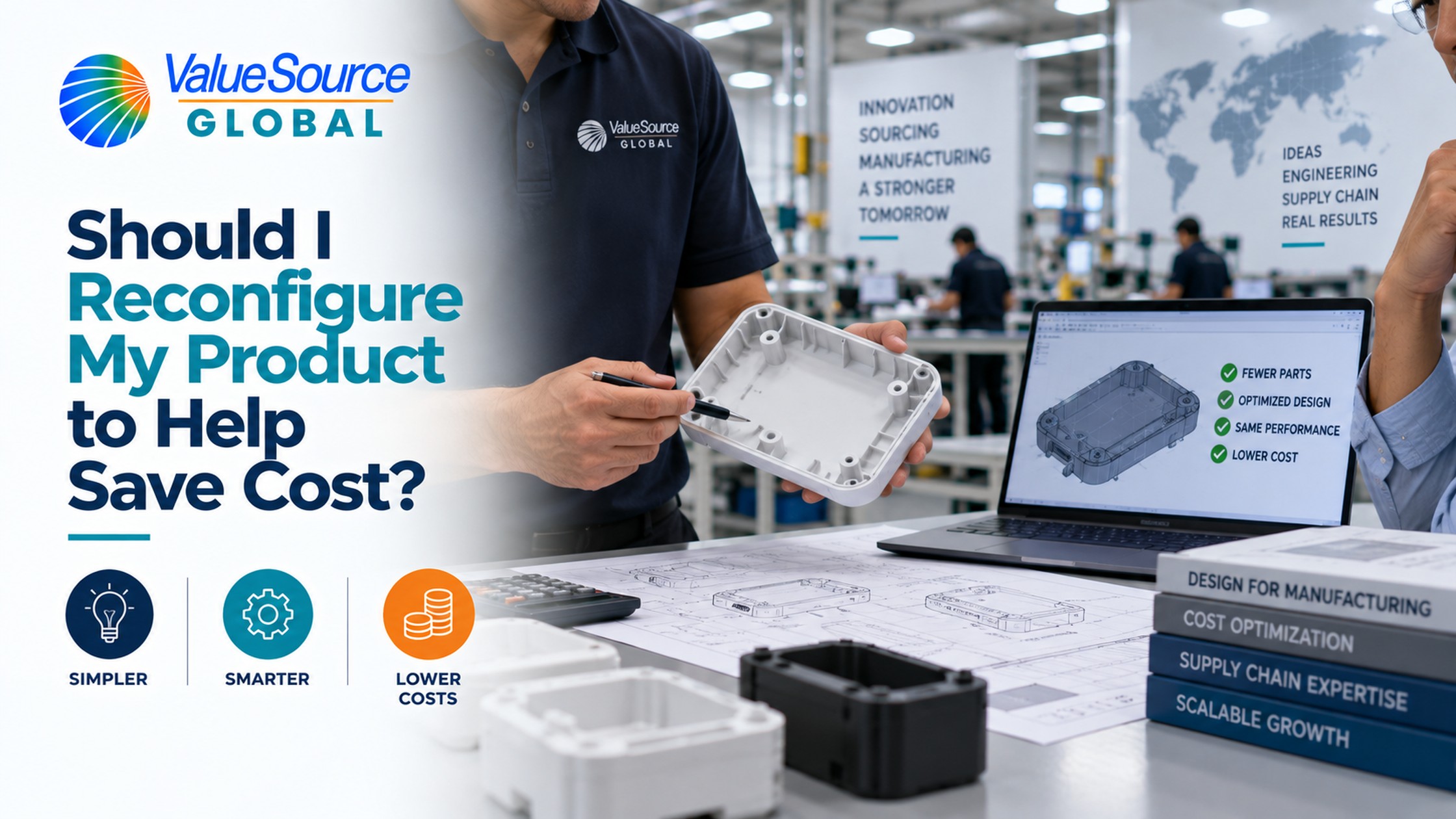

In today's fast-paced and economically turbulent business landscape, cost optimization is a challenge that countless operations executives and business leaders face on a daily basis. The quest for efficient resource allocation has never been more crucial. As material costs fluctuate and supply chains remain unpredictable, examining your current manufacturing processes is often the most effective way to protect your profit margins. You might find yourself asking the critical question, should I reconfigure my product to help save cost? This is a pivotal consideration, but it requires a careful and strategic approach to ensure that you do not sacrifice quality in the name of savings.
Whether you are dealing with shifting market demands, rising raw material expenses, or the intense pressure to stay competitive in an innovative landscape, the decision to reconfigure a product involves far more than just crunching numbers on a spreadsheet. It requires a robust and comprehensive evaluation that not only reduces manufacturing costs but also enhances your overall value delivery. The economic strength of your company frequently hinges on making the precise changes at the right time. Rushing into a redesign without fully understanding the operational realities can lead to devastating consequences for your brand reputation and bottom line.
You need an insightful and experienced partner to help navigate these complex decisions. Value Source Global understands these challenges intimately. Our in-depth industry knowledge and hands-on operational expertise position us uniquely to guide you through the intricacies of product reconfiguration. By tackling this vital decision with the right global sourcing strategy, you can navigate the complexities efficiently and ensure your chosen solution is economically sound. We are dedicated to exploring the nuances of manufacturing changes and revealing how a measured approach can bolster your bottom line while preserving the absolute integrity of your offerings.
What Are the TL;DR Quick Takeaways?
- Cost reduction must prioritize value generation. Slashing component costs without evaluating the impact on product lifespan often leads to higher failure rates and lost customer trust.
- Data-driven material selection is vital. Sourcing alternative materials requires deep testing and strategic global supplier partnerships to ensure consistency and compliance.
- Strategic reconfiguration protects long-term growth. By optimizing design for manufacturability, businesses can streamline assembly, reduce labor dependencies, and build a more resilient supply chain.
What Challenges Are Driving the Need for Product Reconfiguration?
In the ever-evolving landscape of global manufacturing, companies often grapple with the decision of whether to adjust their products to achieve operational cost savings. While this can be a highly effective strategy for maintaining competitiveness and improving profit margins, executing it incorrectly can lead to a myriad of compounding challenges. The pressure to reduce overhead is immense, but the risks associated with altering an established product are equally significant. We frequently observe common scenarios where poorly planned initiatives backfire. Understanding why these challenges exist is the first step toward building a better manufacturing strategy.
One of the most profound risks in product reconfiguration is the unintentional reduction in product quality. Many businesses pursue cost-saving measures by abruptly sourcing cheaper materials or simplifying essential designs without rigorous testing. A classic example can be seen in the consumer electronics industry. Manufacturers have often attempted to increase margins by switching to less durable internal components. As a result, the end products failed much faster under normal use. This led to a massive increase in warranty claims, widespread consumer dissatisfaction, and long-lasting damage to the brand's reputation. When you compromise the core integrity of the item, the financial fallout from returns and lost loyalty far exceeds the initial manufacturing savings.
Another major challenge is the misalignment with customer needs. Reconfiguring a product without thorough market research or user feedback can easily lead to disconnects between what the product delivers and what the customer actually values. Take a company that produces high-end ergonomic office furniture as an example. In a hasty attempt to reduce material costs, they might redesign their chairs using internal foam that is not as dense or supportive. While the chair might look identical on the outside, they have effectively alienated their key market segment that prioritizes all-day comfort and ergonomic health. Cost optimization must always remain invisible to the end user or actively improve their experience.
Furthermore, cost-saving reconfigurations often require extensive changes in production processes. This can cause significant operational disruptions if not managed by experienced supply chain leaders. Consider a scenario where a manufacturing firm decides to adopt a new and cheaper assembly method but fails to provide proper staff training on the factory floor. This oversight inevitably leads to increased error rates, massive production slowdowns, and severe delays in product delivery. Your operational efficiency plummets, and your supply chain resilience is compromised. Changing a product means changing the ecosystem that builds it, which demands meticulous planning.
Finally, there is a very tangible financial risk in underestimating the hidden costs associated with altering a product. In the food and beverage industry, a brand might choose to substitute premium natural ingredients for cheaper artificial ones to cut production expenses. However, if this subtle change results in a drop in sales due to reduced appeal or a negative shift in taste, the company could end up facing significant revenue declines. The loss of market share will always overshadow the pennies saved on the assembly line. These scenarios underscore the critical importance of a highly strategic, expertly guided approach when considering any changes to your manufacturing processes.
How Can You Strategically Reconfigure a Product Without Losing Value?
To improve the results of any product modification, businesses must move away from simple cost-cutting and embrace the concept of value engineering. Value engineering is a systematic method to improve the value of goods or products and services by using an examination of function. Value, as defined in this context, is the ratio of function to cost. Therefore, you can increase value by either improving the function or reducing the cost. It is an operational mindset that requires deep industry insights and a willingness to look at the entire lifecycle of the product.
The success of modifying a product hinges on a comprehensive understanding of the product's original design intent. You must start with a clear identification of the most costly components or processes. Often, the highest costs are not found in the raw materials themselves but in the complexities of the assembly process. A design that requires intricate, manual assembly will always be more expensive to produce than a design optimized for automated manufacturing. By focusing on the concept of Design for Manufacturability, organizations can strategically assess whether modifying a design will streamline production speed and lead to more sustainable operations.
Leveraging industry experts is absolutely crucial during this phase. Professionals who possess deep sourcing insights can anticipate potential pitfalls and chart effective reconfiguration strategies. For instance, according to research from the American Society for Quality, the cost of poor quality can range from 15 to 20 percent of overall sales revenue for many organizations. This staggering statistic highlights why you cannot afford to make decisions based on material price alone. Quality assurance must be baked into the reconfiguration plan from day one. Implementing iterative design and rigorous testing allows companies to make incremental adjustments. This minimizes risk while ensuring that all improvements align seamlessly with your long-term strategic goals.
What Key Qualities Define a Successful Reconfiguration Strategy?
When you are evaluating a potential shift in your manufacturing approach, there are specific qualities that separate a successful project from a costly mistake. The best strategies are comprehensive, data-driven, and focused on total business outcomes. Here are the most critical components to look for.
- Data-Driven Material Assessment
- Design for Manufacturability Optimization
- Global Supplier Network Flexibility
- Total Cost of Ownership Visibility
- Uncompromising Quality Assurance Standards
https://valuesourceglobal.com/value-generation — Optimize your product assembly and component sourcing for maximum efficiency and savings.
Data-Driven Material Assessment
A successful reconfiguration strategy does not rely on guesswork. It requires a detailed, scientific approach to material selection. You must analyze the tensile strength, durability, and thermal properties of your current materials against potential lower-cost alternatives. This data-driven approach ensures that the new materials will perform exactly as expected under real-world conditions. By verifying the exact specifications, you eliminate the risk of premature product failure and maintain your hard-earned brand credibility in the market.
Design for Manufacturability Optimization
Modifying a product is often less about changing the materials and more about changing the geometry. Design for Manufacturability focuses on simplifying the product structure to make it easier and faster to build. This might involve combining two separate components into a single molded piece, thereby eliminating the need for screws, adhesives, and the labor required to join them. When you optimize the design for the factory floor, you drastically reduce assembly time, lower your labor costs, and decrease the probability of human error during production.
Global Supplier Network Flexibility
You cannot effectively optimize costs if you are bound to a single supplier or a single geographic region. A robust strategy demands flexibility in your supply chain. Having access to a vetted global supplier network allows you to source components from regions that offer the best balance of cost, quality, and lead time. This geographical diversification not only helps you secure better pricing but also mitigates the risks associated with regional disruptions, tariffs, and volatile shipping routes.
Total Cost of Ownership Visibility
It is a common mistake to look only at the unit price of a newly sourced component. A mature strategy demands visibility into the Total Cost of Ownership. This encompasses the unit price, freight charges, customs duties, warehousing, defect rates, and potential warranty claims. A component that is ten cents cheaper on the factory floor might end up costing you a dollar more in reverse logistics if it fails in the field. Understanding the total cost ensures that your operational changes result in actual, recognizable profit growth.
Uncompromising Quality Assurance Standards
Finally, any adjustments to your manufacturing process must be accompanied by enhanced quality assurance protocols. When changing materials or production methods, the initial production runs carry the highest risk of defects. Implementing strict quality control measures, including independent third-party inspections and comprehensive factory audits, guarantees that the new configuration meets your exact specifications. Quality cannot be an afterthought. It must be the guiding principle that validates the entire cost-saving endeavor.
By understanding the underlying reasons for reconfiguration and aligning your efforts toward clear objectives, your organization can optimize its products effectively. You must involve all business units in the decision-making process to gain diverse perspectives and foster internal buy-in. Sales teams know what customers will tolerate, engineering knows the physical limits of the product, and procurement understands the market realities. Fusing these viewpoints prevents the common mistake of isolating the cost-cutting mission within a single department. A unified approach cements an organization's standing as a responsive and innovative market player.
How Does Value Source Global Implement Cost Optimization?
At Value Source Global, we specialize in comprehensive product value generation. We offer a strategic approach that directly addresses your cost concerns while simultaneously enhancing the overall value of your manufacturing program. We understand that your supply chain is the backbone of your business. Our methodology is rooted in a structured, data-driven approach that systematically identifies the latent opportunities for cost savings within your existing product lines. We do not believe in superficial cost-cutting. Instead, we focus on intelligent engineering and strategic sourcing.
Our process begins with an in-depth assessment of your product's current configuration. This involves a highly detailed analysis of the raw materials, the mechanical processes, and the specific factory technologies currently being utilized. Our expert team then conducts a rigorous value analysis. The primary objective is to pinpoint specific areas where manufacturing expenses can be reduced without compromising the end-user experience. We look for unnecessary complexities in your design that are driving up labor costs and identify alternative materials that offer identical performance profiles at a more competitive price point.
Based on our comprehensive findings, we develop a customized reconfiguration strategy that aligns perfectly with your overarching business goals. This strategic plan focuses on leveraging highly cost-effective materials and deploying innovative design solutions that simplify the assembly process. However, Value Source Global does not stop at strategic planning. We act as an embedded advisor and provide robust implementation support. We ensure that the new production plan is executed seamlessly on the factory floor. Our team manages the transition, oversees the initial production runs, and enforces strict quality assurance standards every step of the way.
Implementing a structured approach improves outcomes significantly by ensuring that every variable is meticulously planned and expertly executed. Our extensive experience in global sourcing reduces risk by identifying potential production pitfalls and offering clear mitigation strategies long before any physical changes are implemented. We stay at the forefront of global manufacturing trends, ensuring that the solutions we provide are both highly innovative and firmly grounded in operational reality. When you partner with Value Source Global, you gain access to an expansive, vetted supplier network that is capable of scaling with your business needs.
Recommended Product: https://valuesourceglobal.com/value-generation
Strategic Value Generation Services
- Comprehensive Value Analysis: Identify hidden cost drivers within your existing product architecture.
- Design for Manufacturability: Streamline your assembly processes to reduce manual labor and decrease production time.
- Global Sourcing Expertise: Leverage a secure network of vetted international suppliers to secure better material pricing.
What Do Industry Leaders Say About Strategic Sourcing?
"We were facing unprecedented margin compression due to rising raw material costs. Partnering with a team that understood both the engineering realities and the global supply chain dynamics allowed us to reconfigure our core product line. We reduced our manufacturing overhead by eighteen percent without a single compromise on product durability or customer satisfaction. It was a transformative shift in our operational strategy."
Is It Time to Reevaluate Your Manufacturing Strategy?
In conclusion, addressing your manufacturing costs with precision and professional expertise ensures not only a swift resolution to your immediate margin pressures but also the long-term reliability of your supply chain. Solving the cost problem correctly the first time is absolutely crucial to avoid future operational complications and to maintain seamless product delivery. Modifying your product should never be a panicked reaction to market shifts. It should be a calculated, strategic evolution of your business model.
Our commitment to excellence at Value Source Global is backed by decades of hands-on expertise and extensive knowledge in global manufacturing. We pride ourselves on empowering our clients with the necessary tools, insights, and supplier relationships to prevent future supply chain disruptions. When you choose to work with us, you are not just choosing a transactional service provider. You are partnering with a dedicated team that treats your business outcomes as our own.
Our seamless and professional service implementation process ensures that you can confidently move forward, knowing that your product integrity is in expert hands. Let us guide you on this journey, turning complex manufacturing challenges into sustainable opportunities for growth. Taking the step to evaluate your product design today is the most logical choice for executives who value operational precision, supply chain reliability, and measurable financial excellence. Trust in our proven methodology to lead you toward a solution that exceeds your expectations.
What Are the Frequently Asked Questions?
What is the biggest risk when trying to save money on product manufacturing?
The most significant risk is compromising product quality. Swapping materials for cheaper alternatives without proper testing can lead to higher defect rates, increased warranty claims, and severe damage to your brand reputation.
How does Design for Manufacturability actually reduce costs?
Design for Manufacturability simplifies the product structure. By reducing the total number of parts or making components easier to assemble, you significantly lower labor costs and reduce the time it takes to produce each unit.
Can I change my product materials without changing my suppliers?
While possible, it is often beneficial to evaluate new suppliers. Your current supplier might not have the specialized expertise or the most competitive pricing for the newly selected materials. A flexible global sourcing strategy ensures you find the best partner for your new configuration.
How long does a typical product reconfiguration process take?
The timeline varies based on the complexity of the product and the extent of the changes. Simple component swaps might take a few weeks, while a total redesign requiring new factory tooling and compliance testing can take several months to execute properly.
Why should I partner with Value Source Global for this process?
Value Source Global acts as an embedded advisor. We bring decades of operational experience, a vetted global supplier network, and a structured value engineering methodology that guarantees you reduce costs while protecting the integrity of your product.
For additional information check out: Supply Chain Strategy and Manufacturing Insights