
How to Scale Manufacturing Operations with Strategic Industrial Engineering Services
Reduce operational risk and improve supply chain efficiency with expert industrial engineering services from Value Source Global. Learn how to scale your production effectively.
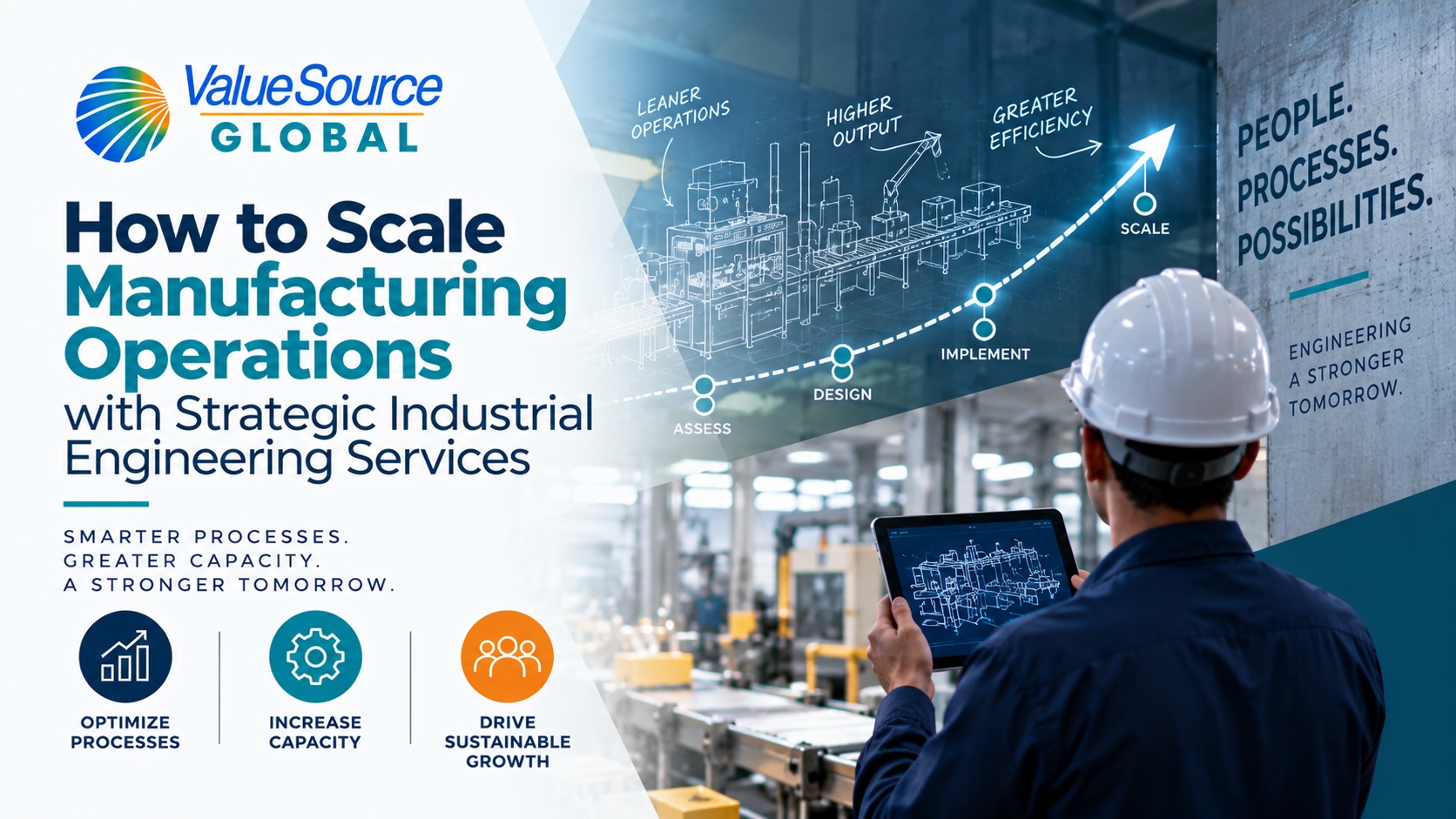


In today's highly complex global manufacturing landscape, businesses constantly navigate challenges that threaten both margins and production timelines. As supply chain disruptions become more frequent and manufacturing costs continue to rise, relying on outdated operational models is no longer a viable strategy. Industry leaders understand that protecting their competitive advantage requires more than just temporary fixes. It demands the integration of specialized industrial engineering services to analyze, streamline, and scale production systems effectively.
When operations executives face unpredictable lead times and quality control inconsistencies, they need solutions rooted in actual factory realities. True operational efficiency does not come from marketing buzzwords. It comes from a systematic approach to resource allocation, process optimization, and risk mitigation. Integrating strategic industrial engineering services allows procurement and operations teams to bridge the gap between their current capabilities and their long-term growth objectives.
This comprehensive guide explores the structural hurdles that modern manufacturing facilities face. By understanding how to apply rigorous engineering principles to your supply chain, you can significantly reduce operational risk, improve product quality, and achieve sustainable profitability. We will examine the core components of process design, the hidden costs of inefficiency, and how partnering with an experienced advisory team can fundamentally transform your production outcomes.
TL;DR – Quick Takeaways
- Process alignment prevents costly bottlenecks: Strategic engineering ensures new technology integrates seamlessly with existing workflows.
- Human factors drive successful execution: Proper training and ergonomic planning prevent high turnover and operational disruptions.
- Data-driven decisions reduce financial risk: Comprehensive cost analysis prevents budget overruns when scaling manufacturing facilities.
What Challenges Drive the Need for Process Optimization?
Businesses engaging in global production encounter a myriad of structural challenges that can significantly impact their operational efficiency. These challenges are not merely minor operational hiccups. If left unaddressed, they can lead to severe financial repercussions, delayed shipments, and damaged supplier relationships. Operations executives must identify and resolve these hidden costs to maintain a resilient supply chain.
One of the most common issues is inefficient process design. In the pursuit of higher output, companies often rush to integrate new automated technologies or overhaul production lines without conducting a thorough analysis of their current baseline. Consider a manufacturing plant that installs advanced robotics without mapping the upstream and downstream constraints. This rushed integration inevitably results in bottlenecks, increased machine downtime, and an overall decrease in throughput. Inefficient process design escalates operational costs and degrades product quality, which ultimately affects the company's market position.
Another critical hurdle is underestimating the human factors involved in production. Even the most advanced manufacturing facility relies heavily on its frontline operators. Businesses sometimes overlook basic ergonomic principles or fail to involve line workers in the planning stages of a new workflow. For example, a logistics company might introduce new packaging machinery without providing adequate training for its operators. This oversight can lead to increased workplace injuries, lower morale, and high turnover rates. The human element is critical, and failing to account for it creates significant operational disruptions.
Financial mismanagement and poor capital allocation also present major risks. The financial implications of upgrading facility operations are profound. Yet, businesses frequently misjudge the resource allocation required for successful implementation. A mid-sized enterprise might attempt to scale its production capabilities across multiple international regions without a solid financial model backing the expansion. This misstep can drain financial reserves and lead to massive budget overruns. Conducting thorough cost-benefit analyses before embarking on any significant engineering project is a non-negotiable step for long-term stability.
Finally, resistance to change within the organization can derail even the most well-designed engineering plans. Change management is a formidable hurdle. When new processes are designed, execution can fail due to pushback from employees and regional stakeholders who are accustomed to legacy methods. Ignoring the cultural aspects of operational transitions slows down progress and allows competitors to capture market share. Recognizing these distinct challenges helps businesses strategically prepare and mitigate risks before they escalate.
How Do Industry Leaders Redesign Production Systems?
The realm of system optimization encompasses analyzing complex networks to enhance productivity and profitability. These methodologies have become indispensable as industries fight to stay competitive. Problems typically arise from dynamic operational requirements and the constant pressure to reduce lead times. Companies often struggle because they lack the strategic foresight or specialized internal knowledge to effectively redesign their manufacturing networks.
Achieving successful outcomes requires a highly systematic approach. This approach combines robust data analysis, tailored operational strategies, and specialized supply chain expertise. According to standards established by organizations like the American Society for Quality, successful continuous improvement programs rely heavily on structured methodologies rather than ad-hoc problem solving. Successful projects typically follow a strictly defined lifecycle.
The first phase is defining the scope and objectives of the project. Operations leaders must clearly understand what specific metric needs optimization, whether it is reducing scrap rates, shortening lead times, or consolidating the supplier base. Without a clearly defined scope, projects suffer from mission creep. Following this, rigorous data analysis takes place. Engineers gather cycle times, defect rates, and resource utilization data to identify current inefficiencies. Accurate data forms the bedrock of any reliable strategic decision.
Once the baseline is understood, the focus shifts to solution design. Engineering teams develop solutions that align with core business goals while leveraging modern lean manufacturing principles. Solutions must be tailored to the specific environment rather than relying on one-size-fits-all templates. Customization ensures alignment with the company's actual capabilities and financial constraints.
Implementation planning is the next critical phase. A comprehensive rollout plan is created to ensure the smooth execution of the new workflow with minimal disruption to ongoing production. This phase heavily involves change management and operator training. Finally, continuous monitoring and control systems are established. Sustaining improvements requires ongoing audits to ensure processes do not revert to their previous inefficient states.
Unfortunately, many businesses miss the mark due to avoidable errors. Inadequate scoping is a primary culprit, as teams jump straight into solutions without diagnosing the root cause of the problem. Additionally, relying on generalist consultants instead of specialized manufacturing advisors can result in superficial fixes. A short-term focus on cost-cutting often hinders long-term strategic resilience.
What Are the Key Qualities to Look For?
Selecting the right partner to analyze and upgrade your operations is a vital decision. Not all advisory teams possess the hands-on factory experience required to drive real results. You must evaluate potential partners based on their operational depth and their ability to execute in real-world environments.
- Operational Expertise: Deep understanding of factory floor realities and global sourcing constraints.
- Strategic Customization: Engineering solutions that are tailored specifically to your unique workflow and business goals.
- Change Management Integration: Structured implementation plans that prioritize frontline worker training and system adoption.
- Continuous Monitoring Systems: Robust data auditing to prevent regression and ensure sustainable long-term performance.
https://valuesourceglobal.com/value-generation - Optimize workflows and maximize production efficiency.
Operational Expertise
A capable engineering partner must speak from the perspective of those who actually run factories. Theoretical models look great on paper, but they often fail when introduced to the realities of raw material shortages or machine tolerances. Expertise matters. You need advisors who bring a deep understanding of industry-specific challenges, ensuring that every recommendation is practical, scalable, and physically viable on the factory floor.
Strategic Customization
Your supply chain is unique, and your optimization strategies should be as well. Generalist approaches rarely yield competitive advantages. A premium engineering service evaluates your exact facility footprint, legacy equipment, and geographic supplier network. By customizing the layout and workflow, the engineering team ensures that the new system aligns perfectly with your distinct capital constraints and throughput goals.
Change Management Integration
The most elegant engineering solution is useless if the workforce cannot execute it safely and consistently. Inclusive project planning is essential. A highly qualified partner involves facility managers and operators early in the design phase to secure buy-in. This collaborative approach uncovers hidden inefficiencies and significantly reduces the friction typically associated with operational transitions.
Continuous Monitoring Systems
Process improvement is an ongoing discipline, not a one-time event. Sustained success requires establishing clear performance metrics and control plans. Advanced engineering services help you deploy tracking mechanisms that monitor cycle times and defect rates in real time. This culture of continual assessment allows your business to adapt quickly to changes in demand or material availability.
The correct application of structured engineering methodologies transforms businesses. By understanding common operational pitfalls and leveraging specialized expertise, your company can overcome capacity constraints, drive true cost efficiency, and foster a culture of operational excellence.
How Does Value Source Global Elevate Your Operations?
In a competitive global market, maintaining the status quo is a liability. At Value Source Global, we recognize the complex pressures procurement leaders and operations executives face daily. Rising manufacturing costs, unpredictable geopolitical tariffs, and shifting supplier reliability require a strategic response. That is why our industrial engineering services are built specifically to deliver structured, expert-driven guidance that directly impacts your bottom line.
We do not operate as a traditional vendor. We position ourselves as your embedded strategic advisor. Our Value Generation approach is rooted in decades of hands-on sourcing, manufacturing management, and global supply chain leadership. We understand the intricacies of scaling production programs because we have built and managed them ourselves.
Recommended Service: Value Generation
Transform Your Manufacturing Workflows
- Supply Chain Resilience: Diversify and strengthen your supplier network to prevent critical disruptions.
- Cost Optimization: Eliminate waste and improve resource allocation for better profit margins.
- Quality Assurance: Standardize production processes to guarantee consistent product output.
By partnering with Value Source Global, your team can focus on high-value strategic growth rather than putting out daily operational fires. We bring calm authority and practical guidance to your most complex manufacturing challenges. Choosing our firm means opting for a long-term relationship grounded in mutual respect, operational excellence, and measurable financial success.
"Aligning our factory operations with a strategic engineering partner allowed us to regain control over our supply chain. We drastically reduced our production bottlenecks and gained the visibility needed to scale our capabilities globally with absolute confidence."
What Is the Next Step for Your Supply Chain?
Addressing inefficiencies within your production network with precision is essential for ensuring the long-term stability of your enterprise. Solving complex operational challenges requires a deep understanding of manufacturing nuances, material flow, and human performance metrics. Relying on an experienced advisory partner allows you to navigate these variables with clarity and confidence.
The integration of professional industrial engineering services provides tangible, measurable outcomes. You can streamline workflows, reduce overhead costs, and build a resilient supply chain capable of withstanding global market fluctuations. Our team at Value Source Global is equipped with the technical knowledge and the operational background to oversee every detail of your process optimization journey.
By taking a proactive approach to your manufacturing strategy, you increase the likelihood of sustaining aggressive business growth. Entrust your supply chain challenges to advisors who have lived them. We are prepared to turn your operational hurdles into scalable competitive advantages. Connect with our team to explore how a targeted engineering strategy can redefine your production capabilities and secure your market position for the future.
Frequently Asked Questions
What exactly do industrial engineering services entail?
These services focus on optimizing complex processes, systems, and organizations. They involve analyzing production lines, supply chains, and resource allocation to eliminate waste, improve quality, and increase overall operational efficiency.
How can process optimization reduce manufacturing costs?
By identifying and resolving bottlenecks, reducing material scrap rates, and improving worker productivity, optimization directly lowers the cost of goods sold. It ensures that every asset and labor hour is utilized to its maximum potential.
Why is human factor engineering important in manufacturing?
Human factor engineering ensures that workspaces and processes are designed around the capabilities of the workforce. This approach prevents physical strain, reduces workplace injuries, and significantly lowers employee turnover, which stabilizes production.
How long does it take to see results from these engineering initiatives?
While minor workflow adjustments can yield immediate improvements in throughput, comprehensive systemic overhauls typically take several months to fully integrate. Sustainable results depend on proper training and adherence to continuous monitoring systems.
For additional information check out: Supply Chain Optimization Strategies