
How Are Tariffs Affecting Supply Chains And What Can Companies Do About It?
Discover how tariffs are affecting supply chains and what companies can do about it. Learn strategic sourcing, diversification, and operational resilience.
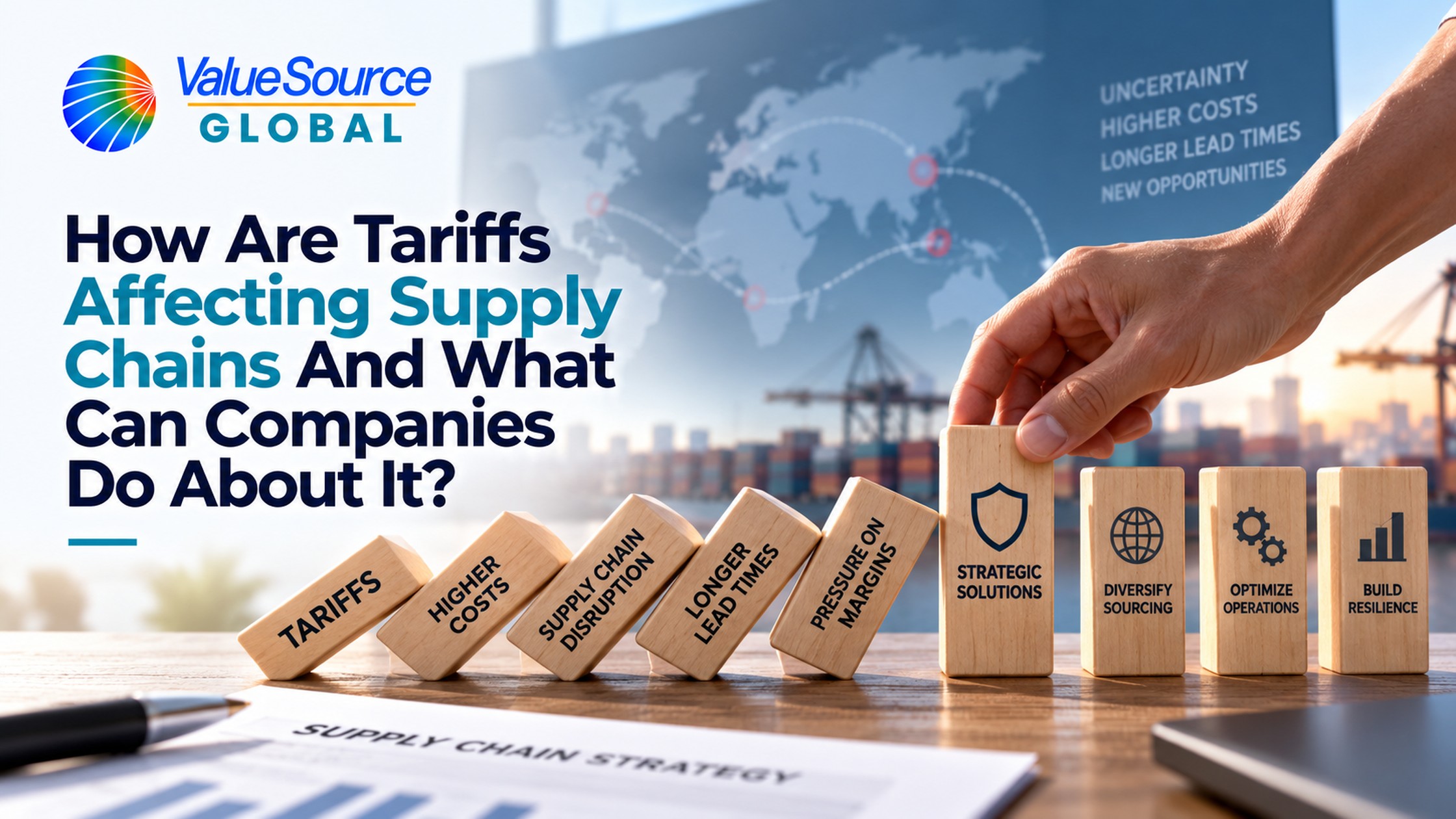


In today's interconnected global economy, procurement leaders and operations executives face a rapidly shifting landscape. Global supply chains rely heavily on predictability to function smoothly. When trade policies shift unexpectedly, that predictability vanishes overnight. Understanding exactly how tariffs affect supply chains and what companies can do about it is no longer just an academic exercise for economists. It is a critical survival skill for any business that relies on international manufacturing and global sourcing networks.
Tariffs act as taxes imposed on imported goods. They immediately increase the landed cost of raw materials, mechanical components, and finished products. For companies operating on thin margins, these sudden cost increases can eliminate profitability entirely. The ramifications extend far beyond just pricing. Tariffs disrupt traditional shipping routes, force hasty changes in supplier relationships, and create significant quality control risks when companies attempt to switch manufacturing partners too quickly. The challenges are vast, but they are not insurmountable for organizations that take a proactive and strategic approach.
At Value Source Global, we recognize the multifaceted nature of these disruptions. We speak from the perspective of professionals who actually run global production programs. We know that navigating international trade policies requires more than just reactionary price adjustments. It requires an embedded advisory partner who understands real world manufacturing realities. Throughout this guide, we will explore the exact mechanisms through which trade taxes disrupt operations and provide actionable strategies to protect your bottom line. We will move beyond the basic theories and delve into the operational tactics that successful organizations use to build resilient, agile, and cost effective supplier networks.
What Are The Quick Takeaways?
- Tariffs create immediate financial and operational risks by increasing material costs and disrupting established procurement timelines.
- Companies often fail by either ignoring the threat until it is too late or overreacting and abandoning reliable suppliers prematurely.
- Partnering with a strategic advisory firm like Value Source Global helps businesses diversify sourcing locations and optimize production scale without sacrificing quality.
Why Are Supply Chains Struggling With Geopolitical Changes?
The core issue facing modern manufacturing programs is the unpredictability of international trade relations. When a new tax is levied on a specific category of imported goods, the entire ecosystem feels the shockwave. Companies are often left grappling with increased expenses and mandatory shifts in supplier relationships. To understand the gravity of the situation, we must look at the specific operational and financial risks that occur when trade policies change without warning.
Operational risks are perhaps the most immediate concern. When a tariff makes a current supplier financially unviable, companies are forced to reevaluate their procurement strategies. This resulting restructuring inevitably leads to disruptions in production schedules. For example, if a company has spent five years perfecting a quality control process with a facility in Asia, moving that production to a different region to avoid a tax introduces massive risk. The new factory will likely have different machinery, different management styles, and different raw material access. This learning curve leads to delayed product availability, higher defect rates, and ultimately, a negative impact on customer satisfaction.
Financial risks directly hit the bottom line. Increased costs from trade taxes cannot always be passed on to the consumer. If a business raises retail prices too aggressively to compensate for supply chain expenses, they risk losing their market share to competitors who absorbed the costs more effectively. Conversely, if a business chooses to eat the cost entirely, their profit margins shrink. This creates a dangerous balancing act for Chief Financial Officers who must maintain cash flow while dealing with unpredictable landed costs.
Growth risks also present a massive hurdle for companies aiming for global expansion. High trade taxes can deter foreign investment and make export strategies completely unviable. If a business cannot accurately forecast its manufacturing costs over the next five years, it becomes incredibly difficult to secure capital or plan for new product line launches.
We see businesses fail in predictable patterns when dealing with these geopolitical shifts. The first common failure scenario is under reaction. In this scenario, a company underestimates the longevity or severity of a tariff. They assume it is a temporary political maneuver and do nothing to adjust their supply chain. As months turn into years, they bleed capital and face severe delivery bottlenecks because they failed to diversify their supplier base.
The second common failure is over reaction. In a panic to mitigate risks, a company hastily severs ties with a highly reliable manufacturing partner simply because they are located in a newly taxed region. They move production to a cheaper region without conducting proper due diligence. They soon discover that the new region lacks the infrastructure, logistics support, and skilled labor required to meet their quality standards. The money saved on taxes is entirely lost on higher shipping fees, quality assurance failures, and expedited freight costs to meet deadlines.
What Strategic Actions Can Companies Take To Protect Operations?
Overcoming these global procurement challenges requires a systematic and highly strategic methodology. Companies that thrive amid geopolitical turmoil exhibit a deep understanding of their supplier networks and possess the flexibility to pivot before disaster strikes. Building this level of operational resilience involves several critical steps.
The foundation of any resilient manufacturing program is diversified sourcing. Relying on a single factory or a single geographic region is a recipe for catastrophic failure in today's environment. By diversifying the supplier base across multiple countries, companies can effectively mitigate risks associated with specific regional taxes. This does not mean abandoning primary suppliers. Instead, it involves building a network of secondary and tertiary facilities that have already been vetted, onboarded, and tested. When trade policies shift, production volume can be smoothly reallocated across this network without halting operations.
According to the Association for Supply Chain Management, organizations that implement comprehensive supplier risk mapping are significantly more likely to maintain delivery schedules during global disruptions. This leads us directly to the importance of scenario planning. Robust scenario planning allows businesses to anticipate various geopolitical outcomes. Supply chain managers should regularly conduct stress tests on their operations. What happens if a twenty percent tax is placed on imported aluminum? How many days of inventory do we have to survive a port strike? Answering these questions before they become reality gives operations executives a critical head start.
Innovative pricing strategies also play a major role in protecting operations. Rather than reacting with sudden, massive price hikes, companies can develop dynamic pricing models. This might involve adjusting product configurations, modifying packaging to reduce shipping weight, or identifying alternative materials that fall outside of the taxed categories. The goal is to absorb as much of the impact internally through efficiency gains before passing the burden onto the consumer.
What Are The Key Qualities To Look For In A Sourcing Strategy?
When restructuring a global manufacturing program to avoid the negative impacts of international trade policies, you need a strategy built on experience and operational truth. Here are the essential qualities your procurement program must possess.
- Geographic Agility Creates True Network Resilience
- Comprehensive Quality Control Transcends Borders
- Total Landed Cost Visibility Prevents Hidden Margin Erosion
- Long Term Partnership Alignment Ensures Dedicated Supplier Support
https://valuesourceglobal.com/manufacturing-partner Stabilize your manufacturing costs and build resilient global sourcing networks.
Geographic Agility Creates True Network Resilience
A sourcing strategy is only as strong as its ability to adapt. Geographic agility means having the operational infrastructure to shift production volumes between different countries seamlessly. If a new trade policy makes manufacturing in one region cost prohibitive, an agile network allows you to ramp up production in a secondary location without suffering a six month onboarding delay. This requires standardized technical drawings, universally understood quality metrics, and clear communication protocols that apply universally across all your manufacturing partners.
Comprehensive Quality Control Transcends Borders
When companies are forced to change suppliers due to financial pressures, product quality usually suffers. A superior sourcing strategy incorporates quality control mechanisms that remain consistent regardless of where the physical production takes place. This involves utilizing localized inspection teams, implementing rigorous first article inspection routines, and maintaining detailed supplier scorecards. Quality cannot be sacrificed in the name of cost savings because defective products ultimately cost far more than any import tax.
Total Landed Cost Visibility Prevents Hidden Margin Erosion
Many procurement teams make the mistake of only looking at the per unit factory price when evaluating suppliers. A robust strategy calculates the total landed cost. This includes the factory price, freight charges, customs duties, insurance, warehousing fees, and the statistical cost of potential defects. Having absolute visibility into every single cost component allows executives to make accurate, data driven decisions when deciding whether to absorb a tax increase or move production.
Long Term Partnership Alignment Ensures Dedicated Supplier Support
Transactional relationships with factories fail during times of crisis. When global disruptions occur, factories prioritize their most collaborative and reliable clients. A strategy focused on long term partnership ensures that your business receives preferential treatment when capacity is tight or raw materials are scarce. By treating suppliers as extensions of your own business rather than easily replaceable vendors, you build loyalty that pays massive dividends when the global market becomes volatile.
In addition to these core qualities, reshoring and nearshoring are increasingly viable options for many companies. Moving production closer to the final consumer market can drastically reduce exposure to international trade disputes. While domestic manufacturing often carries higher labor costs, the savings generated from reduced shipping times, lower inventory holding requirements, and zero import taxes can make it a highly competitive alternative. Evaluating these complex trade offs requires deep industry insight and a realistic understanding of global manufacturing capabilities.
How Can Value Source Global Strengthen Your Manufacturing Process?
Navigating the complex terrain of global trade requires more than just internal brainstorming. It requires the guidance of experienced professionals who have spent decades building and managing international supply chains. Value Source Global stands ready to be that embedded advisor. We do not just consult on theory. We execute operational strategies that protect margins and ensure uninterrupted product flow.
Our approach is rooted in a highly structured service methodology designed to address modern supply chain bottlenecks head on. The process begins with a comprehensive assessment of your current procurement landscape. We analyze your existing supplier dependencies, evaluate your exposure to geopolitical risks, and identify specific areas where trade taxes are causing margin erosion. This deep dive allows us to understand your business at an operational level.
Once the assessment is complete, we move into customized strategy development. Our team of global sourcing experts devises a tailored plan that aligns with your specific growth objectives. We focus heavily on optimizing sourcing locations. Through our extensive, pre-vetted network of global manufacturing partners, we can identify alternative regions that offer favorable trade conditions without compromising on your technical specifications. We handle the complex legwork of supplier diversification so your internal teams can remain focused on your core business.
Recommended Product: https://valuesourceglobal.com/manufacturing-partner
Secure Your Global Supply Chain Operations
- Supplier Network Diversification: Reduce regional dependency by leveraging our vetted global manufacturing network.
- Total Quality Assurance: Maintain strict product specifications with localized inspection teams and rigorous audits.
- Cost Optimization Strategies: Protect your profit margins through intelligent negotiation and landed cost analysis.
With your supply chain secured and responsive, your executive team can refocus their energy on strategic growth initiatives rather than constantly fighting procurement fires. When you engage Value Source Global, you are investing in a foundation built for long term success, resilience, and operational excellence.
"Value Source Global completely transformed how we handle international sourcing. When unexpected trade policies threatened to wipe out our profit margins, their strategic oversight and quick pivot to alternative suppliers protected our bottom line without a single drop in product quality."
Are You Ready To Build A More Resilient Supply Chain?
Addressing the challenges of global trade taxes is not merely an optional initiative, it is a strict necessity for ensuring the sustained success of your manufacturing operations. Solving these complex problems correctly the very first time prevents a cascading series of delays, defects, and margin erosion down the line. Our deep expertise and proven track record in global sourcing position Value Source Global as the trusted authority to guide your organization through these turbulent economic waters.
By choosing our professional partnership, you are opting for a path that is robust, reliable, and backed by decades of actual factory floor experience. We know what works because we have built these systems for businesses across the globe. Our commitment to operational excellence ensures that every strategy we deploy is meticulously tailored to fit your unique production requirements, guaranteeing absolute effectiveness.
Take the decisive step toward total supply chain optimization today. Feel confident knowing that you have the support of seasoned professionals who understand the intricate realities of international procurement. Value Source Global is prepared to be the strategic advisor that helps you navigate current disruptions and builds a framework capable of handling whatever the global market presents next.
Frequently Asked Questions
What is the most immediate impact of new trade taxes on a business?
The most immediate impact is a sudden increase in the total landed cost of imported goods, which directly reduces a company's profit margin unless the costs are offset by efficiency gains or passed on to the consumer through higher prices.
How does supplier diversification protect against geopolitical risks?
Supplier diversification spreads production volume across multiple countries or regions. If one region is hit with sudden taxes or trade restrictions, the company can quickly shift production to their other vetted suppliers, avoiding catastrophic delays.
Why do companies fail when trying to switch suppliers too quickly?
Companies fail because they skip critical due diligence steps. Rushing the onboarding process leads to partnering with factories that lack proper quality control systems, resulting in defective products and severe logistical failures.
How can Value Source Global help mitigate these financial risks?
Value Source Global acts as an embedded strategic partner. We leverage our extensive network to identify cost effective manufacturing alternatives, negotiate favorable pricing, and oversee total quality control, shielding your operations from unpredictable market shifts.
For additional information check out: Global Sourcing Insights