
How Are Executives Approaching China Tariff Alternatives 2026?
Explore strategic China tariff alternatives 2026 to optimize global sourcing, reduce production costs, and build a resilient supply chain with Value Source Global.
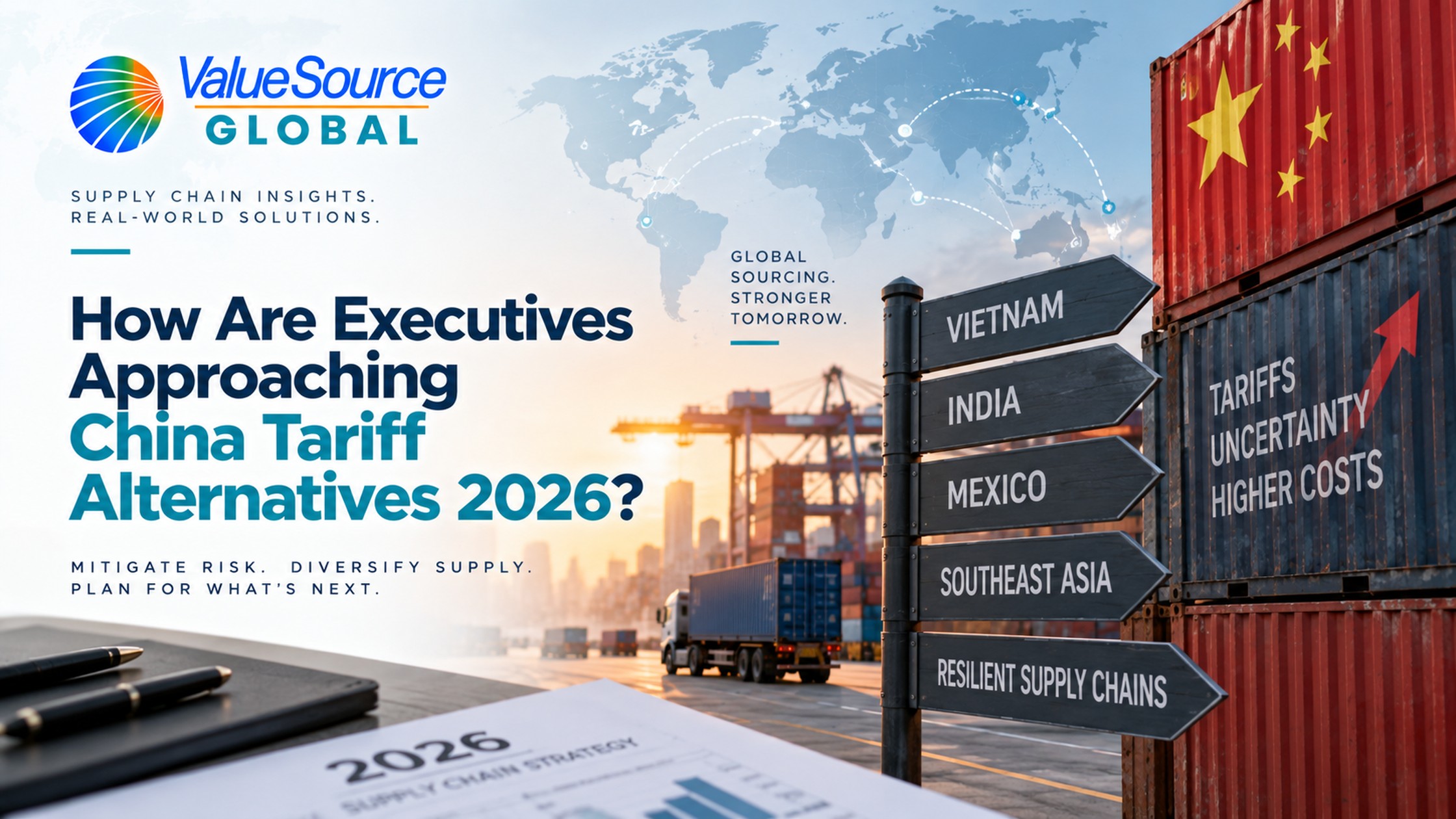


In the rapidly evolving global market, businesses are continually confronted with the complexities of international trade. As we look toward the future, finding reliable china tariff alternatives 2026 has shifted from a speculative planning exercise to an immediate operational necessity. If your company relies heavily on overseas manufacturing, you're likely feeling the pressure of rising costs, unpredictable trade policies, and glaring supply chain vulnerabilities. It's no secret that the trade landscape between major economic powers is shifting, and these changes have a profound impact on your company's profitability and overall operational stability.
Identifying viable alternatives to traditional single region sourcing isn't just a matter of regulatory compliance. It's a fundamental strategic necessity for sustained growth and market competitiveness. Procurement leaders and operations executives are increasingly echoing the same concerns. They're looking for more reliable suppliers, better visibility into their supply chains, and ways to reduce risk without sacrificing product quality. By the end of this article, you'll understand the hidden risks of remaining stagnant, the core components of a resilient sourcing strategy, and how to position your organization for sustainable growth despite macroeconomic headwinds.
We'll explore the nuanced realities of global sourcing and provide actionable insights drawn from decades of hands-on manufacturing experience. Value Source Global approaches these challenges not as a vendor, but as an embedded partner. It's not just about avoiding taxes or chasing the lowest labor rate. It's about building a robust supply chain that can withstand whatever the global market throws at it, ensuring you remain competitive well into the future.
TL;DR – Quick Takeaways
- Supply chain diversification requires strategic infrastructure, not just a change of address.
- Advanced cost modeling and deep operational audits mitigate severe tariff impacts.
- A true manufacturing partner embeds themselves in your operations to absorb risks and drive efficiency.
What Operational Hurdles Arise With Shifting Trade Policies?
The complex trade landscape involving fluctuating international tariffs remains a critical issue for businesses as they strategize for the years ahead. The implications of navigating these regulatory waters pose significant operational, financial, and growth challenges. Grasping the true depth of these issues is essential for building resilient and competitive strategies. When tariffs hit, it isn't merely a line item change on a financial spreadsheet. It disrupts cash flow, alters pricing strategies, and severely squeezes profit margins.
Businesses face several realistic struggles when dealing with shifting trade landscapes. First is the overwhelming burden of supply chain uncertainty. Companies dependent on concentrated overseas manufacturing are required to entirely reconsider their supply chain strategies. Reliance on a single country for raw materials or finished goods exposes operations to immense volatility, necessitating the exploration of options such as relocating production or diversifying sourcing networks. However, moving production isn't as simple as flipping a switch.
Cost management challenges also rise to the forefront. As tariffs introduce substantial additional costs, executive teams must identify whether to absorb these expenses internally or pass them on to consumers. This difficult decision directly affects pricing strategies, ultimately impacting competitive positioning and long term customer retention. If a business misjudges this balance, they risk alienating their core customer base or bleeding capital at an unsustainable rate.
Furthermore, regulatory compliance adds an exhausting layer of complexity. Understanding the intricacies of new trade policies and ensuring absolute compliance is a monumental task. Misinterpretation or accidental disregard of these regulations can lead to hefty governmental penalties, severely affecting financial stability and market reputation.
We often witness distinct failure scenarios when companies attempt to adapt without adequate foresight. A common misstep is misjudging supply chain decisions. A company might rapidly shift production to an alternate location like Vietnam or Mexico without conducting a comprehensive cost benefit analysis. They expect lower labor costs but quickly face unexpected logistical nightmares, raw material shortages, and massive delays. The lack of preparedness in local infrastructure and skilled labor directly affects product launch cycles, leading to diminished market share.
Another frequent issue is inadequate cost adjustment. An apparel brand might decide against adjusting their pricing post tariffs, hoping to maintain customer loyalty. However, the failure to accommodate the new inbound costs compresses their profit margins so significantly that it leads to internal financial strain, reducing their capacity for future product development. Similarly, over diversification poses a massive risk. A consumer goods company, in a frantic bid to reduce reliance on single region imports, might excessively fragment its supplier base. This fragmented strategy leads to operational inefficiencies, a lack of quality control standardization, and a fractured supply chain, ultimately reducing overall product consistency.
The challenge of navigating new sourcing ecosystems is not just a bureaucratic hurdle but a vital strategic imperative with far reaching consequences. Incorrect implementation or a lack of adaptability can lead to substantial financial losses, reputational damage, and operational disruptions. Companies must cultivate a deep strategic understanding of their manufacturing approaches, as these critical decisions can either propel them toward sustainable growth or lead them directly into financial distress.
What Are The Strategic Frameworks For Tariff Mitigation?
To effectively manage the friction of shifting global trade, businesses must look beyond superficial fixes and implement comprehensive operational frameworks. Relying solely on temporary waivers or basic tariff exemptions offers only fleeting relief. True resilience requires a multifaceted approach that integrates supply chain restructuring, intelligent diversification, and proactive trade compliance. The goal isn't just to survive regulatory changes but to capitalize on new efficiencies that competitors might overlook.
One of the foundational pillars of this strategy is deep supply chain auditing. Before you can shift your manufacturing base, you must fully understand your current vulnerabilities. This means mapping out every tier of your supplier network. Many companies realize too late that while their primary assembly factory is in a new tariff free zone, the raw materials and sub components are still being sourced from the original restricted region. This lack of visibility completely nullifies the benefits of relocating.
To understand the broader implications of these shifts, we can look to global trade authorities. The World Trade Organization frequently notes that modern global trade resilience hinges entirely on diversified supplier networks and agile operational frameworks. You can't put all your eggs in one basket, nor can you spread them so thin that you lose economies of scale.
Technology also plays an indispensable role in navigating these complexities. Utilizing advanced analytics, predictive modeling, and supply chain management software offers deeper insights into market dynamics. These tools allow procurement teams to run scenario planning, testing how a 10 percent tariff increase in one region compares against rising freight costs in another. Armed with this data, leadership can make highly informed, data backed decisions rather than relying on gut instinct or outdated industry assumptions.
Moreover, negotiating long term contracts with flexible terms is critical. In a volatile market, locking yourself into rigid agreements can be disastrous. Contracts should be structured to allow for agility in response to sudden regulatory shifts, ensuring your business can quickly pivot to secondary suppliers or adjust order volumes without facing crippling financial penalties.
What Key Qualities Define A Resilient Supply Chain?
When evaluating your sourcing network and potential manufacturing partners, there are specific operational attributes you must prioritize to ensure long term success and stability.
- Geographic Diversification: Spreading production across multiple favorable trade regions to mitigate geopolitical risks.
- Regulatory Expertise: Deep understanding of international trade laws to ensure seamless customs clearance.
- Agile Sourcing Infrastructure: The ability to quickly pivot production volumes between different vetted factories.
- Transparent Cost Modeling: Clear visibility into all landed costs, including freight, materials, and hidden fees.
- Scalable Manufacturing Capacity: Facilities that can seamlessly ramp up production to match your seasonal growth.
- Stringent Quality Assurance: Standardized inspection protocols applied uniformly across all global locations.
https://valuesourceglobal.com/contact-us Optimized global sourcing strategies designed to reduce risk and protect profit margins.
Geographic Diversification
Expanding your supplier base to include regions less affected by tariffs is arguably the most effective way to protect your supply chain. However, this diversification must be strategic. Moving to a new country requires establishing new relationships, vetting factory conditions, and ensuring the local infrastructure can support your logistics requirements. It's about finding the perfect balance between cost effectiveness and operational reliability.
Regulatory Expertise
International trade laws are labyrinthine and constantly changing. Having a partner or internal team with deep regulatory expertise is non-negotiable. This ensures your products are correctly classified under the Harmonized Tariff Schedule, preventing costly delays at customs and protecting you from unexpected compliance penalties. Expertise in leveraging free trade agreements can also unlock significant cost savings.
Agile Sourcing Infrastructure
An agile infrastructure allows a company to respond dynamically to market shocks. If a sudden tariff is imposed on a specific country, an agile network can swiftly redirect manufacturing to a pre-vetted secondary facility in a different region. This prevents stockouts and ensures a continuous flow of goods to your distribution centers, keeping your retail partners and end consumers satisfied.
Transparent Cost Modeling
You can't manage what you can't measure. Transparent cost modeling strips away the opacity traditionally associated with overseas manufacturing. By breaking down the true landed cost of a product covering raw materials, labor, overhead, freight, duties, and insurance executives gain the clarity needed to make strategic pricing and sourcing decisions. This prevents the unpleasant surprise of margin erosion upon delivery.
Scalable Manufacturing Capacity
As your business grows, your supply chain must grow with it. Partnering with factories that possess scalable manufacturing capacity ensures you aren't bottlenecked during peak seasons or promotional surges. A reliable partner will proactively invest in machinery and labor to accommodate your growth projections, acting as an extension of your own operations.
Stringent Quality Assurance
Moving to a new manufacturing region often brings fears of quality degradation. Implementing stringent, standardized quality assurance protocols across all global facilities eliminates this risk. By utilizing local engineering teams to conduct regular audits and inline inspections, you guarantee that every product rolling off the line meets your exact specifications, regardless of its country of origin.
How Does Value Source Global Guide Your Sourcing Transitions?
In a rapidly evolving global market, businesses need more than just theoretical advice, they require a manufacturing partner capable of executing complex strategies on the ground. As we approach 2026, companies are seeking reliable alternatives to mitigate the financial impacts of import tariffs. Value Source Global is your professional partner in navigating these operational challenges with precision, experience, and confidence.
At Value Source Global, we believe that a structured, systematic approach is the absolute key to successfully addressing complex international trade issues. We don't just hand you a list of potential factories and walk away. We embed ourselves in your operations, acting as a true extension of your procurement and engineering teams. Our methodology is rooted in decades of actual manufacturing leadership, giving us the perspective of those who actually run factories and global production programs.
Our process begins with a Comprehensive Assessment. We conduct a thorough evaluation of your current supply chain architecture, historical import patterns, and the direct financial impact you face under existing and proposed tariff structures. We look at everything from raw material origins to final assembly locations. Following this, we move into Strategic Planning. Our sourcing experts collaborate with your leadership team to develop highly customized strategies. We analyze alternative sourcing options, audit potential suppliers outside of restricted zones, and verify all tariff classifications.
Implementation Support is where our operational intelligence truly shines. We assist in the seamless execution of these strategic plans, managing the transition to new suppliers or trade routes while ensuring zero disruption to your daily operations. We place our own quality control teams on the factory floor to oversee initial production runs, guaranteeing your standards are met from day one. Finally, through continuous Monitoring and Optimization, we ensure your business remains adaptable to any further macroeconomic shifts. We constantly evaluate factory performance, logistics costs, and regulatory updates, adjusting your strategy proactively rather than reactively.
The benefits of this structured approach are clear. By systematically addressing each aspect of the tariff challenge, we mitigate the severe risks commonly associated with hasty or ill conceived factory migrations. You gain a clearly defined path forward, minimizing financial impact and enhancing your overall market competitiveness. Our team possesses the deep regulatory knowledge and global network required to reduce the risk of errors in compliance and strategy implementation.
By partnering with Value Source Global, your internal teams are freed from the exhausting daily management of overseas factory communications. You can focus your valuable time and resources on core business growth, innovation, and market expansion, knowing that your supply chain is in the hands of seasoned operational experts.
Recommended Product: https://valuesourceglobal.com/contact-us
Strategic Sourcing Consultation
- Comprehensive Supply Chain Audit: Identify vulnerabilities and hidden costs within your current network.
- Vetted Global Supplier Matching: Access a curated network of reliable manufacturing facilities.
- Dedicated Operational Support: Benefit from an embedded team managing quality control and compliance.
"Value Source Global completely transformed our supply chain strategy. Their deep understanding of international trade and proactive approach to shifting regulations gave us the confidence to expand our manufacturing footprint safely. They aren't just consultants, they are actual operators who understand what it takes to get products made and shipped on time."
Director of Global Sourcing, Consumer Electronics
What Is The Next Logical Step For Your Supply Chain?
Addressing global sourcing challenges with precision is absolutely imperative for long term operational success. The shifting landscape of international trade demands that executives take a proactive, analytical approach to their manufacturing networks. Hoping that tariffs will simply disappear or that legacy suppliers will absorb the costs is not a viable strategy. True resilience requires a willingness to adapt, invest in new infrastructure, and forge strategic partnerships built on transparency and shared objectives.
Value Source Global's comprehensive understanding of these operational hurdles positions us as an elite partner in the global manufacturing space. We are committed to delivering results with accuracy, efficiency, and unwavering reliability. Expertise and hands-on experience are the true cornerstones of our approach, ensuring that all potential supply chain pitfalls are thoroughly navigated before they impact your bottom line. By choosing to work with us, you align your organization with seasoned professionals dedicated to implementing strategies designed specifically for your unique business needs.
The complexities of this task demand far more than theoretical knowledge, they require practical skills honed through years of running actual production lines. We take immense pride in our ability to dissect these massive logistical challenges, providing executable plans that stand the test of time. Take the next step toward an optimized, risk adjusted supply chain by engaging a team that understands the realities of global manufacturing. Feel confident and fully prepared to embrace a sourcing ecosystem that drives sustainable, scalable growth.
Frequently Asked Questions
How quickly can a company transition its manufacturing base to a new country?
The timeline varies significantly based on product complexity and industry requirements. A straightforward consumer good might be transitioned in three to six months, while highly engineered electronics or medical devices could take over a year due to stringent regulatory approvals and tooling requirements.
Will diversifying suppliers automatically increase overall production costs?
Not necessarily. While initial setup and tooling transfer carry upfront costs, a properly executed diversification strategy often reduces overall landed costs by mitigating tariff penalties, optimizing freight routes, and fostering competitive pricing among multiple suppliers.
How does Value Source Global ensure product quality in emerging manufacturing regions?
We maintain strict, standardized quality control protocols regardless of the country of origin. Our local engineering and inspection teams conduct comprehensive factory audits, inline checks, and pre shipment inspections to ensure your exact specifications are consistently met.
What role do free trade agreements play in sourcing strategies?
Free trade agreements are critical tools for cost optimization. By legally establishing the origin of goods within participating nations, companies can often bypass steep tariffs entirely, making certain regions highly attractive for targeted manufacturing expansion.
For additional information check out: Supply Chain Resilience Strategies